

The city at risk of becoming a ghost town in South Africa


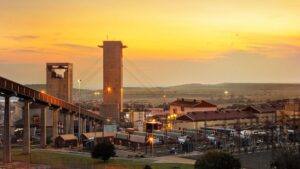
Newcastle in KwaZulu-Natal could become a ghost town if ArcelorMittal South Africa (AMSA) follows through with its threat to close the local steel plant.
This concern has been raised by residents, municipality members, business leaders and ArcelorMittal South Africa CEO Kobus Verster, who said the plant’s future hangs by a thread.
The company’s long steel division, centred in Newcastle, has been under severe strain, with losses running into billions of rand.
“Internationally, steel has been in a crisis for two years. Prices are at all-time lows,” Verster explained in an interview with BizNews.
“Domestically, demand is low, sales volumes dropped 11% and prices dropped 7%, so revenue fell 17% while costs didn’t drop at the same rate.”
He added that South Africa’s long steel demand is now about half of installed capacity, while competitors benefit from a 35% input cost advantage through the scrap metal policy.
ArcelorMittal has been in talks with the government and the Industrial Development Corporation (IDC) to avoid closure.
Verster said the IDC has given the company cash to fund the losses of Newcastle’s long steel operations up to the end of September.
He said that this timeline still stands. If the drop-dead date is 30 September, AMSA needs assistance early in August to start pushing down the supply chain.
“If not, we will dispose of all the assets that are not contributing to the core flat steel business,” he added.
Municipal leaders also warned of a major financial blow if the plant closes. Newcastle Municipality council speaker Thengi Zulu said the loss of jobs and revenue from ArcelorMittal and its employees would have a severe knock-on effect.
“We can expect a significant impact on revenue collection and livelihoods. This will also impact many smaller companies reliant on the steel industry,” Zulu said.
Business leaders are equally concerned. Johan Pieters, chairman of the Newcastle Growth Coalition Chapter, has written an open letter to President Cyril Ramaphosa.
He highlighted the devastating impact closure would have on the local economy, job security, and the broader community.
“My late father worked for Iscor and later ArcelorMittal for 41 years. Many Newcastle residents share similar stories,” Pieters said.
The interventions AMSA needs

According to Verster, the division’s losses are driven by multiple factors. These include collapsing demand, high electricity costs, steep Transnet rail tariffs, poor rail performance, and the scrap metal policy.
“Commercially, we cannot support it any longer. We’ve most probably done it for too long already,” he said.
“Directly, about 3,500 people would be affected. Indirectly, studies talk about 80,000 people. Downstream companies would close, some mines and quarries would shut, even kindergartens and B&Bs would be affected,” Verster warned.
“The government understands this social cost. It’s much more than the cost of trying to resolve Newcastle’s problems.”
Verster believes there is a way forward if all parties contribute to a fairer deal. He suggested reducing the scrap discount to 10%, cutting Transnet’s iron ore tariff to Newcastle from $28 per tonne to $18, and lowering Eskom’s costs.
“All of those things can contribute up to the point where you can break even, and at some point, the volumes will solve the problem,” he said.
If the plant closes, ArcelorMittal will focus on its flat steel business, which Verster described as “solid, with good product range and growth potential,” and capable of being highly successful if not weighed down by losses in long steel.
This would involve selling non-core assets, including Saldanha Steel, and investing the proceeds in core operations while cutting debt.
Despite the challenges, Verster said the company is open to working with the government and the IDC, provided any plan is commercially viable.
“I represent three parties here: the shareholders, the company, and South Africa. Surely we will find a solution that can satisfy broad stakeholders,” he said.
“Shareholders have been open to looking at anything. They’ve already put R5.5 billion into ArcelorMittal South Africa.”
“However, we will not carry any further cash losses from Newcastle, because it will put the broader business at severe risk.”
He stressed that Newcastle’s plight reflects a broader national economic crisis. “This is not an ArcelorMittal crisis or even a steel crisis. It’s an economic crisis,” he said.
“Smelters, ferrochrome and ferroalloy producers are shutting down due to electricity costs. We have all the raw materials here, but we can’t produce competitively.”
Despite this, Verster remained cautiously optimistic about the company’s future beyond the Newcastle plant.
“If you can just exclude long steel, our core business can be a very successful growth business. At some point, we may see economic recovery. Medium- to long-term, there are good prospects for our core assets,” he said.











 Loading ...