

Investors betting big on The Tiger


Allan Gray is bullish on Tiger Brands’ turnaround, with the company seeing its share price double since new management took over.
Tiger Brands is ubiquitous in South Africans’ lives. It owns large and iconic brands like Albany, All Gold, Black Cat, Doom, Energade, Jungle Oats, Mrs H.S. Balls, Oros, Koo, Maynards, and many more.
Despite its brands being found in most South African households, the company faced extreme pressures over the last decade.
During the 2010s, the company suffered due to failed forays into Africa. It bought Nigeria’s Dangote Flour Mills for R1.6 billion, but was forced to sell it for a symbolic $1.
In 2018, a listeria outbreak was traced to one of its meat facilities, which killed over 200 people.
“It is unclear whether this was a coincidence or a symptom of a greater issue,” said Andrew McGregor, Equity Analyst at Allan Grey.
“What was true was that price had been pushed too far, plants hadn’t been maintained properly, and management had become complacent.”
Between the 2017 and 2023 financial years, six of the 12 operating segments at Tiger Brands had double-digit declines in operating profit.
The profit from bakeries, its largest segment, dropped by two-thirds; the groceries business profit nearly halved.
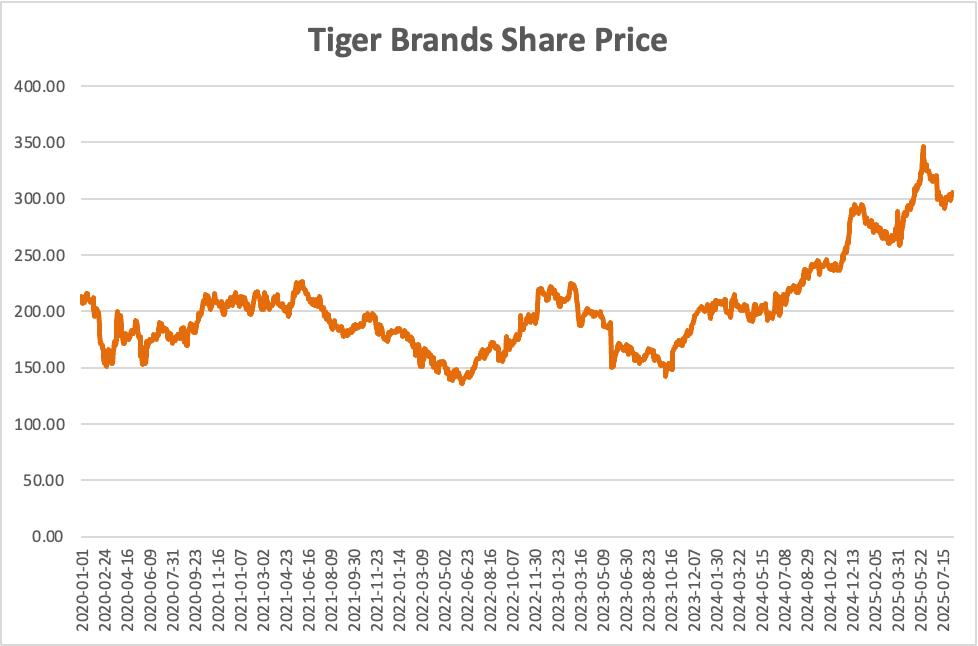
The group’s earnings were under extreme pressure, and the share price fell from a high of R470 to a low of R136.
“It certainly appeared as if the Tiger had been tamed,” said McGregor.
Big turnaround

However, the tides started to turn in late 2023, when Tjaart Kruger was announced as the new CEO of Tiger Brands.
Ironically, Kruger was partly responsible for the Tiger Brands’ downfall due to his successful leadership at bakery competitor, Premier, which plied the pressure on the group.
However, now at the helm of the Tiger, Kruger’s plan to fix the company focused on four key steps.
- Step 1: Simplify the management structure
- Step 2: Get the basics right
- Step 3: Focus on the winners
- Step 4: Fix the culture
Although Allan Gray is not sure whether the plan will ultiamtely work, it can assess the reasonability of the plan, and can monitor outcomes.
So far, investors are cautiously bullish.
“What is interesting about the Tiger Brands case study is that previous plans were reasonable, but execution was noticeably absent,” said McCregor.
“Kruger and his team score top marks for execution. The baroque management structure collapsed within four months.”
“They have managed to improve the output of bakeries while reducing costs at the same time by simply fixing the maintenance regimen.
Although it is tough to assess the success of changes to culture, there has been an increase in the number of phone calls at Tiger Brands from people looking for jobs.
People wanting to work for a company should indicate that a good company culture is returning.
McCregor noted that if a turnaround proceeds as planned, then there should be hidden value in the group that is not currently priced in.
“Volumes will return, margins will improve, and earnings will be returned to shareholders. It is the simplest recipe for a good investment. We just need to monitor their progress.”
“Overall, we believe there is strong evidence of the turnaround strategy working at Tiger Brands, and with the share having returned 110% since Kruger took over, it is a story we are watching closely.”
According to Tiger Brands’ website, Allan Gray owns about 6.67% of the company.
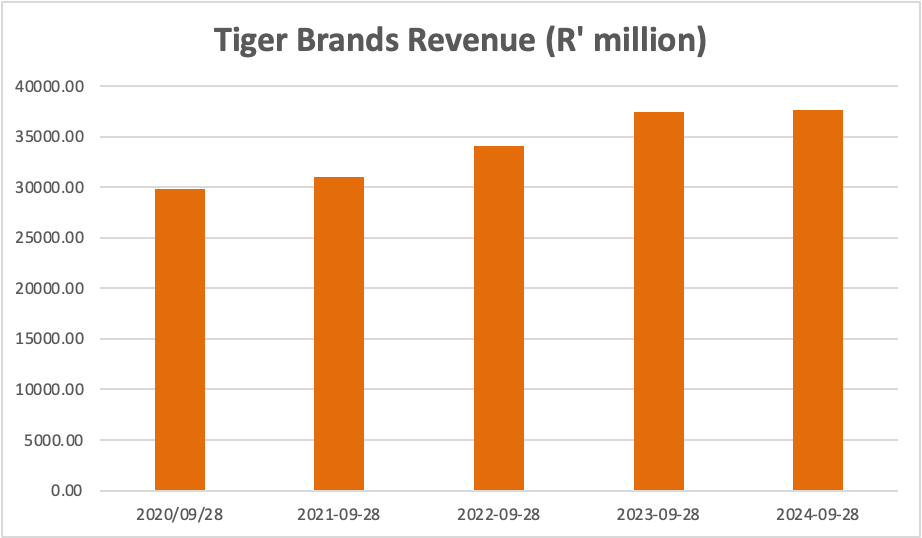
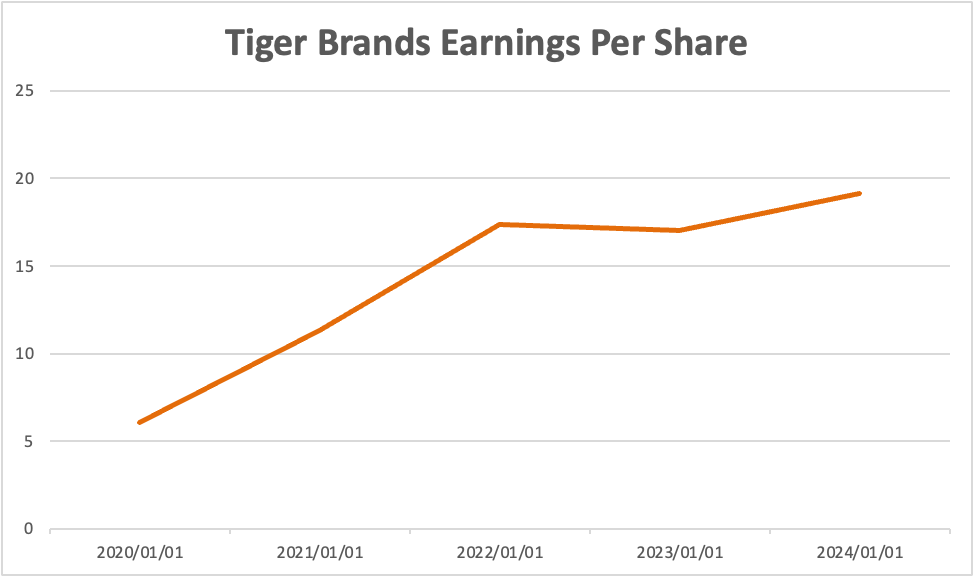
Financials















 Loading ...