

Another 155 businesses in South Africa added to the growing list of closures



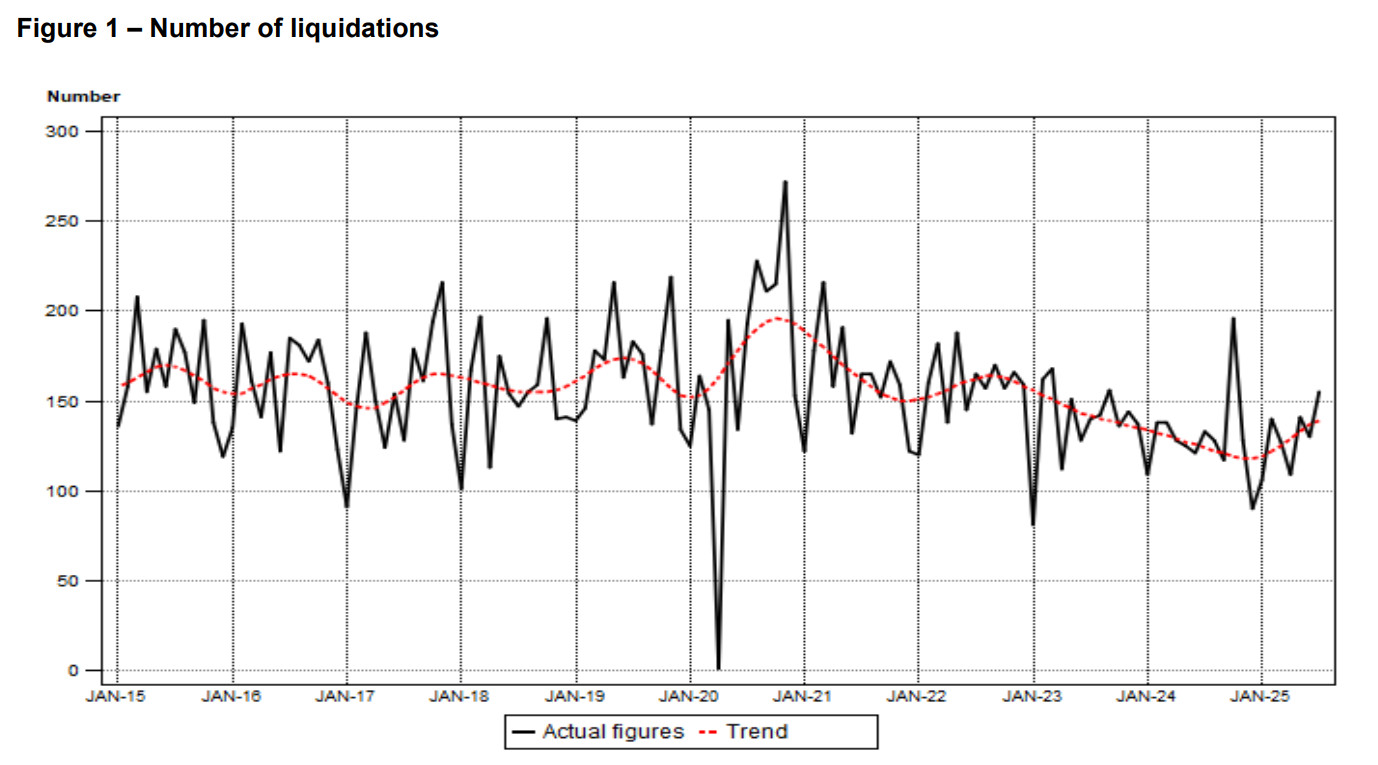
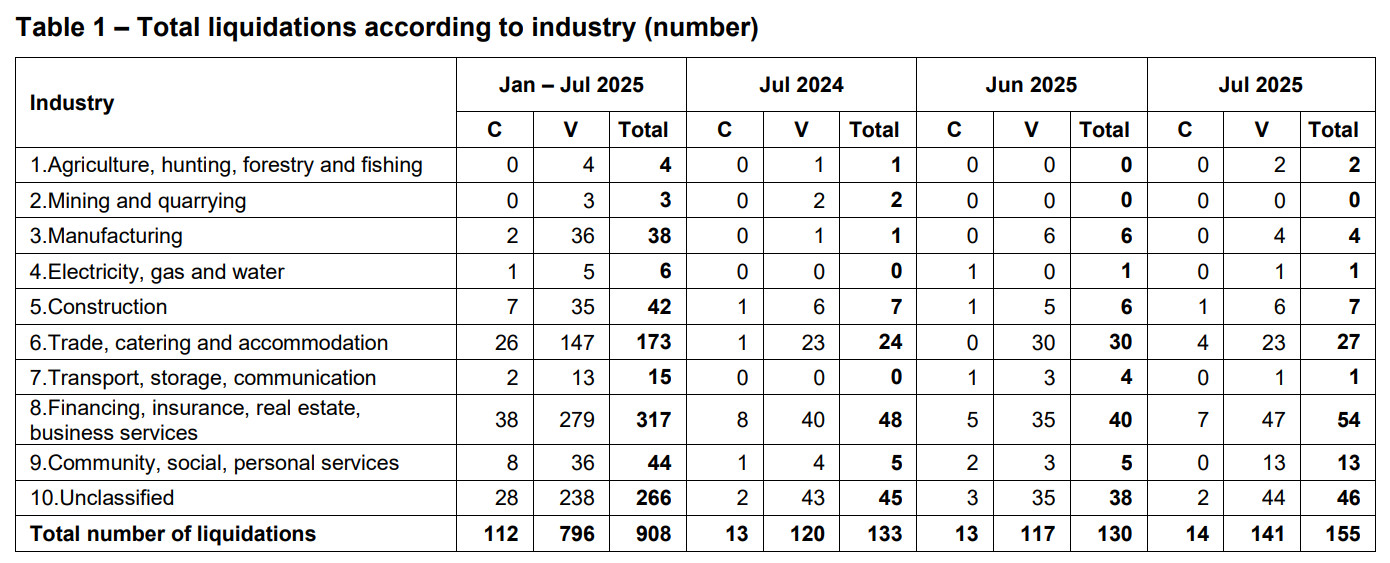
Liquidations in South Africa spiked in July, with 155 more business closures hitting the country and taking the total to 908 for the year so far.
According to the latest data from Stats SA, this marks the worst month for liquidations this year so far, and also represents a 16.5% increase from the same time last year.
The number of business closures was up 19.2% from June, and increased by 12.4% in the three months ended July 2025 compared with the three months ended July 2024.
An increase of 1.8% in the number of liquidations was recorded in the first seven months of 2025 compared with the first seven months of 2024.
As has become the common trend in the country, businesses in the financing, insurance and services sector and the trade, catering and accommodations sector were hardest hit.
There was also an uptick in closures in the community, social and personal services sector.
According to business rescue and insolvency expert, Fluxmans Attorneys’ Craig Blumenthal, the distinction between voluntary and compulsory liquidations is important when analysing the data.
Voluntary liquidations are not necessarily reflective of a business’ insolvency, but could represent active business processes, where structures like special purpose vehicles or subidiaries are liquidated to transact.
Compulsory liquidations, on the other hand, are typically court-ordered and usually reflect solvency issues.
The vast majority of liquidations in South Africa are voluntary, with around 88% of total liquidations in 2025 being in this category.
In July, 141 of the 155 liquidations were voluntary. However, the 14 compulsory liquidations recorded in the month were also up from June.
Notably, the number of compulsory liquidations in the year-to-date is also 6.7% higher than the same time in 2024, which could indicate more businesses in distress in general this year.
According to Blumenthal, increasing compulsory liquidations are an indicator of economic downturn.
Businesses under pressure
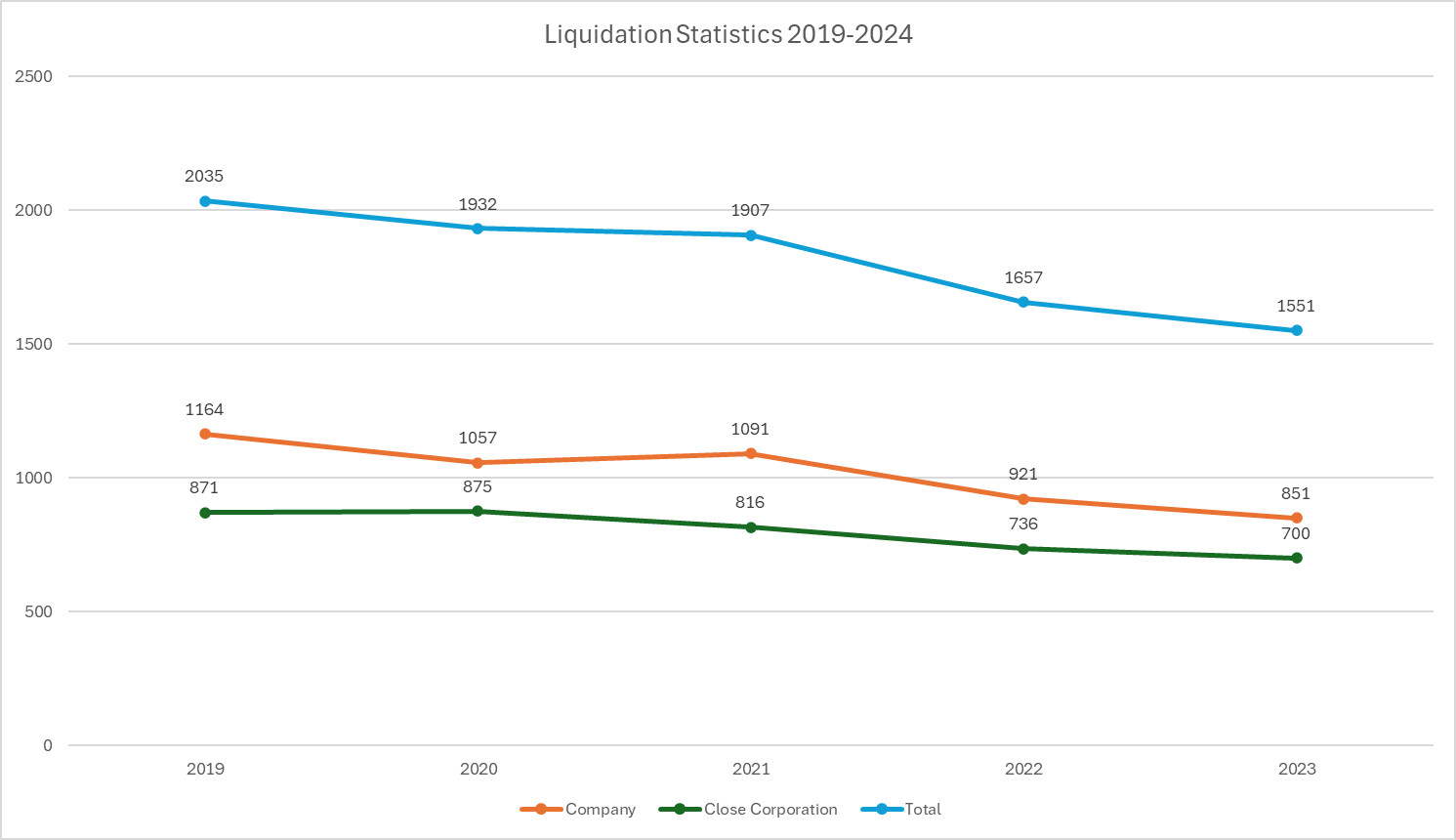
Looking at the wider trend in Stats SA’s data, liquidations have decreased each year since peaking in 2021. While 2025 has started showing an upward turn in the trendline, but is still far off from the peaks.
It must be noted that liquidation proceedings are tallied in a different way to business closures or the outcomes of business rescue processes.
Therefore, the data only serves as a singular data point when trying to gauge the health of an economy, and lower numbers don’t necessarily mean a better environment.
Many well-known and decades-old businesses in South Africa have shut down this year or entered into business rescue proceedings, and these will not be reflected in liquidity data.
More recently, the imposition of 30% tariffs on South African exports has led to niche and specialised companies being voluntarily shut down—not necessarily liquidated.
Other companies, like Mango Airlines, are entering winding-down processes, which are a part of a structured business rescue plan.
Even if wound down, these are not considered liquidated and are, in fact, a successful business rescue outcome, as creditors and shareholders get more out, and the brands could even continue on in some form.
According to Blumenthal, the wider market largely misunderstands the purpose and outcome of business rescue, and the data is difficult to parse, given that outcomes are tracked on separate lines.
Data for liquidations are released by the Master’s Office—which faces its own challenges with delays, etc—and those for business rescue are released by the Companies and Intellectual Property Commission (CIPC).
Both the categories and information presented by the two offices also differ, he said. However, there is some parity between the two where some patterns are emerging.
For instance, he noted a significant downturn in liquidations in the agricultural sector but a rise in business rescues. The opposite can be seen for companies in the financial sector.
There are also other factors at play. For instance, liquidation statistics take into account both companies and close corporations.
Since the Companies Act 71 of 2008 was enacted, however, it has not been possible to register a close corporation and the Act called for close corporations to be converted to companies.
“As a result, year on year, there are fewer close corporations, and this will naturally result in a situation where there will be a statistical decrease in total liquidations when measuring both companies and close corporations,” Blumenthal said.
The number of close corporation liquidations currently accounts for around 45% of the total.


















 Loading ...