

Another international car brand making a comeback in South Africa


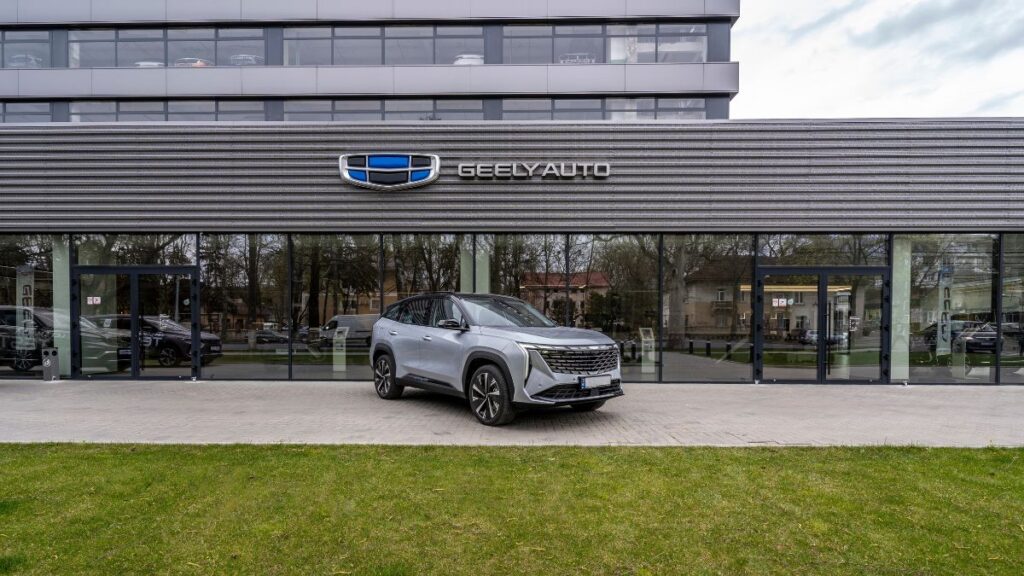
Chinese carmaker Geely Auto is making a return to the South African market after exiting more than a decade ago.
The company first entered the local market in 2007 but quietly exited in 2014, citing tough economic conditions and strong competition.
Now, it has been confirmed that it will be back in October 2025, with dealerships already being signed up across the country.
Geely is part of Zhejiang Geely Holding Group, one of the world’s biggest automotive companies.
The group owns or has stakes in several well-known brands, including Volvo, Polestar, Lotus, and Zeekr. It also co-owns Smart with Mercedes-Benz and holds a nearly 10% stake in the German carmaker.
The Chinese manufacturer first entered South Africa in 2007 but exited around 2014, citing tough economic conditions and intense competition.
Since then, speculation about its return has surfaced periodically, with trademark filings spotted in 2024 offering the strongest clue.
The company has since confirmed that South Africa is on its roadmap alongside major markets such as Brazil and the UK, following its recent launches in Australia and New Zealand.
Founded in 1997 in Hangzhou, Geely now operates in 90 countries across five continents, making South Africa part of a much broader international push.
In January, Geely opened a facility in Egypt to assemble two of its models, the Emgrand sedan and Coolray SUV, marking its first step into Africa and the Middle East.
While it has not confirmed which of its sub-brands will be introduced locally, it has suggested that some, such as Lynk&Co or Zeekr, could follow depending on demand.
Globally, the company has been focusing on electric and hybrid cars. In South Africa, however, it will launch a mix of traditional petrol-powered cars and new-energy vehicles, given that the market still relies heavily on both.
What to expect

According to Geely’s product roadmap, the first models arriving in October 2025 will be the Geely EX5, offered as a battery-electric vehicle and a plug-in hybrid.
To support its return, Geely has already signed 35 dealerships in South Africa and aims to reach 40 before its official launch.
Gauteng will have the largest number of dealers, followed by KwaZulu-Natal and the Western Cape.
The company expects to sell 13,000 cars in 2026, 15,000 in 2027, and 20,000 in 2028, by which time it hopes to have 80 dealerships in operation.
South Africa’s automotive industry has taken note. Earle Peters, managing executive at Transnet National Ports Authority’s Durban Terminals, described Geely’s return as a milestone.
“It’s encouraging to see major international car brands expanding in South Africa. The return of Geely Motors to South Africa is both a commercial milestone and a signal of confidence in our market and infrastructure.”
While the arrival will give South Africans mor echoice, another international brand adds to the pressure facing South Africa’s car industry.
Imported cars already make up nearly two-thirds of passenger vehicle sales in the country. In 2024, most of these imports came from India, while Chinese brands accounted for just over 52,000 sales, a noticeable increase from the previous year.
Combined Motor Holdings (CMH), which represents major brands including Ford, Jeep, Land Rover, and Mazda, has warned that without stronger government support, rising imports from China and India could lead to job losses in South Africa.
BMW Group South Africa CEO Peter van Binsbergen has echoed these concerns, calling the situation an existential crisis for the domestic industry.
He stressed that while overall sales have grown, the surge in cheaper imports has undercut local production.
Government is aware of the risks. Minister of Trade, Industry and Competition Parks Tau has said that subsidies for locally manufactured vehicles and auto components are under review to encourage higher local content.
Tariffs are also being reconsidered to protect domestic producers against the flood of low-cost imports, which he warned is already straining the sector.








 Loading ...