

The reason online delivery fees are doubling in South Africa, Eskom plans more smart meters for households


The rand showed little change in early trading on Thursday ahead of the release of local producer inflation data.
The rand was trading at 17.3500 against the dollar, which is slightly stronger (by less than 0.1%) than Wednesday’s closing level of 17.3650.
Economists surveyed by Reuters anticipate that year-on-year producer inflation will rise to 1.8% in August, up from 1.5% in July.
Nedbank economists noted in a research report that food products are likely to put upward pressure on the Producer Price Index due to an outbreak of foot-and-mouth disease, which has increased meat costs.
However, they also pointed out that deflation in other categories, such as fuel, should balance this out.
Inflation in Africa’s largest economy has remained well-contained this year, allowing the central bank to reduce its main interest rate three times.
This month, the bank paused its rate cuts as it evaluates the effects of the previous reductions.
On Friday, 26 September, the rand was trading at R17.44 to the dollar, R23.30 to the pound and R20.38 to the Euro. Oil was trading slightly lower at $69.59 a barrel.
Here are five important things happening in and affecting South Africa today:
Online delivery fees are doubling: Takealot Fulfilment Solutions highlights that hijacking and armed robberies of couriers remain significant issues in South Africa in 2025. To combat this, logistics operators must invest in security measures like escort vehicles, tracking systems, and surveillance. These security needs, along with rising insurance premiums, contribute to increased delivery costs. FarEye estimates that last-mile delivery costs in South Africa are now 50% to 100% higher than the global average. [MyBroadband]
Smart meters: Power cuts impact 1.6 million Eskom households. A strategy for smart meters will roll out over 12 to 18 months, pending Cabinet approval for funding from the R4 billion electrification budget. [Engineering News]
New e-hailing law warning: According to the South African e-hailing association (saeha), South Africa’s new e-hailing regulations may harm individual drivers while exempting international companies like Uber and Bolt. The new rules require drivers to obtain licenses, brand their vehicles, and install panic buttons, raising safety concerns. The SAEHA warned that these rules could expose drivers to more risk, especially after recent violent incidents. Drivers will also face geographic restrictions and must return to their starting point after each ride. [Newsday]
Spam calls wreaking havoc: Spam calls are bringing direct marketing to a standstill. South Africans are so overwhelmed by these spam calls that many are hesitant to answer unknown numbers. Some studies indicate that as many as 90% of calls are spam. This situation is damaging direct marketing efforts, as people are losing trust in phone calls. [Primedia Plus]
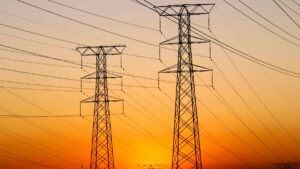
Eskom’s transformer problem: Over 700 Eskom transformers are failing due to vandalism and illegal connections, as revealed by Electricity Minister Kgosientsho Ramokgopa during a Pretoria media briefing. Ramakgopa raised the alarm on illegal connections saying the practice is slowing efforts to end load shedding. [EWN]













 Loading ...