

The rand’s winning streak at risk


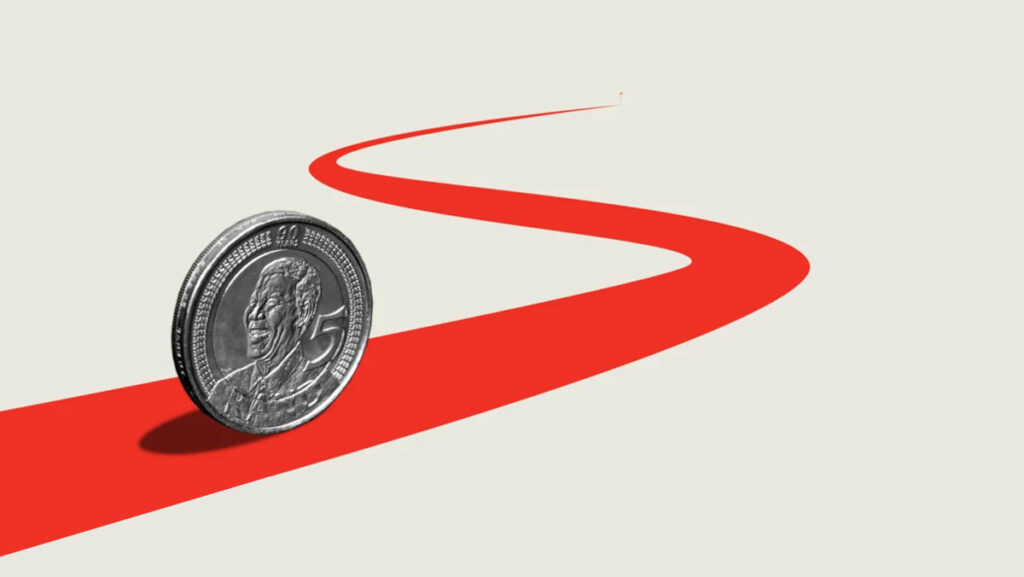
The rand has strengthened against the US dollar this year, but the latest government shutdown in the US could put that at risk.
The rand has recently seen mid-strength against the euro, pound and yuan, but continues to strengthen well against the US dollar.
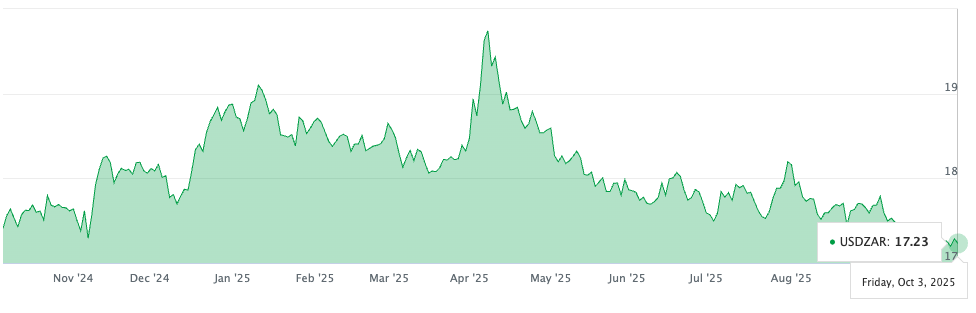
The rand has improved from R18.82 to the dollar since the start of the year to its current level of R17.24.
However, much of this improvement is due to the US dollar’s depreciation this year, which comes off the back of trade fears, potential lower interest rates and the Trump administration’s desire for lower rates.
Investec Chief Economist Annabel Bishop noted that the rand is only 8.8% stronger than the US dollar since the start of the year, while the dollar has depreciated by 14.6% year to date.
The rand’s improvement against the US dollar is also under threat, with the latest US government shutdown creating some mild US dollar strength.
In a counterintuitive way of thinking, the dollar could benefit from the US government shutdown as investors move their capital into safe assets due to global uncertainty.
The shutdown could thus hurt the rand and other emerging market currencies as investors look for guaranteed returns.
This is common and similar path was seen during the 2008 financial crisis. Although the US housing market caused the collapse, the dollar strengthened due to an influx of capital looking for a safe home.
The US government shutdown started on 1 October, with Bishop highlighting that no end is in sight.
The shutdown and concerns over US economic growth have increased uncertainty, leading to slight US dollar strength.
The US government administration also threatened mass layoffs if the shutdown deepens, as negotiations with the Democrats have been at a stalemate.
The senate will vote today on funding bills from both US parties, with neither expected to make headway. Furloughed workers are not receiving remuneration until the shutdown ends.
“While the US government shutdown occurs every year to varying degrees at this time, this year is expected to be significant given the substantial political divide, which may see further risk aversion and US dollar strength in the short-term,” said Bishop.
South Africa’s prospects

In South Africa, President Cyril Ramaphosa has highlighted the vast improvements at Eskom.
The President highlighted the sharp reduction in load shedding and return to profitability, even if the utility’s municipal debt and emissions remain a concern for many.
Bishop noted that the utility has also benefited from billions in bailouts, well above inflation, electricity tariff hikes and government guarantees on its debt
“Thanks to the collaboration between different Government departments, the stewardship of the National Electricity Crisis Committee (NECOM) and hard work by the leadership and staff of Eskom, Eskom is turning the corner,” said Ramaphosa.
“Two years since its inception, this collaborative model continues to yield results not only around energy but also in the other workstreams of transport and logistics, crime and corruption and youth unemployment,” Ramaphosa.
Via partnerships with the private sector, Eskom is looking to build roughly 14,000 km of new transmission lines in South Africa over the next decade.

















 Loading ...