

Eskom increased electricity prices from R1.08 to R2.53 per kWh in 10 years


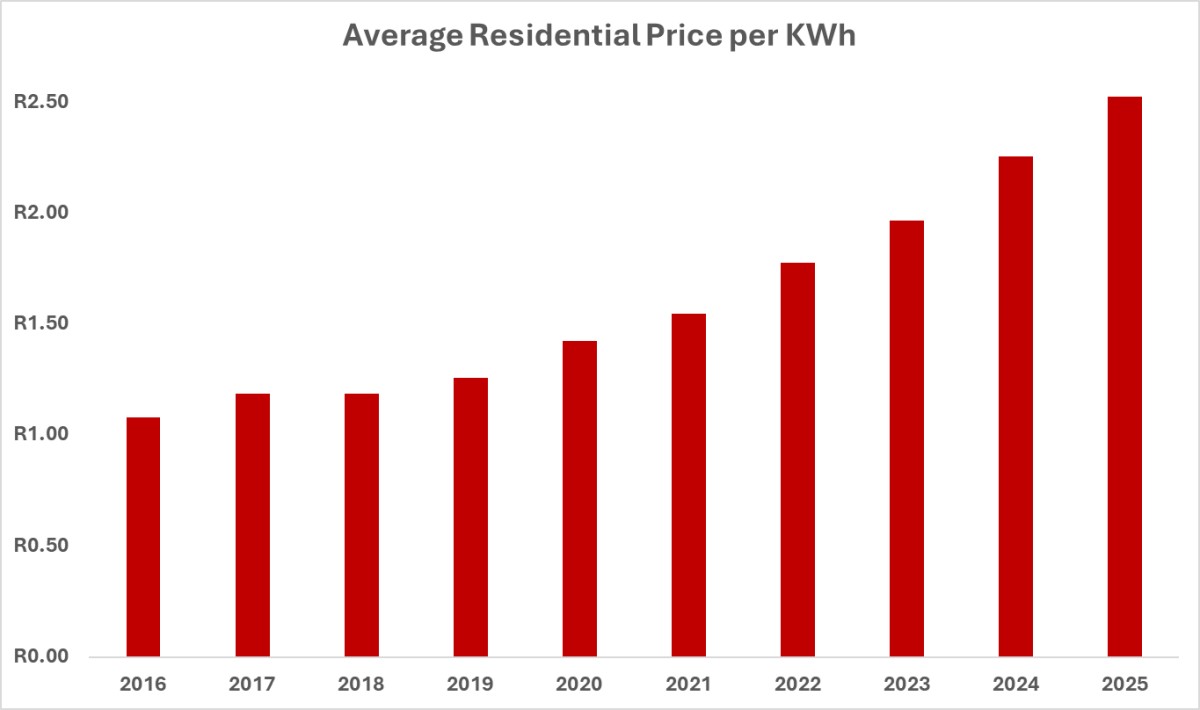
Eskom has significantly increased electricity prices over the last decade, with the average residential price rising from R1.08 per kWh in 2016 to R2.53 in 2025.
These increases have been widely criticised for hurting the local economy and putting pressure on households and businesses.
Another criticism is that these above-inflation increases, approved by the National Energy Regulator of South Africa (Nersa), should not have been allowed.
Eskom argues that, despite the vast increases, its prices are still too low, and higher increases may be needed to cover operational costs, debt, and other expenses.
However, experts highlighted that these high costs were caused by mismanagement, corruption, and a bloated and overpaid workforce.
South Africans should not pay the price for years of state capture and corruption, where Eskom was used as a wealth extraction entity.
Efficient Group chief economist Dawie Roodt even suggested that the National Energy Regulator of South Africa should be shut down.
He said Nersa’s primary purpose of determining energy prices is problematic, as it does not know what they should be. “In fact, nobody knows what energy prices should be.”
Roodt explained that Eskom and Nersa’s electricity price determinations were mainly based on external, highly unpredictable factors.
While the increases have often been lower than Eskom sought, they have most frequently been well above inflation.
Roodt said the only way to determine the right price of electricity is to allow it to be determined by the open market.

Eskom in a death spiral
Many experts warned that Eskom is facing a death spiral, with demand for the power it produces declining, forcing it to charge customers more per unit to make ends meet.
Impower energy expert Matthew Cruise explained that the big electricity price increases make it attractive for Eskom’s customers to go off-grid.
As a result, the power utility will have fewer good customers who can pay their electricity bills on time, from which it can generate revenue.
To cover its costs, which include salary increases above inflation, Eskom has to increase prices dramatically.
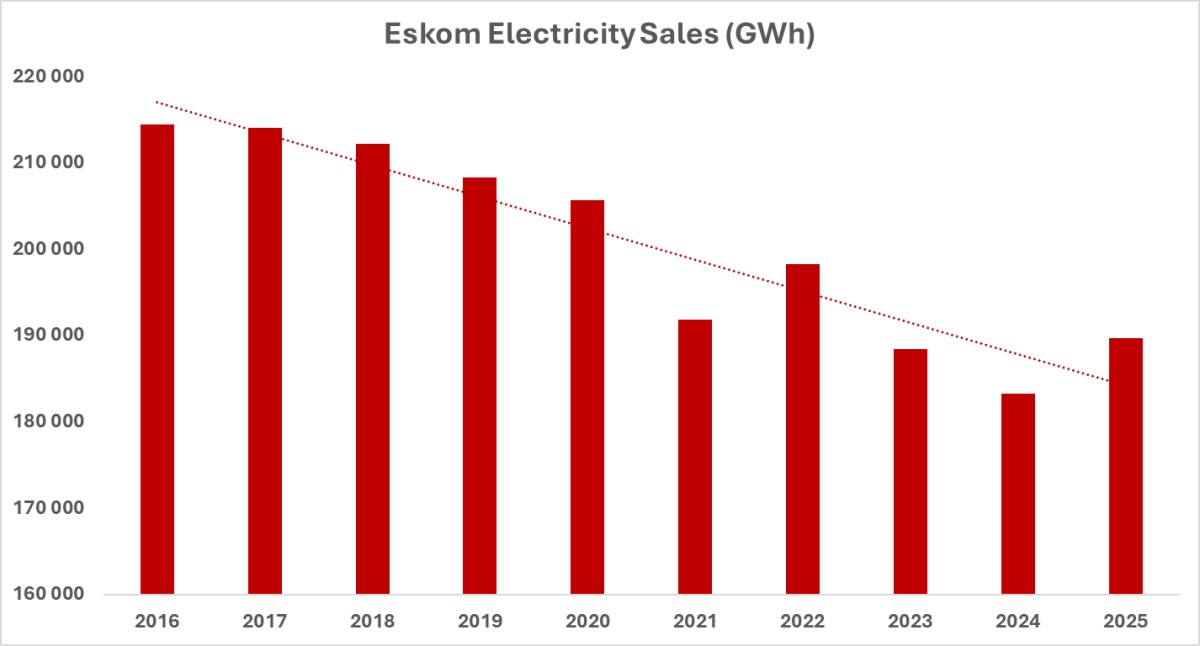
This is clearly shown in Eskom’s operational data. Over the past ten years, the amount of electricity sold in a year has dropped by 11.5%.
In the 2016 financial year, Eskom sold 214,487 GWh of electricity. In the 2025 financial year, it only sold 189,723 GWh.
Despite the significant drop in electricity sales, Eskom’s revenue increased by 111% over the same period.
This means Eskom’s revenue more than doubled despite the amount of electricity sold dropping.
Electricity price increases explain the increase in Eskom’s revenue. The average residential price per kWh of electricity increased by 134% since 2016.
The average residential price went from R1.08 per kWh in 2016 to R2.53 per kWh in 2025, boosting Eskom’s revenue despite its poor performance.
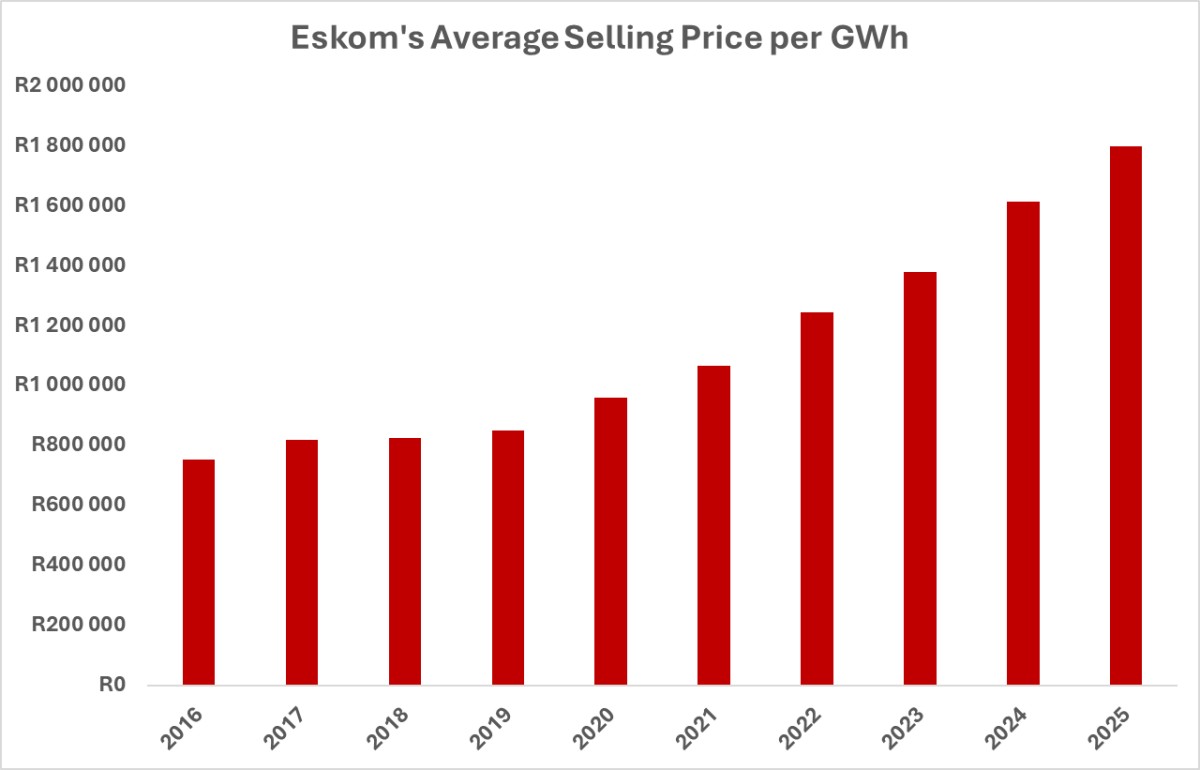
In 2016, Eskom sold a GWh of electricity at an average price of R753,836. Today, a GWh is selling at an average price of R1.8 million.
The charts below show Eskom’s declining electricity sales along with the electricity price increases over the last decade.


















 Loading ...