

New international bank coming to South Africa


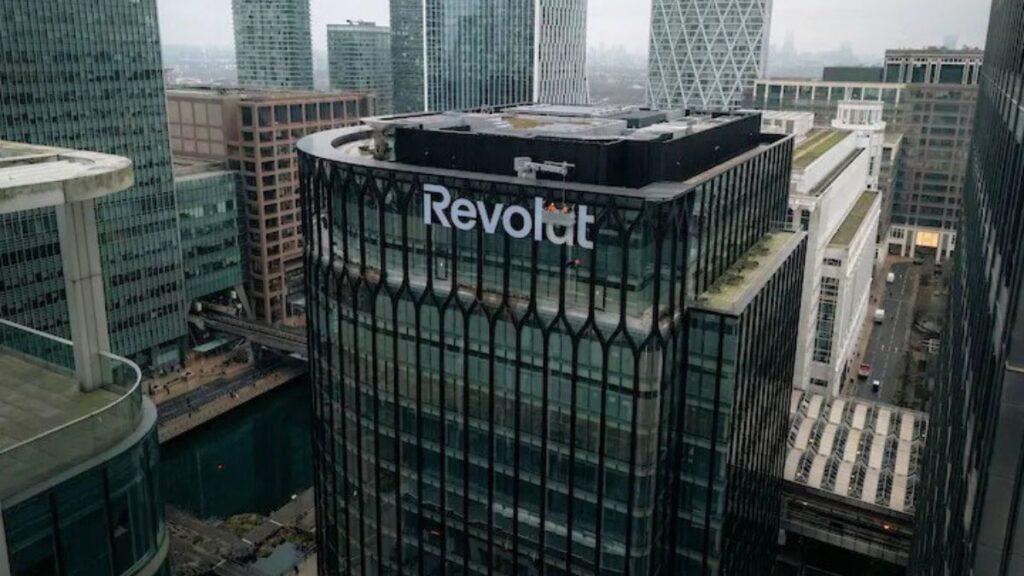
International giant Revolut has formally applied for a South African banking licence, marking its first move into Africa as a digital bank.
The company submitted its Section 12 application to the Prudential Authority in mid-November, confirming that its plan to establish a fully fledged bank in the country after months of consideration.
Revolut first revealed its intention to expand to South Africa in late September at the launch of its new global headquarters in London.
Its decision to move ahead represents a significant shift from exploring the market to formally entering it.
Alongside the application, the company appointed Dr Gaby Magomola as chairman of its South African business.
Revolut said Magomola brings long-standing experience in finance and governance, noting that his appointment reflects its commitment to “responsible growth, innovation, and access” in South Africa’s financial sector.
Magomola has held senior positions at Citibank, Barclays, and FNB, served as CEO of African Bank, and recently stepped down as deputy chairman of the Development Bank of Southern Africa.
Revolut South Africa CEO Jacques Meyer said Magomola’s background will help the company understand the local environment as it prepares to launch.
“Dr Magomola’s experience is invaluable as we deepen our commitment to the South African market,” Meyer said.
“His strategic counsel will be critical in navigating the local regulatory environment and ensuring we build a locally relevant service.”
Revolut’s South African application marks its first attempt to establish a bank in Africa, immediately putting it in line to compete with South Africa’s expanding digital-only banks.
TymeBank, Discovery Bank, and Bank Zero have all grown quickly in recent years and operate alongside the country’s major traditional banks.
TymeBank, which targets lower-income customers, was valued at R26.7 billion at the end of 2024.
Discovery Bank reached one million customers by September 2024 as it focused on higher-income clients.
Massive growth planned

Bank Zero has also been growing steadily and is now in the process of being acquired by Lesaka Technologies in a deal worth R1.1 billion.
Revolut believes there is room for another player. Meyer said the company sees South Africa as ready for more competition.
“The market is primed for disruption, and we see a clear opportunity to bring our product expertise and customer-first approach to a country that is hungry for innovation,” he said.
A full banking licence would allow the company to offer a complete range of financial services rather than a limited app-based product.
This is part of a broader shift in Revolut’s global strategy. In its earlier years, the company entered some countries using smaller licences, such as e-money or payment approvals.
CEO and co-founder Nik Storonsky said these limited licences resulted in “a worse product,” and the company is now focusing on securing full banking licences or buying existing banks when entering new markets.
Revolut has grown rapidly since its founding in 2015 and now has more than 65 million customers worldwide, including 12 million in the UK.
Storonsky wants the bank to reach 100 million customers by mid-2027 and expand into more than 30 new markets by 2030.
South Africa is seen as a strategic part of this expansion. Earlier this year, Storonsky described the country as attractive but said the company was still at an early stage of evaluating it.
The submission of the banking application shows that its plan has advanced significantly.
Revolut is also raising funds at a valuation of about $75 billion (R1.29 trillion) and has committed to invest $13 billion (R224.9 billion) over the next five years to support its expansion.
Key areas include the UK, Europe, the US, Latin America, Asia-Pacific, the Middle East, and now potentially Africa.
It also recently secured a payments licence in the United Arab Emirates and is exploring a bank acquisition in the United States.
If South African regulators approve the application, Revolut will be able to launch a full banking offering that could include accounts, loans, investment products, and other services.
The company expects to create 10,000 jobs worldwide over the next five years as it scales operations in new and existing markets.















 Loading ...