

Another R160 million circling the drain, and trouble for South Africa’s Afrikaans Uber


The rand declined on Friday as investors moved away from riskier assets, following a US jobs report that did not clarify the Federal Reserve’s near-term interest rate policy.
The rand traded at 17.2750 against the dollar, marking a 0.3% decrease from Thursday’s closing level.
The Top 40 index on the Johannesburg Stock Exchange (JSE) fell by 2.2%. Analysts observed that the significant decline in US stock markets the previous day posed risks for the rand and South African markets.
Increased volatility in these markets is likely to lower risk appetite, which will subsequently affect the performance of South African bonds, the JSE, and the rand itself.
On Monday, 24 November, the rand was trading at R17.37 to the dollar, R22.76 to the pound and R20.01 to the euro. Oil was trading slightly lower at $62.60 a barrel.
5 important things happening in South Africa today

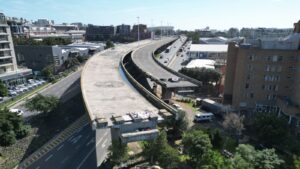
Another R180 million circling the drain: The Gwaing River Bridge, a 180m structure across the N2 near George, will likely take 10 years after construction started to complete due to contractor issues. Construction began in January 2018, but the first two contractors left, and a recent tender was cancelled. The existing bridge needs widening for safety. Initially set for completion in July 2020 at R160 million, over R100 million has already been spent. [News24]
Walmart’s plan to take on Checkers in South Africa: While it recently celebrated its 1st birthday, Afrikaans e-hailing service Wanatu is being criticised for not fixing its buggy app and charging users exorbitant fees. It has also refused to provide any details about tangible growth or future potential, after previously punting ambitious expansion plans. [MyBroadband]
Trade talks with the US continue: South Africa’s trade minister, Parks Tau, said on Sunday that he expected negotiations with the U.S. over a trade deal would continue, despite differences between the two countries over this weekend’s Group of 20 summit in Johannesburg. [Reuters]
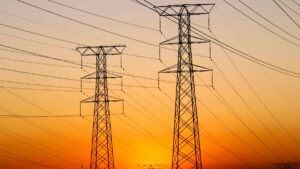
Eskom’s biggest problem: Agnes Mlambo, acting group executive for distribution, announced to lawmakers that Eskom’s arrear debt currently stands at R105 billion, with 14 municipalities responsible for 58% of it. Eskom has cautioned that if the debt is not addressed, it could exceed R300-billion by 2030, jeopardising its financial recovery and the unbundling of its distribution business. [Engineering News]
Joburg execs pay breaking the rules: Despite significant service failures, City of Joburg executives are earning nearly R5 million a year, well above national benchmarks for senior municipal managers. An analysis of the city’s budget data over four years reveals that executive pay has risen, even as core services like electricity, water, and waste removal have worsened. [Daily Maverick]









 Loading ...