

South Africa’s self-made disaster


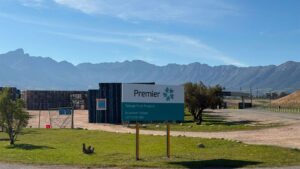
The closure of British American Tobacco’s (BAT’s) only cigarette production plant in South Africa is a self-inflicted jobs disaster for the country, brought about by poor policy and enforcement failures.
According to Business Leadership South Africa (BLSA) chief executive Busi Mavuso, the announcement by BAT on 15 January that it will close its factory demonstrates how legitimate manufacturing has been destroyed in the country.
The factory has been operating at 35% capacity and can no longer sustain operations. As a result, 230 direct jobs will be lost, with a ripple effect hitting up to 35,000 jobs and lives along the value chain.
Farmers, distributors and retailers will all feel the impact of the loss.
Mavuso said that the country has reached this point thanks to the ballooning of illicit trade, which now accounts for as much as 75% of the tobacco market, up from roughly 33% pre-COVID.
“The acceleration came from policy missteps during COVID-19, when legal cigarette and alcohol sales were banned, which was later declared unconstitutional,” Mavuso said.
“Meanwhile, enforcement capacity was diverted elsewhere, allowing illegal networks to establish distribution chains that never closed.”
These severe missteps by the government resulted in steep increases in excise duties on legal products, creating even wider price gaps that illicit operators exploited.
Illegal boxes now sell for less than the R26.22 in combined excise and VAT that should be collected, circumventing health warnings and age restrictions while costing the fiscus roughly R30 billion annually in lost tax revenue.
While significant damage was done during the COVID pandemic, the government is in the process of making more policy changes that could prove even more harmful to the legitimate industry.
Parliament is currently processing the Control of Tobacco Products and Electronic Delivery Systems Bill, which aims to introduce a host of regulations to deter smoking.
However, researchers, experts and industry players such as BAT have criticised some of these proposed changes, warning that they will hand the market over entirely to criminal networks and illicit traders.
Some of these include measures such as mandating plain packaging for all products, which critics argue will simply aid criminals in taking over.
Not just about cigarettes

While the BAT closure speaks to a specific market, Mavuso said that the policy issues go beyond tobacco.
“This isn’t just about cigarettes. The same dynamics are destroying legitimate businesses across multiple sectors,” she said.
She noted that illicit alcohol sales have grown 55% by volume since 2017, with one in five drinks now from illegal sources, according to the Drinks Federation of South Africa.
Counterfeit pharmaceuticals, fake branded clothing, electronics, cosmetics and even food products are flooding the market.
The Consumer Goods Council of South Africa estimates that the illicit economy now accounts for approximately 10% of GDP, pointing to the staggering scale of the problem.
“These illegal operations feed organised criminal networks involved in illegal mining, construction mafia activity, and other serious crimes,” Mavuso said.
“The profits fund everything from cash-in-transit heists to more sophisticated criminal enterprises.”
Beyond the immediate tax losses and job destruction, the illicit economy undermines the rule of law and erodes public trust in institutions when criminals operate openly with apparent impunity, she said.
The BLSA CEO said that various industry groups have proposed solutions to these issues, but the proposals have “sat with government departments for years without implementation”.
“Government must act with urgency across multiple fronts,” she said.
SARS needs dedicated resources for its illicit trade task team, including specialised investigators and technology for supply chain monitoring.
The police require trained specialists who understand how to build cases against sophisticated criminal networks, not just street-level vendors.
The NPA must prioritise prosecutions that target the organising networks.
“Every month of delay means more factories operating below viable capacity, more jobs at risk and more entrenchment of criminal networks.”

















 Loading ...