

Gayton McKenzie signs agreement with FIFA


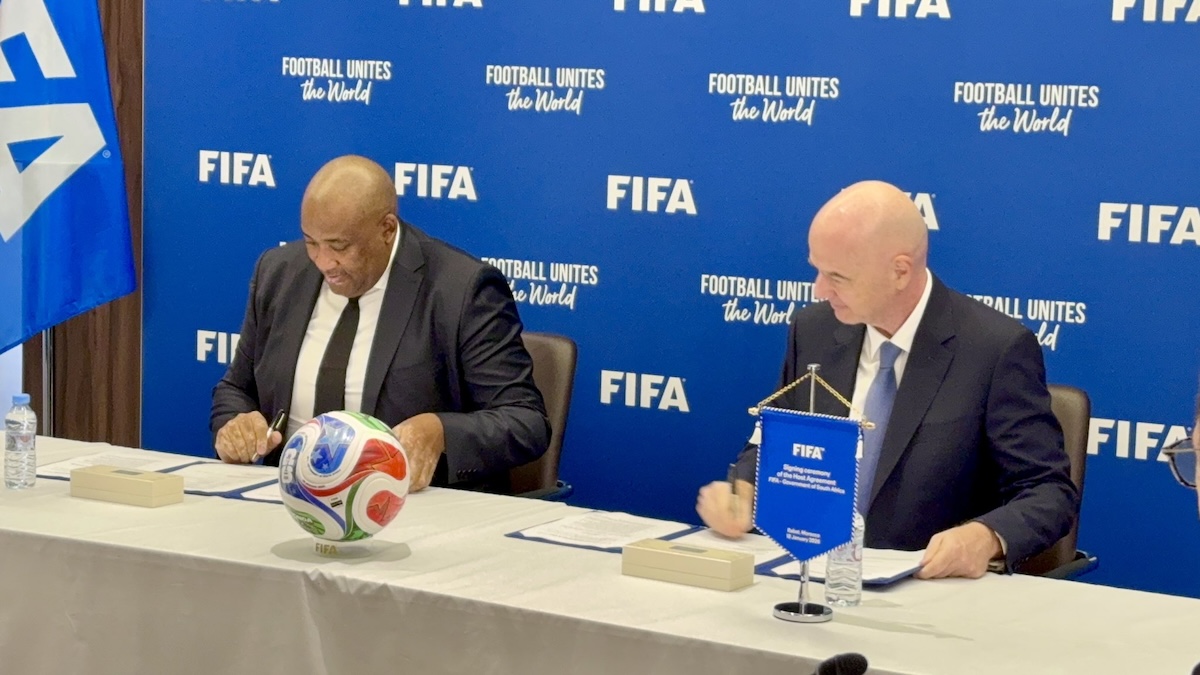
South Africa’s Minister of Sport, Arts and Culture, Gayton McKenzie, signed a cooperation agreement with FIFA Development Zurich AG, which will establish a FIFA office in Johannesburg.
The agreement was concluded on the sidelines of the 2025 Africa Cup of Nations (AFCON) final in Rabat, Morocco, with FIFA President Gianni Infantino.
The deal will create a FIFA Regional Development Office in South Africa’s largest city.
It also provides a framework for South Africa to facilitate FIFA’s administrative, movement and operational activities in the country.
FIFA will assume the responsibility for funding and staffing the Regional Office, which will serve South Africa and its neighbouring countries.
DSAC’s obligations will include visa assistance, customs support, and liaison with relevant authorities, and FIFA will bear the full costs for office operations, personnel, and programme delivery.
McKenzie said that the signing “marks a practical step toward strengthening football development in Southern Africa”.
“This agreement is about ensuring that development projects, coaching support, technical programmes and administrative capacity are accessible within our region,” he said.
“The Regional Office will allow FIFA to work more closely with our football federations, and while it is hosted in South Africa, it is intended as a resource for the whole Southern African football family.”
McKenzie said that the agreement reinforces South Africa’s larger intention to expand collaboration with FIFA and CAF in areas that benefit communities, youth participation and football ecosystems worldwide.
“Our role is to help open the door. FIFA carries the investment and delivery responsibilities, while we ensure that we are a welcoming and enabling host,” he said.
R16.5 billion invested
The new FIFA Regional Development Office in Sandton, Johannesburg, is expected to provide operational and developmental advantages for South Africa and its neighbours.
FIFA’s regional offices will serve as daily points of contact for member associations, which will help deliver development programmes, technical support and capacity-building for local needs.
The department said that the initiatives under the FIFA Forward programme have channelled more than $1 billion (R16.5 billion) into African football since 2016.
These funds have supported youth football, women’s leagues, infrastructure and federation governance.
For South Africa, a regional office enables faster access to expertise, coaching pathways, referee development, strategic planning support, and more efficient programme funding.
Its neighbours will also benefit as the office strengthens regional networks, reduces administrative bottlenecks and deepens cooperation among associations.
The presence of the office will also yield significant social and economic benefits, including increased community sport participation, youth engagement, and new jobs in coaching, officiating, and sport management.
The department said that the agreement positions South Africa as a key partner in continental football development, with the World Cup coming to Morocco in 2030.
South Africa will play the first game of the upcoming 2026 World Cup against Mexico, the inverse of the opening of the 2010 World Cup, which South Africa hosted.















 Loading ...