

South Africa on the wrong side of corruption


Transparency International’s (TI) 2025 Corruption Perceptions Index (CPI) shows that South Africa is still seen as more corrupt than not, with its score stagnating at historic lows.
South Africa is also below the global average on the index, which, for the first time in over ten years, has fallen to 42 out of 100.
This indicates increasing corruption levels and a decline in global leadership. This year’s results indicate that most countries are struggling to control corruption.
122 of 180 countries have scores below 50, and the number of countries scoring above 80 has fallen from 12 a decade ago to only 5 this year.
Corruption Watch said this highlights a concerning trend where democracies face increasing corruption amid rising tensions between major powers, a reckless neglect of international norms, the deadly effects of the climate crisis, and societies that are becoming more polarised.
South Africa’s score remained unchanged at 41, the same as in 2024 and 2023. This score indicates a lack of progress in anti-corruption initiatives and suggests minimal to no progress over the past three years.
The highest South Africa has ever ranked is 45th, still below the halfway mark of 50.
“While the score has seldom given cause for celebration, remaining steadfastly below the 50 mark, the dip over the past two years to 41 is certainly cause for concern as it suggests that corruption is not being taken seriously enough by our leaders,” said Corruption Watch Executive Director Lebogang Ramafoko.
The CPI evaluates perceived public-sector corruption in 182 countries and territories on a scale from zero (highly corrupt) to 100 (very clean), based on 13 independent data sources.
Since the CPI measures perceptions of corruption rather than public reports, some developments may not be reflected in the report.
Additionally, the CPI does not account for cross-border corruption activities, such as illicit financial flows or money laundering, conducted with assistance from other countries.
Therefore, high CPI scores do not necessarily indicate an absence of corruption; some top-scoring countries, such as Switzerland (80) and Singapore (84), have faced criticism for enabling money laundering, facilitating the transfer of illicit funds, and supporting cross-border financial transactions.
This limitation is especially relevant when examining regional differences, as Sub-Saharan Africa remains the lowest-performing region, with an average score of 32 out of 100.
Only four out of 49 countries in the region scored above 50: Seychelles (68), Cabo Verde (62), Botswana (58), and Rwanda (58).
The lowest scores on the index are held by South Sudan and Somalia, each with a score of nine, followed by Eritrea at 13 and Sudan at 14.
Still room for hope in South Africa
Although the latest results show that corruption levels in South Africa are not improving, there are some promising developments that the CPI does not capture.
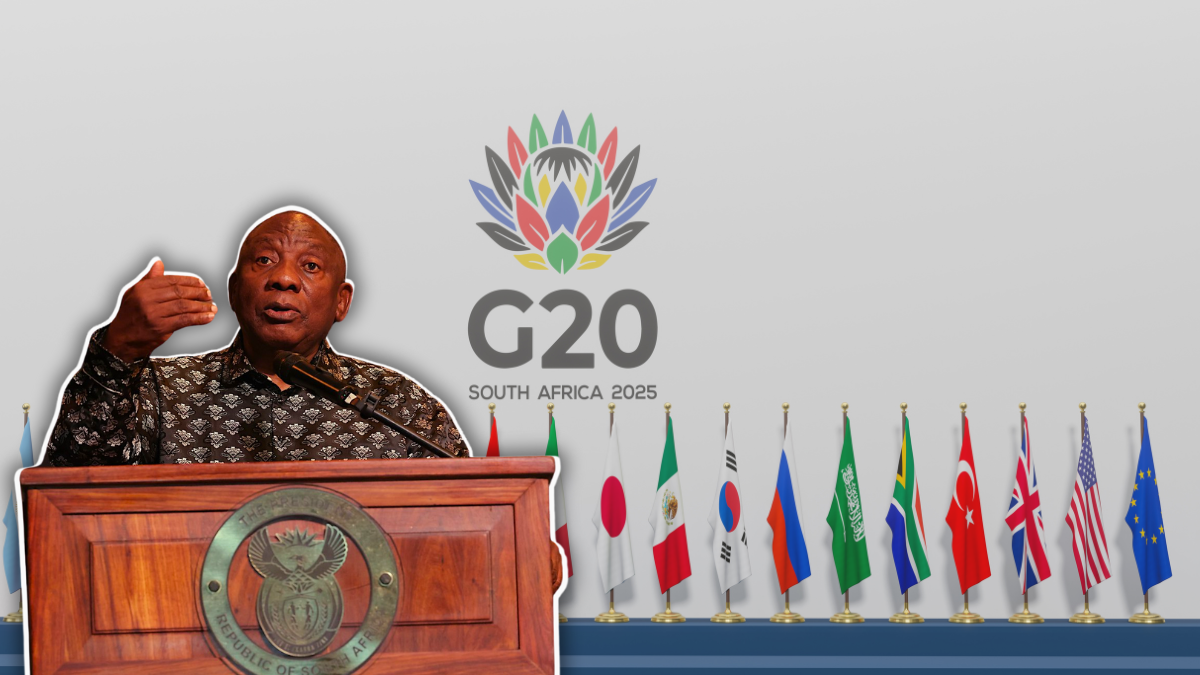
In 2025, South Africa was removed from the Financial Action Task Force (FATF) grey list due to persistent efforts by financial governance bodies. The country also hosted a successful G20 Summit.
Additionally, allegations of corruption within the criminal justice system are under investigation by two constitutionally supported processes: the Madlanga commission and a special parliamentary committee.
These efforts indicate a commitment to addressing corruption and improving governance, even as challenges remain.
Corruption Watch highlights a trend: the CPI clearly distinguishes between countries with strong, independent institutions, free and fair elections, and open civic space, and those governed by repressive authoritarian regimes, in their approach to corruption.
Generally, full democracies score an average of 71 on the CPI, flawed democracies about 47, and authoritarian regimes around 32.
Given South Africa’s score of 41, it likely reflects the country’s position in democracy rankings, suggesting a flawed democratic system.
However, some rare cases exist where a few non-democratic countries perform relatively well compared to their regional peers and are seen as effective at managing certain types of corruption.
In such cases, anti-corruption measures are usually centralised and implemented in a top-down manner, often lacking long-term sustainability.


















 Loading ...