

Money flooding out of South Africa


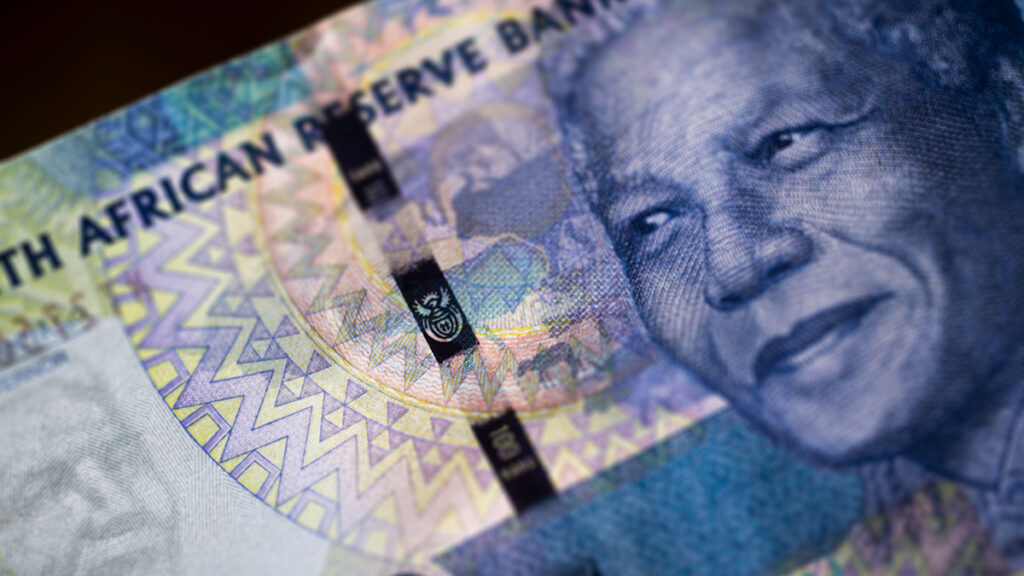
Money is flowing out of South Africa as global investors rush toward safer assets amid escalating geopolitical tensions in the Middle East.
This is the feedback from Investec Chief Economist, Annabel Bishop, who said rising risk aversion in global financial markets has pushed investors away from emerging markets like South Africa and into traditional safe havens.
This shift in global sentiment has weakened the rand and triggered foreign selling of South African assets.
The currency fell to R16.81 against the US dollar late on Friday and was trading around R16.86 on Monday as investors pulled money from the country’s financial markets.
“The rand weakened as the US dollar strengthened and foreigners sold off South African portfolio assets, with R3 billion worth of bonds sold on Friday,” Bishop said.
Despite this, South Africa’s benchmark government bond yield has climbed back to levels last seen at the start of the year.
According to Bishop, the bond yield is around 8.57% and was last at this level earlier this year before optimism surrounding the national budget and improved government finances helped calm markets.
The weaker rand is also amplifying the impact of rising global oil prices, which have surged amid fears that the conflict could disrupt supply from the Middle East.
“The jump in the oil price, to close to US$110/bbl, combined with the weaker rand versus the US dollar, has pushed up the CEF fuel price estimates once again for the petrol price, as the war in the Middle East intensifies,” she said.
When oil prices rise while the rand weakens, the cost of fuel imports increases sharply. Bishop noted that the rand price of oil has surged dramatically in recent weeks.
“The rand oil price has increased to R1 814/bbl, from R1 161/bbl at the end of last month, a severe jump and last at such a level in the third quarter of 2023, when the fuel price was at R26.68/litre, versus the current R20.30/litre.”
Fuel prices in South Africa are adjusted once a month, with the final calculation based on the average figures recorded during the month. The next adjustment will take place on the first Wednesday of April.
Interest rate at risk

However, Bishop warned that volatility in global oil markets remains extremely high as the conflict continues to escalate.
“The oil price has seen marked volatility, and the lengthening of the US/Iran/Israeli war has increased concerns over the supply of oil and petroleum products, along with natural gas, raising concerns globally on inflation,” she said.
Recent comments by Donald Trump have also heightened tensions. According to Bishop, the US leader was reported over the weekend as warning that “Iran will be hit very hard.”
These remarks briefly pushed oil prices toward $120 per barrel and weakened the rand further.
“The rand neared R16.90/USD at the time as well as concerns over the intensity of the war increased, as the US has said it will escalate attacks,” Bishop said.
She added that oil prices have since eased slightly below $110 while the rand has recovered marginally toward R16.80.
Despite the temporary stabilisation, risks remain tilted toward further volatility.
“The risk is for further rand weakness with the US dollar a safe haven now, running stronger on the severe escalation in geopolitical tensions in the Middle East, while the oil price is at risk of further elevation to US$110/bbl plus,” Bishop said.
If these conditions persist, the consequences could extend beyond currency markets. Higher oil prices feed directly into inflation through fuel, transport and food costs.
“Shipping costs have risen, driving up oil and fertiliser prices, and a food price shock globally has now become a concern as well as the oil price shock,” Bishop said.
For now, the South African Reserve Bank may tolerate a temporary spike in oil-driven inflation. However, Bishop warned that prolonged price increases could change that outlook.


















 Loading ...