

R148 million payday for Absa’s new CEO


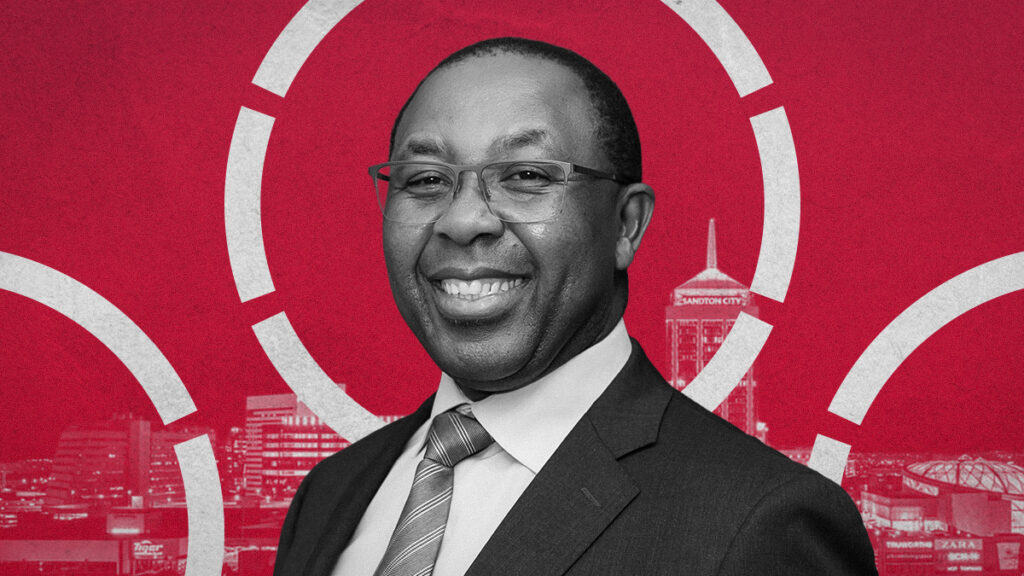
Absa Group’s CEO Kenny Fihla, who was appointed to his executive role in June 2025, received total remuneration of just over R148 million for the 2025 financial year, including R98 million in buyout awards.
Fihla, who previously served as Standard Bank’s Deputy Chief Executive and CEO of its South African operations, spent 18 years at Standard Bank before moving to Absa.
As Absa’s CEO, he earned a fixed remuneration of R6.2 million, which includes his basic salary, medical aid, and retirement benefits.
However, Fihla’s total awarded remuneration of R148 million encompasses his fixed salary, total STIs, LTIs, and buyout awards.
According to Absa’s 2025 annual financial statement, his fixed remuneration earnings are pro-rated, which means he was paid solely for the period he was employed by the bank.
Most of Fihla’s total remuneration for 2025 is in buyout awards at R98.4 million, which includes a R20.7 million cash-based buyout and a R77.7 million share-based buyout (face value).
When executives leave one company for another, they usually have to forfeit unpaid bonuses and unvested shares at their previous employer.
When Fihla joined Absa, the group had to “buy out” or compensate him for the exact amount of money and shares he had relinquished when he resigned from his former executive role at Standard Bank.
Fihla received R23.3 million for Short-Term Incentives (STIs), reflecting his annual performance bonus for the work he did during 2025.
His Long-Term Incentive (LTI) awards, amounting to R20 million, represent his future bonus.
However, this sum includes only shares promised by Absa and can only be realised in the future if he and the group meet their long-term targets.
Absa’s financial results

Fihla, while acknowledging his newly appointed position as CEO, shared his remarks on the group’s performance during the 2025 financial year.
“In my engagements across the Group, I’ve been struck by the depth of capability and experience within our teams. However, a period of frequent leadership change has, at times, meant we have not operated with the level of focus and integration that our scale demands,” he said.
“We are addressing this and remain confident in our ability to attract high‑calibre leadership.”
The Group recorded a 12.25% increase in headline earnings, reaching R24,762 million compared to R22,059 million in 2024.
Headline earnings per share (HEPS) increased by 12.20% to 2,987.0 cents, up from 2,662.2 cents in 2024, while basic earnings per share also grew to 2,679.6 cents.
The total profit for the reporting period was R25.6 billion, up from R24.9 billion in the previous year.
In addition to appointing Fihla as the group’s CEO, Absa experienced several changes during the 2025 financial year.
The Group merged its Product Solutions Cluster, Everyday Banking, and Private Wealth Banking into one unified business unit called Personal and Private Banking (PPB) to enhance customer value.
In addition, the segment previously known as Relationship Banking was rebranded as Business Banking, with a clearer focus on small and medium-sized enterprises (SMEs) and commercial clients in specific sectors.
“Our Africa Regions business now contributes around a third of Group earnings and grew
faster than our South African operations, reinforcing the strength of our pan‑African footprint
and our ability to connect inter‑ and intra‑Africa trade corridors,” said Fihla.
In line with its strategic objectives, the Group successfully disposed of several insurance entities, including Absa Life Botswana, Absa Life Zambia, and its interest in Global Alliance Seguros in Mozambique.
“We see clear opportunities to increase Africa Regions’ contribution by accelerating growth in markets such as Uganda, Tanzania and Zambia, whilst sustaining strong momentum in our larger markets, including Kenya and Ghana,” he said.













 Loading ...