

How GoTyme for Business Is Built Around How SMEs Actually Operate


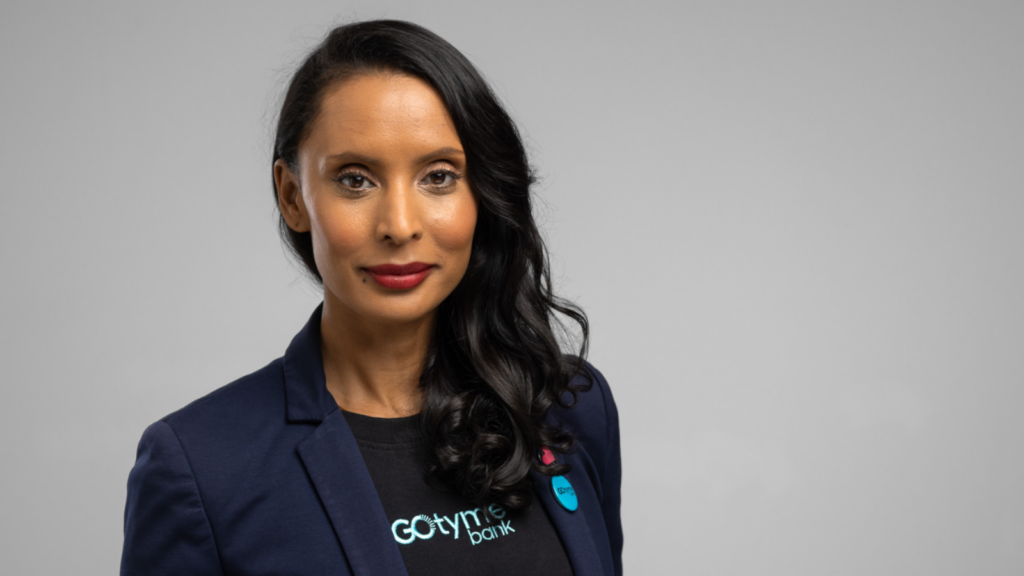
By Lee-Anne Kalam, Head of Marketing: Business Funding and Partners
Small and medium-sized businesses are at the heart of South Africa’s economy. They account for more than 90% of formal businesses, contribute approximately 34% of GDP, and employ between 50% and 60% of the country’s workforce.
Yet despite their importance, many South African businesses still face one of the biggest barriers to growth: access to funding.
Research estimates South Africa’s SME funding gap at approximately R350 billion, while only a small percentage of formal SMEs have access to traditional credit. For many business owners, the challenge is not a lack of ambition, customers or opportunity. The challenge is accessing funding that works for the realities of running a business.
The Funding Challenge Facing South African SMEs
Business owners operate in an environment where opportunities often appear without warning.
A supplier offers a bulk discount on stock. A new contract requires additional inventory or equipment. A business identifies the opportunity to expand into a new location. Seasonal demand increases and additional working capital is needed to meet customer demand.
In these moments, timing matters.
Unfortunately, traditional funding processes are not always designed around the pace at which SMEs operate. Lengthy application processes, extensive documentation requirements and rigid lending criteria can create friction at the exact moment a business needs to move quickly.
For entrepreneurs who are already managing staff, customers, suppliers and day-to-day operations, time spent navigating complex funding processes is time taken away from growing the business.
Why Cash Flow Matters More Than Most People Realise
One of the most common misconceptions about business growth is that profitability alone determines success.
In reality, cash flow is often the deciding factor.
Many businesses experience pressure not because demand is weak, but because cash is tied up in stock, supplier payments, operating expenses or unpaid invoices. Revenue may be coming, but the timing of that revenue can create challenges in the short term.
This is one of the reasons access to working capital remains such an important issue for SMEs.
Business owners need the ability to purchase stock before peak trading periods, pay suppliers on time, invest in equipment, hire staff and respond to growth opportunities when they arise.
Funding should help businesses maintain momentum, not slow them down.
Funding Built Around How Businesses Actually Operate
SMEs rarely generate revenue in perfectly predictable patterns.
Trading conditions fluctuate. Seasonal businesses experience busy and quieter periods. Consumer spending changes. Markets shift. Yet many traditional lending products continue to rely on fixed repayment structures that remain unchanged regardless of how the business is performing.
The GoTyme Business Advance was designed to take a different approach.
Rather than forcing businesses into rigid repayment structures, payments can be linked to business turnover, allowing them to move more naturally with the performance of the business. When turnover slows, payments adjust accordingly. When business is stronger, payments increase.
This approach reflects the reality that business performance is dynamic, and funding should be designed with that in mind.
Simplicity and Transparency Matter
For many entrepreneurs, uncertainty is one of the biggest challenges in business.
Whether managing cash flow, forecasting revenue or planning future growth, business owners need clarity to make informed decisions.
GoTyme Business Advance uses a fixed-fee model, allowing business owners to understand the total cost of funding upfront. There are no complex interest calculations to monitor and no uncertainty around what the funding will ultimately cost.
That transparency makes budgeting easier and gives business owners greater confidence when planning for growth.
Beyond Funding: Building an SME Growth Ecosystem
Access to capital is important, but funding alone does not build successful businesses. Entrepreneurs also need access to knowledge, networks, practical tools and opportunities to learn from others who understand the realities of running a business.
That is the thinking behind Flex, GoTyme for Business’s business community platform.
Today, Flex connects more than 70,000 South African business owners through educational resources, expert-led webinars, networking opportunities, practical business tools and growth-focused conversations.
The goal is simple: to provide business owners with access not only to capital, but also to the knowledge and connections that help businesses grow sustainably. Because often the right introduction, insight or conversation can be just as valuable as funding itself.
Why This Matters for South Africa
When SMEs grow, the impact extends far beyond individual businesses.
A sector that contributes approximately 34% of South Africa’s GDP and supports more than half of the country’s workforce has the power to drive economic growth, create jobs and strengthen local communities.
Yet the reality remains that many businesses continue to operate in a market where access to funding is limited, despite a funding gap estimated at R350 billion. Closing that gap requires solutions that are built around how businesses actually operate, not how financial institutions have traditionally preferred to lend.
For South African SMEs, the future of business funding is not simply about access to capital. It is about access to capital that is faster, more transparent and better aligned to the realities of entrepreneurship.
That is the opportunity GoTyme for Business is working to unlock.
Visit gotyme.co.za/business to learn more.


















 Loading ...