

One important sector falling behind in South Africa


As of March 2026, South Africa’s maize exports are around 1.7 million tonnes, below the 2.4 million tonnes forecast for the 2025-2026 period.
Agbiz Chief Economist Wandile Sihlobo told Moneyweb Radio that South Africa is likely to miss the maize export target due to extremely weak demand, which is weaker than usual.
“Ordinarily, we would be seeing that countries in the African continent would be showing a lot of interest in our products around this time, but this year we aren’t seeing that, and the reason for it is because we are emerging from a reasonably good agricultural season across the Southern Africa region,” said Sihlobo.
He said that this, along with large maize production in the world market, could have reduced the amount of maize typically exported to countries in the region and to international markets.
Sihlobo mentioned that countries like South Korea, Japan, Vietnam, and Italy, which typically depend on South African maize exports, may have shifted their purchases to South America, the United States, and other regions where maize is available at a lower cost.
“Our forecasts were too optimistic, but they were based on what’s available,” Sihlobo said on Moneyweb Radio.
Last year, South Africa produced around 16.7 million tonnes of maize, which, according to Sihlobo, is the second largest crop on record.
The 2025 year was considered a good crop year, as production was in surplus. South Africa consumes approximately 12 million tonnes of maize per year.
“We are looking at the current season that we are in, which is the crop that will only be harvested from May. We are expecting a crop of around 16.1 million tonnes, which again is a super large crop.”
Sihlobo said that, based on South Africa’s current maize production rates, it was reasonable to forecast a surplus.
However, from a demand perspective, Sihlobo said they may have been too optimistic in expecting many countries to ask for South Africa’s maize, which was historically the case.
South Africa’s maize industry
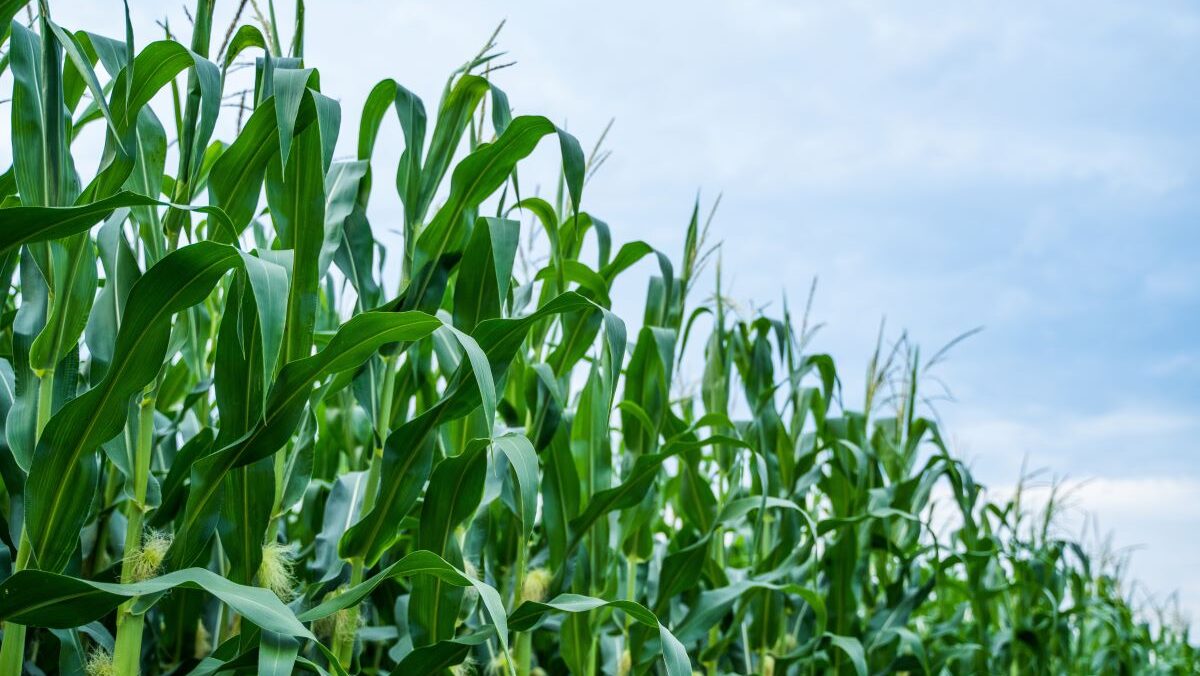
According to a journal entry in the Journal of Economic and Financial Sciences, the grain industry, which includes maize, barley, oats, sorghum, and wheat, is an important agricultural sector in South Africa, accounting for over 30% of the country’s total agricultural production by 2022.
In 2020, maize exports from South Africa exceeded R9 billion, contributing to total agricultural exports of R168 billion that year.
That same year, South Africa was responsible for 1.46% of global maize exports.
According to the report, exporting maize surpluses is crucial to balancing the country’s agricultural economy, as domestic demand for maize remains constant while production increases.
With increased maize production in South Africa and consistent local demand, the country regularly generates a surplus.
The report highlights that high export volumes are necessary to ensure that South African maize prices trade at export parity for longer periods.
This means that when a country produces a surplus of a commodity, such as maize, and sells it to international markets, it becomes available on the domestic market at the lowest possible price.
However, factors such as inadequate transport infrastructure, logistical bottlenecks, and high production costs are reported to significantly constrain South Africa’s agricultural exports.
Economists reported that a major issue is the dramatic shift in the methods of transporting maize.
In 2007, nearly 33% of South African maize was transported by rail. However, by 2020, this figure had dropped to 6.71%, with over 82% of maize transported by road.
Researchers argue that road transport is considerably more expensive, costing about R220 (in 2022) more per tonne than rail on key routes, which places a large financial burden on the sector.
Researchers said that if the industry reverted to rail for just 35% of its transportation needs, it could save an estimated R4.2 million per large export vessel.


















 Loading ...