

New driving laws, fines and penalties for South Africa


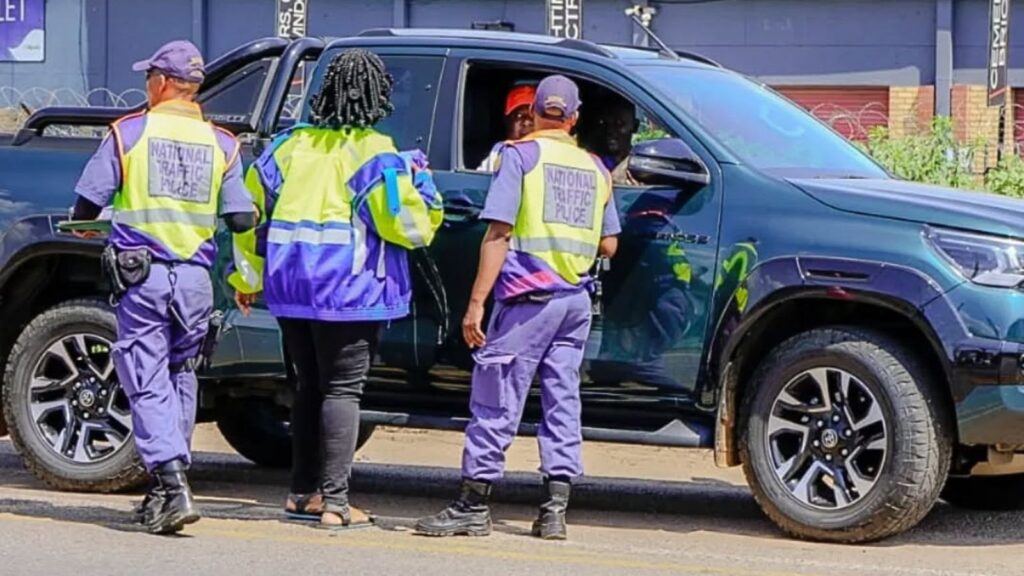
President Cyril Ramaphosa announced that the Administrative Adjudication of Road Traffic Offences Act (AARTO) will be implemented in 62 municipalities across South Africa, with the rollout effective 1 July.
This announcement details the general rollout of the system, including processes for issuing infringement notices and penalties, as well as other regulations supporting the system’s implementation.
The Government Gazette of 30 June 2026 introduces the AARTO regulations, which entirely repeal the 2008 regulatory framework.
This rollout initiates Phase 2, legally bringing 62 municipalities, including major metros like Buffalo City, Nelson Mandela Bay, Mangaung, Ekurhuleni, and Durban, under the AARTO administrative fine system.
Johannesburg and Tshwane, which previously piloted the system, are now incorporated into the national framework for 2026.
Under the new system, each penalty unit is valued at R100, and total fines are calculated by multiplying the assigned penalty units by this base value.
Infringers can receive a 50% discount on fines if paid within 32 days. After this period, a Courtesy Letter is issued, which adds an R100 fee and revokes the discount.
If the fine remains unpaid for another 32 days, an Enforcement Order is triggered, incurring an additional R100 fee.
Traffic infringements can be served electronically via the AARTO website, confirmed digital addresses, or regular mail, while sensitive notices must be sent via Registered Mail.
Once an unpaid fine reaches the Enforcement Order phase (Form AARTO 13), the infringer will be blocked from renewing vehicle or driving licenses or registering new vehicles until the order is resolved.
Fleet operators and private owners have 32 days to nominate the actual driver responsible for an offence.
While the gazette put the AARTO system into effect, it does not yet activate the driving demerit system, which will be implemented with phase 4 of the rollout.
Once active, if not nominated, demerit points will be attached to the vehicle or company operator card.
Drivers start with 0 points, with a suspension occurring after exceeding 15 points. Each point over this limit results in a 3-month suspension, prohibiting driving during that time.
Licenses can only be suspended twice; after a third infraction, the license is permanently cancelled, requiring a complete restart of the testing process.
Points decrease by 1 for every 3 months of offence-free driving, and completing a driver rehabilitation programme grants a bonus reduction of 4 points.
“It’s sad when you have to dangle carrots for discounts”

The South African Local Government Association recently lost a High Court application seeking to stop the further rollout of the Administrative Adjudication of Road Traffic Offences Act (AARTO).
During an interview with Cape Talk, OUTA CEO Wayne Duvenage raised concerns about the administration of the new process.
“There’s a lot of number plate planning, this is our biggest problem, and if people ride on your number plate, which they can do, it’s very easy, and you start picking up fines and disputing them, they decline those disputes, that’s where the problems are going to arise,” he said.
Duvenage mentioned that although a dispute resolution process is intended, it has not yet been established, which could lead to complications.
“That’s where we believe this entire system is going to become very burdensome and collapse over time,” he said.
Duvenage said that although the 50% discount on fines is meant to encourage infringers to pay, he does not think it will increase the number of people paying.
“Fines should be fines, and people should avoid traffic fines and drive properly, and if you do get them, then pay them,” said Duvenage.
He said the challenge is that when people do not pay their fines, it risks the whole system collapsing.
Duvenage explained that the City of Cape Town is effectively collecting traffic fines, which is why they have raised objections. The minister has temporarily exempted the City of Cape Town.
He said that although this should be a matter of road safety, municipalities’ revenue-earning opportunities are now being compromised by having to forgo some of their income to the national body, which is causing a “messy” situation.
















 Loading ...