

The ownership trap: Why South African manufacturers are embracing off-balance sheet growth



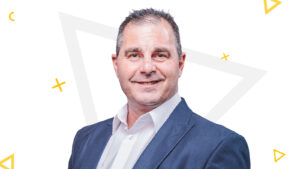
By Chantell Hanekom, Manufacturing Sector Head at Merchant West
In the face of global supply chain pressures, and intense competition from imports, South African manufacturers are in a constant battle to modernise.
Data from Stats SA consistently highlights the sector’s struggle with rising input costs and capital constraints.
Upgrading to efficient, high-precision machinery is a survival imperative. Yet, many remain caught in a “Capital Trap”, defaulting to traditional bank loans on the assumption that ownership is the optimal path.
In reality, traditional financing often leaves a business balance-sheet heavy, liquidity choked, and with its strategic agility hamstrung by rigid, high monthly repayments.
The financial strain: Gearing and the liquidity squeeze
Financing a R20 million machine over 48 months places a significant, immovable liability on the balance sheet.
This can trigger debt covenants, restrict access to revolving credit facilities for volatile raw material costs, and cripple a firm’s ability to navigate the long payment cycles typical in retail supply chains.
This also misaligns with asset lifecycles. A premium industrial asset may have a productive lifespan of 15-20 years, yet lenders often insist on a five-year repayment term.
This creates an artificial cash flow crisis, where asset repayment occurs far faster than the value it generates.
The strategic shift: The rent-to-own OpEx model
A growing number of manufacturers are moving toward off-balance sheet funding through rent-to-own or similar finance lease structures.
This model allows for full asset use while treating costs as OpEx.
Crucially, ownership still transfers at term’s end, but the journey is recalibrated for growth.
1. Unlocking strategic cash flow
The most significant lever is the ability to align repayment with asset utility, extending terms to seven or even eight years.
While traditional financial purists may cite the time value of money (longer terms result in more interest paid), this view ignores the measurable opportunity cost of capital in a manufacturing context.
If a longer term frees up R100,000 monthly, and that capital is deployed into inventory turned over four times annually at a 15% margin, the profit outweighs the incremental financing cost.
Here, the focus remains strictly on the IRR generated by the liquidity itself. The logic speaks for itself.
2. The fiscal efficiency advantage
The structural benefits are compelling for financial officers:
- Tax treatment: Monthly installments are typically 100% tax-deductible as an operating expense, simplifying accounting versus depreciation schedules.
- VAT optimisation: Unlike an installment sale contract where VAT is financed upfront, in a rental agreement, VAT is levied on each rental. The business can claim VAT back monthly, including on the interest component, effectively reducing the real cost of capital.
3. The specialist financier: A partner who understands metal
Manufacturing contributes over 11% to South Africa’s GDP, and its complexity demands financiers who understand operational realities.
Specialised private financiers like Merchant West assess the asset itself (its brand, residual value, and productive lifespan), enabling them to structure 84–96 month repayment terms based the machines full life cycle.
The momentum shift: Comparing growth trajectories
To understand the strategic difference in practice, one must compare the cumulative cash flow trajectories of a traditional loan versus a structured rent-to-own agreement for a R20 million asset.
Under a traditional bank loan, the manufacturer experiences a deep and prolonged cash flow drain. High monthly repayments act as a heavy “anchor,” keeping the business’s cumulative cash position in the red for a significant portion of the asset’s early life.
In this scenario, the business is essentially working for the machine, with recovery to a positive cash position being a slow, uphill climb.
Conversely, the strategic rent-to-own model creates a much shallower cash flow dip. By extending the term and lowering the monthly commitment, the business realises greater liquidity.
The freed-up cash (the difference between the high loan repayment and the lower rental) is immediately reinvested into raw materials or headcount.
While the instalment sale model is a story of slow recovery, the rent-to-own model is one of accelerated operational momentum.
As the reinvested capital generates its own compounding profit, the business’s cumulative cash flow crosses into positive territory significantly sooner.
It shifts the focus from owning equipment to leveraging equipment to fund the next stage of growth.
A new era of industrial finance
Securing the best possible equipment with the least possible friction on the balance sheet is what separates manufacturers who scale from those who stall.
Industry analysis and engagement with sector financiers confirm that the rent-to-own model is a powerful tool for protecting gearing ratios, optimising tax and VAT positions and, most importantly, keeping cash flowing through operations.
In a market where agility is the greatest competitive advantage, how you fund your assets matters as much as the assets themselves. It is time to stop viewing equipment as a debt burden and start viewing it as a cash flow catalyst.
To explore what an extended, asset-based finance structure could mean for your balance sheet, speak to Merchant West Asset Finance.
Click here to supercharge your business with shrewd Manufacturing Equipment Finance solutions.
Get in touch
Tel: 021 492 0299 | Email: [email protected]
Disclaimer
This article is based on industry analysis and observations of financial trends. It is for informational purposes only and does not constitute financial, legal, or tax advice.
Companies should consult with qualified professional advisors to determine the best financing structure for their specific circumstances. All figures and examples are illustrative.
















 Loading ...