

South Africa dumping 45,000 tonnes of medical waste every year


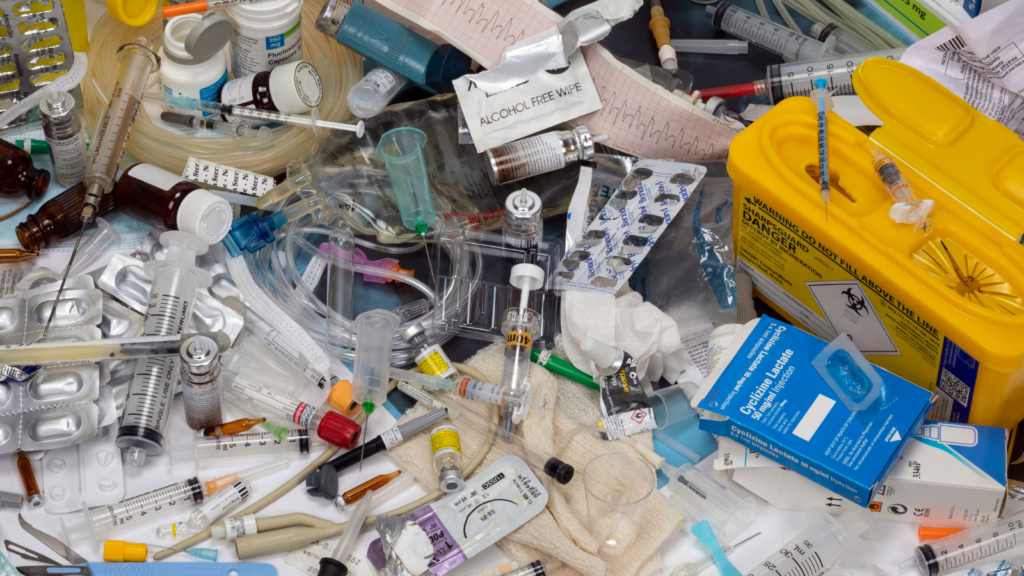
Studies indicate that about 45,000 tonnes of healthcare waste are produced annually, a significant portion of which consists of disposable plastic products.
In Gauteng Province, 79% of surveyed healthcare facilities have formal waste management plans.
However, only 20.5% of these facilities have active strategies in place to minimise waste at the source. As a result, large quantities of valuable medical-grade plastics are frequently discarded.
This information comes from a report by A-Thermal, a South African company that specialises in the treatment of healthcare risk waste.
A-Thermal noted that many of these medical plastics are actually suitable for recycling, provided they remain free from biological contamination.
This includes:
- Polypropylene (PP): Sterilisation wraps and trays
- Polyethylene (PE) & PVC: Tubing, flexible films, and IV bags
- PET, Polystyrene, & Polycarbonate: Rigid containers and components
The group also noted that items such as syringes and infusion sets have significant recycling potential when separated immediately at the point of use, thereby preventing their mixing with hazardous waste.
However, implementing recycling programmes in a hospital setting can present several challenges. Many plastics are automatically classified as healthcare risk waste (HCRW) due to their potential contact with bodily fluids.
Once designated as HCRW, these materials must be disposed of using costly methods such as incineration or autoclaving, rather than being recycled.
Many medical devices are made from combinations of different plastics, metals, or adhesives, making them very difficult to sort and recycle.
Recycled plastics often cannot meet the strict sterility and safety standards required for manufacturing new medical devices, which means they must be redirected to non-medical applications.
Violations of waste laws can lead to R5 million fines

The Minister of Forestry, Fisheries, and the Environment published the updated draft National Norms and Standards for the Transportation, Storage, and Treatment of Health Care Risk Waste (HCRW) under the National Environmental Management: Waste Act 59 of 2008 (NEMWA).
The updated Waste Act was released on February 3, 2026. The draft standards were open for public comment until March 5, 2026.
The primary aim of this regulatory update is to enforce strict control, traceability, and accountability throughout the entire lifecycle of medical waste.
The proposed standards apply broadly to all HCRW, defined as waste generated during the diagnosis, treatment, or immunisation of humans or animals, particularly when contaminated with blood, bodily fluids, or tissues.
This encompasses a wide range of waste categories, including cytotoxic and genotoxic wastes, infectious, isolation, and pathological wastes, as well as laboratory, pharmaceutical, radioactive, and heavy metal wastes.
As a result, the regulations impose significant compliance obligations on both waste service providers and waste generators across the healthcare, pharmaceutical, and veterinary industries.
Under their statutory “duty of care” as outlined in NEMWA, healthcare facilities must take active measures to ensure that any waste transporters and managers they employ are fully compliant.
They must also ensure that all on-site storage areas comply with general controls.
Any entity transporting HCRW from the point of generation to any temporary or permanent storage, treatment, or disposal facility must adhere to strict vehicle requirements, operational controls, and specified timeframes for transport and storage.
Facility operators face stringent requirements regarding treatment standards, storage timeframes, and record-keeping.
Specifically, those using non-combustion treatment technologies (NCTTs) must comply with strict efficacy guidelines using prescribed biological indicators.
They are subject to extensive validation testing, which includes commissioning, routine, independent, and re-validation testing, along with mandatory protocols in the event of system failures.
The draft norms do not currently address how they will integrate with existing provincial policies, such as those in Gauteng and the Western Cape, or the HCRW norms previously gazetted under the National Health Act in October 2025.
Facilities currently operating legally under an existing Waste Management Licence (WML) may continue to operate, but must align with the new norms upon the review or renewal of their licence.
Facilities that do not require a WML must achieve full compliance within six months of the standards taking effect.
Under Section 67(1)(f) of NEMWA, failing to comply with an active norm or standard is considered a criminal offence.
Violations can lead to severe statutory penalties under Section 68(2), including fines of up to R5 million, imprisonment for up to five years, or both.

















 Loading ...