

South Africa sends a message to the United States


South Africa says it will continue to engage with the United States in an effort to reduce or remove the latest tariffs imposed by Washington.
However, it made it clear that it will not abandon key domestic policies such as black economic empowerment (BEE).
The latest tariffs were introduced after the United States concluded a Section 301 investigation into the enforcement of forced-labour import restrictions.
South Africa is among 41 economies that the Office of the US Trade Representative (USTR) found do not adequately prohibit or enforce bans on the importation of goods produced through forced labour.
Countries in this group face higher tariffs than 19 other economies that already have such laws in place, which will instead be subject to a 10% tariff.
Trade, Industry and Competition Minister Parks Tau said the government would continue discussions with the USTR in the hope of securing relief from the measures.
“Government will continue to engage with the USTR on the Section 301 tariffs with a view to either eliminate or reduce the current tariff imposed on our country,” Tau said.
As part of that effort, Pretoria plans to publish draft regulations for public comment that would prohibit the importation of goods produced wholly or partly through forced labour or child labour.
The proposed regulations are expected to strengthen South Africa’s case as exporters face growing uncertainty over access to the US market. The latest tariffs add to broader tensions between Pretoria and Washington.
South Africa was one of 60 countries affected by new US duties this week, with most exports now subject to a 12.5% tariff, although several products, including certain agricultural goods, remain exempt.
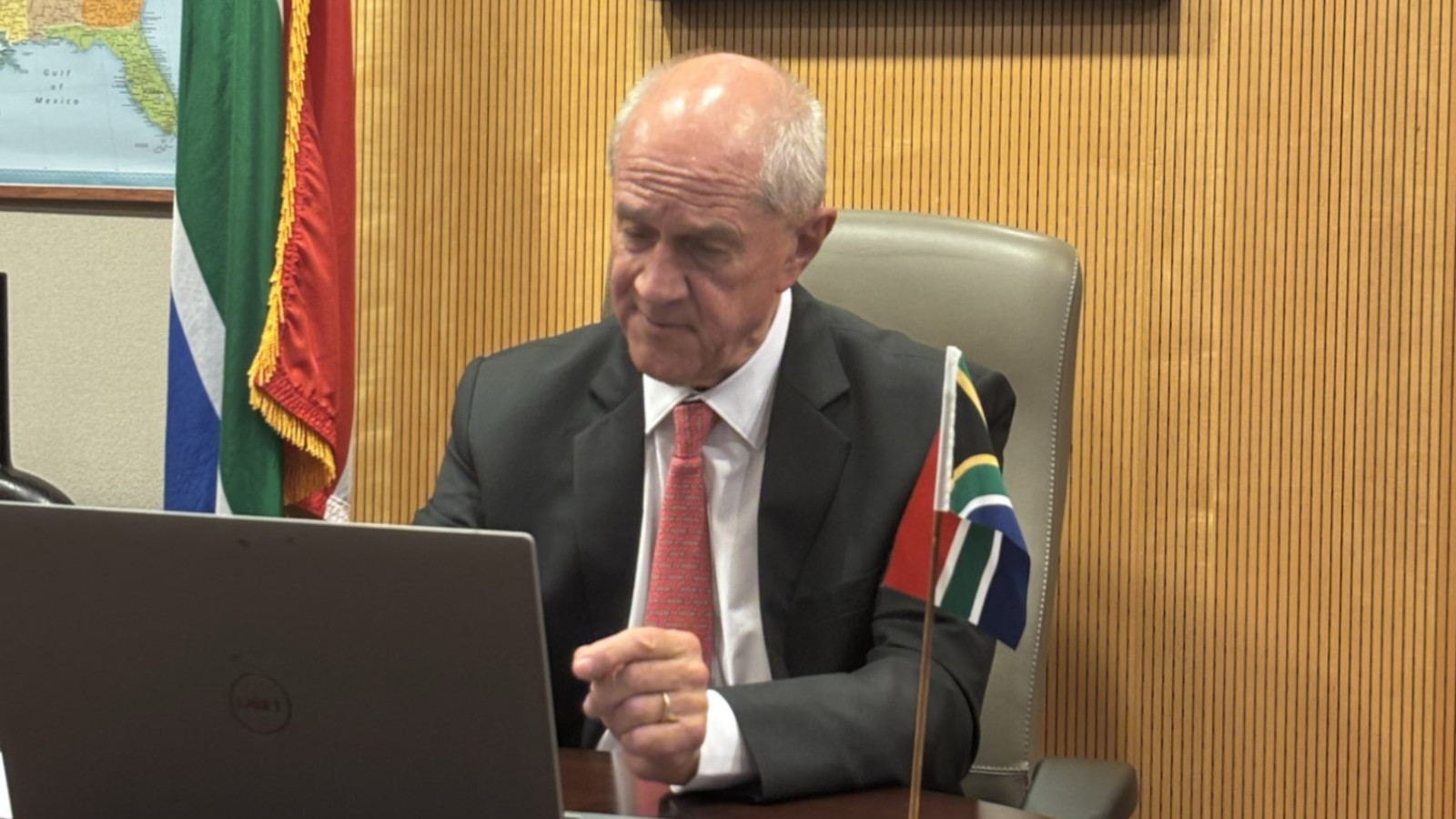
South Africa’s newly appointed ambassador to the United States, Roelf Meyer, believes restoring normal trade relations will require addressing the executive order signed by President Donald Trump in February 2025.
Clear instructions from Pretoria
The order suspended US assistance to South Africa and offered refugee status to Afrikaners after Trump accused the South African government of persecuting White farmers and confiscating their land.
Trump has also criticised South Africa’s genocide case against Israel at the International Court of Justice, as well as Pretoria’s relationships with Iran and Hamas.
Meyer said convincing the US administration to withdraw the executive order would be his first priority.
“The starting point, I think, is for us to get the executive order lifted. As long as the executive order remains, it can be used to justify tariffs, trade restrictions or other punitive measures against South Africa,” Meyer said.
He said his mandate from President Cyril Ramaphosa and Cabinet was to pursue practical solutions and rebuild relations with Washington through engagement with the White House, Congress, the State Department and the USTR.
“I received a clear picture. It was a clear mandate to go ahead and do what we can to find solutions,” he said. Trade negotiations are expected to cover a wide range of issues.
According to Meyer, the latest communication from the USTR raised concerns extending beyond tariffs to include long-running trade disputes, market access for US pork and poultry, South Africa’s land expropriation legislation, foreign policy and Black economic empowerment.
While Meyer indicated that South Africa is prepared to negotiate on several issues, he stressed there would be no retreat from BEE, describing it as a fundamental principle aimed at addressing inequalities created during apartheid.
“There’s no way that South Africa can walk away from that,” he said. Instead, Meyer suggested discussions could focus on how empowerment rules are implemented.
He pointed to South Africa’s equity equivalence framework, which allows multinational companies in some cases to meet empowerment obligations without transferring ownership.
“We can’t make exceptions only for American companies,” he said.
Although Meyer described his meetings in Washington as constructive, he cautioned that support for stronger trade and investment ties within parts of the US government may not always align with the White House’s position.
“My impression from the three weeks that I spent in Washington is that there are agencies of government that want to expand trade and investment with South Africa,” Meyer said.
“However, I don’t think we can rely only on that. The White House might come back tomorrow and say something different.”
Written with Bloomberg.















 Loading ...