

End of TV Licences in South Africa


The South African Broadcasting Corporation (SABC) intends to remove TV licences in the country, as the system becomes increasingly ignored, with a new plan coming in the 2028 financial year.
The SABC is a state-owned broadcasting agency that provides free television and radio channels in the country.
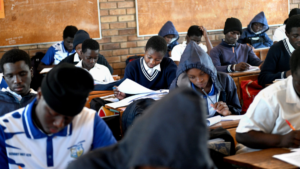
The company focuses on providing educational and children’s content, making this accessible to a large number of South Africans.
TV licences were introduced in South Africa in 1975, and all citizens who own a television are required to hold one.
The licence costs R265 annually, with these funds going to the SABC to support its continued operations.
Recently, the state-owned company has faced financial pressure, recording a loss of over R250 million in the 2025 financial year.
This grew from the previous year’s losses, which reached approximately R197 million, underscoring the company’s dire financial situation.
One of the company’s primary revenue sources should be TV licence subscriptions, but the non-payment rate for this has been climbing in recent years.
In the 2025 financial year, there were over 1 million unpaid TV licence fees, representing an 85% non-payment rate.
The non-payment rate has been steadily rising and stood at 72% in 2018, up 13 percentage points in seven years.
The broadcaster is set to receive roughly R234 million per year in government funding over the next three years to support its operations.
However, this funding will primarily be used for educational and children’s content for its channels.
The government funding may be inadequate, with virtually no prospect of covering any shortfalls through TV Licence fees.
In response to these major funding challenges, the SABC and the Department of Communications and Digital Technologies have been in discussions to revise its funding model.
These discussions have explored several different funding models which could potentially replace the failing TV licence system.
Plans for a new funding model

The Department of Communications and Digital Technologies is currently working on a draft SABC bill to present to South Africa’s parliament.
This bill will propose a new funding model for the broadcaster and is widely expected to remove the current TV licence system.
Currently, the draft bill is incomplete and is expected to be presented to parliament within the 2028 financial year.
The department is currently conducting research into viable funding models for the broadcaster, combining public and commercial revenue sources.
BMIT, a research company contracted to research funding methods for the SABC, proposed several alternatives for the state-owned broadcaster.
These alternatives included a combination of commercial revenue sources and public funding.
The commercial revenue side included proposals involving advertising, sponsorships, and subscriptions for some of its services.
Public funding options could involve government grants and individual levies, similar to the current TV licence approach.
Other proposals included reviewing the current debt collection structure and including other entities, such as municipalities, in the process.
BMIT managing director, Chris Geerdts, said many options have been explored, but no new plans have been announced.
He said loosening regulations around public mandate quotas could help the SABC move towards a profitable business model.
Loosening these regulations would allow the company to license and commission new content more easily, boosting its offerings and helping it remain competitive.
The SABC spoke to MyBroadband in April and said it needed to generate approximately R1.7 billion in revenue from its remaining mandated content production.
This comes as the broadcaster can no longer rely on TV licence revenue to support itself, leaving commercial revenue as the only way to bridge the gap.
It also said that the current government funding is insufficient to cover the shortfall from TV licence non-payment.
Currently, South Africa’s TV licence system remains in effect, but many expect the model to fall away in favour of a more profitable funding model.














 Loading ...