

R26 billion problem for Mercedes-Benz


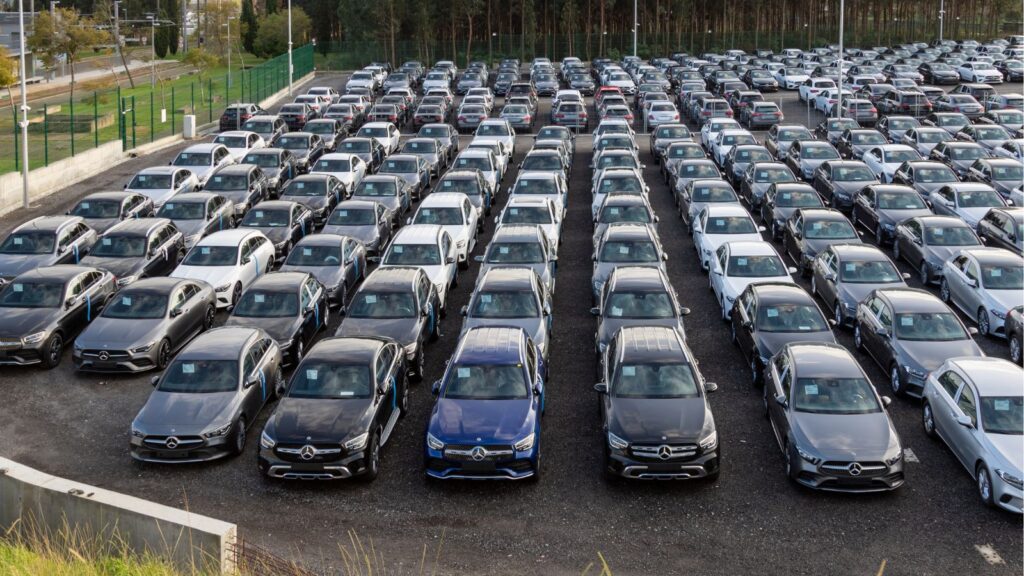
Mercedes-Benz has warned that worsening conditions in China are weighing heavily on its performance.
The German luxury carmaker has taken a direct financial hit of €1.392 billion (R26.5 billion) in the first half of 2026 due to competition from local manufacturers and weakening consumer demand for its vehicles.
The company’s Interim Report for the second quarter of 2026 shows that China has become one of its biggest challenges.
The brand has experienced a sharp decline in sales, major write-downs on investments, and losses from joint ventures, which have forced it to lower expectations for its passenger car business this year.
Mercedes-Benz said the premium vehicle market in China remains under severe pressure, particularly for established international brands facing increasingly aggressive local competitors.
“The market situation in the premium and luxury segment in China remained strained, with foreign manufacturers in particular experiencing significant decreases in unit sales,” the company said.
“In the Chinese premium and luxury segment, the ongoing intense price competition, especially by local manufacturers, is expected to lead to significantly weaker development of unit sales for many foreign manufacturers.”
This has resulted in steep declines in Mercedes-Benz vehicle sales. Passenger car deliveries in China dropped 30% in the second quarter to 98,624 units, while first-half sales fell 28% to 210,245 vehicles.
The company said the slowdown affected every part of its passenger car lineup. “In China, Mercedes-Benz Cars unit sales decreased across all product categories amid intense competition, cautious consumer sentiment and ongoing model changes.”
For the first six months of the year, it added that sales were again impacted by intense competition and subdued consumer sentiment in China, as well as by the effects of model changes.
Its commercial van business also suffered significant setbacks. Van sales in China plunged 70% during the second quarter and were down 77% over the first half of the year.
| Q2 2026 (R) | H1 2026 (R) | |
|---|---|---|
| Special Impairments on Equity Investments | €752 million (R14.35 billion) | €752 million (R14.35 billion) |
| Risk Provision (smart) | €92 million (~R1.76 billion) | €92 million (R1.76 billion) |
| Subtotal: Special China EBIT Adjustment | €844 million (R16.10 billion) | €844 million (R16.10 billion) |
| BBAC Pro-Rata Share of Net Loss | -€560 million (-R10.68 billion) | -€445 million (-R8.49 billion) |
| BAIC Motor Pro-Rata Share of Net Loss | -€55 million (-R1.05 billion) | -€103 million (-R1.97 billion) |
| Subtotal: Operating At-Equity Net Losses | -€615 million (-R11.73 billion) | -€548 million (-R10.46 billion) |
| Combined Direct China Financial Burden | €1,459 billion (R27.84 billion) | €1,392 billion (R26.56 billion) |
Financial blow
The deterioration in China’s market also had a major impact on the company’s finances.
Mercedes-Benz recorded €752 million in impairment charges related to Chinese equity-method investments during the second quarter, alongside a further €92 million risk provision linked to a financing commitment involving smart.
In total, these special adjustments amounted to €844 million. The company also recorded substantial operating losses from its Chinese joint ventures.
Its share of earnings from Beijing Benz Automotive Co. (BBAC) resulted in a €445 million loss in the first half of the year, including a €560 million loss in the second quarter. Its investment in BAIC Motor contributed a further €103 million loss for the first six months.
Combined, the operating losses and special charges amounted to a direct financial burden of approximately €1.392 billion during the first half of 2026.
As a result, Mercedes-Benz has lowered its outlook for passenger car sales this year.
“Due in particular to the negative development of the Chinese market, Mercedes-Benz Cars’ unit sales are now expected to be slightly below the previous year’s level,” it said.
Despite the challenges in China, other parts of the business continued to perform strongly.
Mercedes-Benz Vans delivered solid growth, with revenue rising 5% in the second quarter to €4.455 billion.
Earnings before interest and tax (EBIT) jumped 83% to €502 million, supported by robust global demand for larger commercial vans such as the Sprinter and eSprinter, whose sales increased 15%.
The Financial Services division also posted a strong performance. Second-quarter EBIT climbed 92% to €475 million as improved credit quality and higher portfolio margins boosted profitability.
Mercedes-Benz’s electric vehicle business continued to expand despite the broader market challenges.
Global sales of battery electric passenger cars increased 51% in the second quarter to 52,852 units and were up 28% over the first half of the year.
Electrified van sales also rose 46%, prompting the company to increase its forecast for the share of electrified vehicles in total passenger car sales during 2026.
Regional performance outside China was considerably stronger. Passenger car sales increased 13% in North America during the second quarter.
It also noted a 10% growth in the United States, while European sales rose 4%, with Germany recording 6% growth.
Mercedes-Benz also continued returning cash to shareholders, paying a dividend of €3.50 per share in April and completing a €2.092 billion share buyback program covering 38 million shares.
The board said it plans to launch another share buyback program worth up to €1 billion before the company’s 2027 annual general meeting.
| Q2 2026 (R) | H1 2026 (R) | |
|---|---|---|
| Group Revenue | €32.061 billion (R611.7 billion) | €63.66 billion (R1.21 trillion) |
| Group EBIT | €1.547 billion (R29.5 billion) | €3.451 billion (R65.8 billion) |
| Adjusted EBIT | €2.299 billion (R43.9 billion) | €4.072 billion (R77.7 billion) |
| Net Profit | €1.086 billion (R20.7 billion) | €2.519 billion (R48.1 billion) |
| Industrial Free Cash Flow | €1.102 billion (R21.0 billion) | €2.959 billion (R56.5 billion) |
| Industrial Net Liquidity | €30.434 billion (R580.7 billion) | €30.434 billion (R580.7 billion) |













 Loading ...