

R13 per litre pain on the cards for South Africa


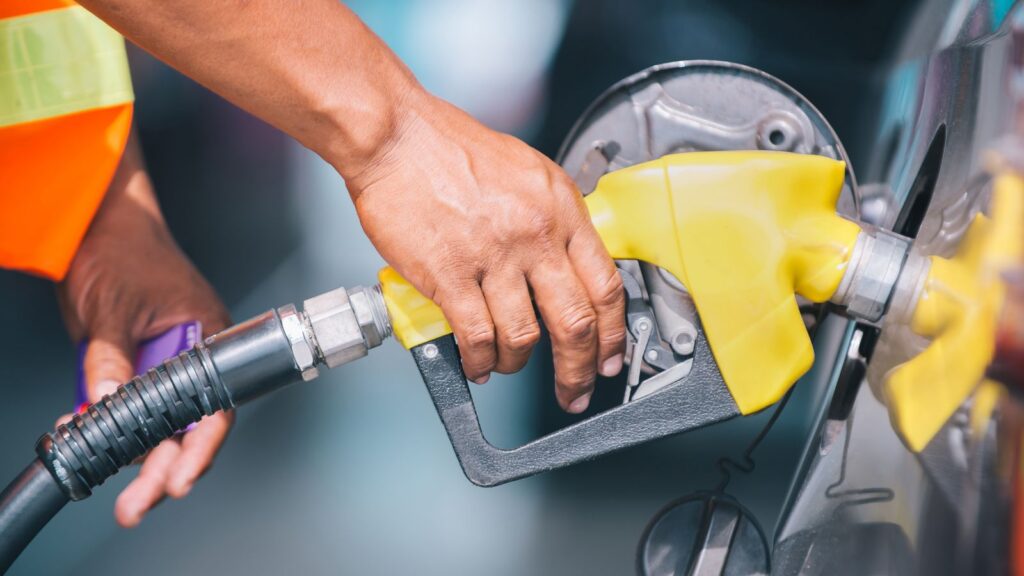
While South African motorists will welcome a surprise cut in petrol prices this week, the September review period has already started, and prospects are bleak.
According to early data from the Central Energy Fund (CEF), looking ahead to next month, motorists are already facing steep under-recoveries in both petrol and diesel prices.
Petrol prices are showing an under-recovery of around R1.00 per litre, while diesel is facing another massive under-recovery of around R5.00 per litre.
If carried through to the end of the month, these under recoveries could push petrol prices to almost R6.50 per litre higher than before the US-Iran War, with diesel prices over R13 per litre higher.
The final pricing for September will be based on the recovery data from 31 July to 28 August, leaving ample room for changes to still occur.
For example, the August review period began with a large over-recovery at the start of July, but this disappeared by the end of the month, flattening for petrol and sinking into an under-recovery for diesel.
As the September review period has just started, a similar shift could occur, depending on the broader global market.
However, starting on the back foot means motorists really need good news and positive global developments to reverse the trend. At this stage, this is highly uncertain.
These are the recoveries at the start of the month.
- Petrol 93: increase of R0.90 per litre
- Petrol 95: increase of R1.01 per litre
- Diesel 0.05% (wholesale): increase of R4.84 per litre
- Diesel 0.005% (wholesale): increase of R4.96 per litre
- Illuminating paraffin: increase of R3.94 per litre

Should the early under-recoveries carry through to the end of the month, the cut to petrol prices in August, thanks to the balancing of the slate levy, would be undone.
Not only that, it would again widen the gap between pre-war and post-war fuel prices—something that has also happened with diesel.
Fuel prices rose sharply after the war broke out at the end of February, with petrol rising by R6.53 per litre between March and May and diesel rising by R13.43 per litre.
June brought some relief for diesel, with wholesale prices cut by R2.62 per litre, but petrol prices jumped by another R1.43 per litre as Treasury relief ended.
July was the first month with cuts for both petrol and diesel, despite the Treasury relief ending completely, bringing prices down by R1.96 and R3.59 per litre, respectively.
August saw petrol prices come down by another 52 cents, but diesel went the opposite direction, climbing by R1.23 per litre.
Petrol prices are now R5.48 per litre higher than before the war, with diesel R8.45 per litre higher.
If the early projections for September hold, prices will jump to R6.49 per litre for petrol and R13.41 per litre for diesel, respectively.
Post-Iran War price adjustments
| Month | Petrol 95 | Diesel 0.005% |
|---|---|---|
| March | +R0.20 | +R0.65 |
| April | +R3.06 | +R7.51 |
| May | +R3.27 | +R5.27 |
| June | +R1.43 | -R2.62 |
| July | -R1.96 | -R3.59 |
| August | -R0.52 | +R1.23 |
| Total difference | +R5.48 | +R8.45 |
| September (current recovery) | +R1.01 | +R4.96 |
| Projected difference | +R6.49 | +R13.41 |
Oil prices will determine the path forward

The large under-recovery at the start of the month reflects the continued uncertainty surrounding the US-Iran War in the Middle East, as well as slowed shipments of oil through the Strait of Hormuz.
The war re-ignited in mid-July, causing oil prices to surge after a brief period of recovery.
Oil prices had dropped to near-pre-war levels of $70 at the start of July, then rapidly climbed to $100 a barrel as peace negotiations between the warring nations collapsed.
Prices recovered to around $83 a barrel by month-end, though markets remained uncertain about a permanent end to the conflict.
As things stand, observable traffic transiting the Strait of Hormuz remains a trickle, while attacks on vessels and Iranian threats heighten safety concerns for shipowners and crews, Bloomberg reported.
Still, crude is exiting the Persian Gulf, mostly on tankers that have switched off their transponders, while empty vessels are transiting in the dark.
This is dampening the extremes of the initial outbreak of war and keeping oil prices relatively contained.
Nevertheless, the surge in global oil prices is causing the biggest under-recovery at the start of the month, with the rand’s contribution also negative, but flat.
The rand, which has remained resilient throughout the war, has stuck to a narrow range above R16 to the dollar. It had been trading under R16/$ before the war.
It pushed toward R17 to the dollar as the war reignited and after markets recalibrated following the South African Reserve Bank’s surprise decision to hold interest rates, but has since settled back to around R16.50/$.
















 Loading ...