

Backed by Harmony, South Africa’s Next Big Start-up Could Be Sitting in a University Classroom


South Africa’s youth unemployment crisis is well documented, but a growing movement on university campuses suggests the country’s next generation is choosing to build businesses instead of waiting for jobs.
At this year’s Enactus South Africa National Exposition, with headline sponsor mining giant Harmony Gold Mining Company Limited (Harmony), students unveiled enterprises tackling everything from food security and healthcare to artificial intelligence, education and agriculture, proving that innovation is becoming one of the country’s most valuable economic assets.

For two decades, Harmony has partnered with Enactus South Africa to help develop the next generation of entrepreneurs, innovators and business leaders.
That commitment was on full display at the 2026 Enactus South Africa National Exposition, where university students from across the country showcased businesses designed to tackle some of South Africa’s most pressing challenges.
The annual competition has evolved into more than a student showcase.
It has become a launchpad for commercially viable businesses that address real-world problems while creating employment opportunities.
Among this year’s standout innovations were AI-powered education platforms, digital health solutions, smart agriculture technologies and community safety applications.
Projects such as SkillFinder AI, which transforms printed material into interactive study resources, Access Learning, which converts study material into audio and Braille, and Maatla, a platform connecting chronic patients to nurses within seconds, demonstrate how South African students are applying technology to solve pressing national challenges.

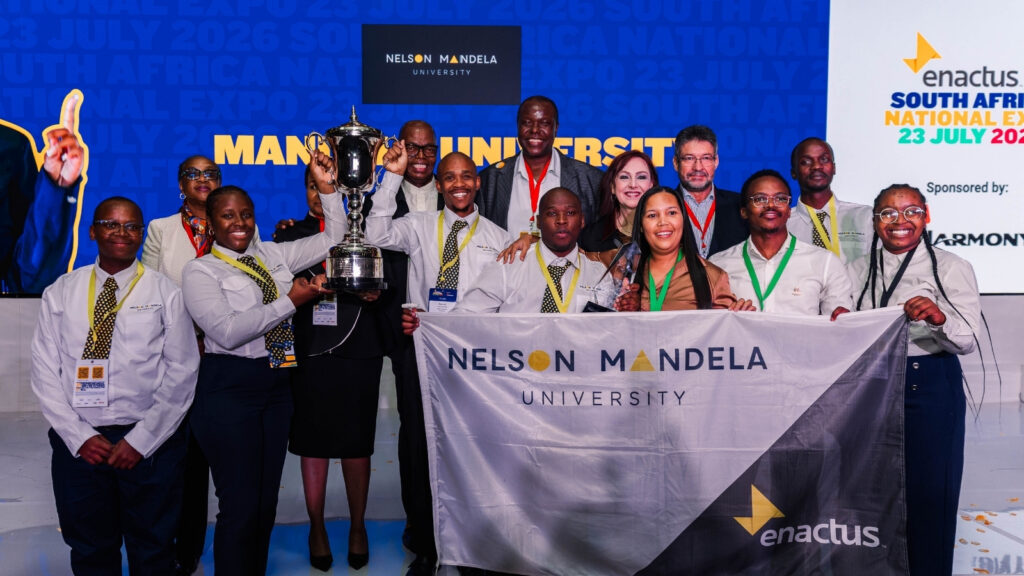
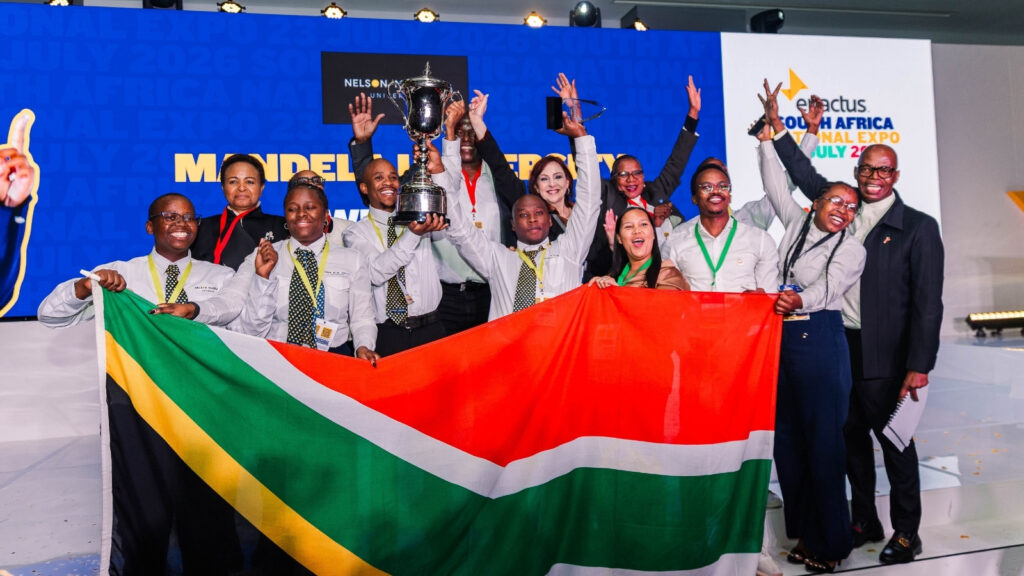
The competition culminated in Nelson Mandela University being crowned the 2026 Enactus South Africa National Champion.
Its enterprise, Batho Pele BioLoop Africa, impressed judges with a circular economy model that combines solar-powered smart farming, food waste recycling, hydroponic vegetable production and sustainable animal feed generation.
Beyond its environmental impact, the venture creates opportunities for young entrepreneurs to establish profitable farming businesses.
Corporate investment is playing an important role in helping these ideas move beyond the classroom.
Harmony views youth entrepreneurship as a strategic investment rather than a corporate social responsibility exercise.
The mining company says supporting education, entrepreneurship and skills development is central to building long-term economic inclusion and sustainable communities.
“At Harmony, youth development is not viewed as charity. It is a strategic investment in the future of our country,” said Dr Mashego Mashego, Executive: Corporate Affairs at Harmony.
As part of that commitment, Harmony sponsored the 2026 Food & Health Security, Employability & Entrepreneurship Enactus Challenge, encouraging university students to develop sustainable businesses addressing food insecurity and unemployment.
This year, 128 student teams entered the challenge, with ten enterprises receiving implementation grants before six finalists competed for top honours.
The winning enterprises reflected South Africa’s growing appetite for technology-enabled agriculture and food innovation.
University of Venda’s NotshiHive took first place with an integrated pollination and biological crop protection service, while Cape Peninsula University of Technology’s Thuma Mina Mfundi developed a mobile platform that allows students to pre-order affordable meals while creating delivery income opportunities for fellow students.
What makes initiatives like Enactus increasingly relevant is their focus on turning academic knowledge into scalable businesses.
Instead of preparing graduates only for employment, universities are equipping students to become employers.
For South Africa’s digital economy, that distinction matters.
The country’s future competitiveness will depend not only on producing graduates with technical skills but also on cultivating founders capable of building companies that solve African problems at scale.
If this year’s Enactus finalists are any indication, the next wave of South African start-ups may not emerge from corporate incubators or Silicon Valley-inspired accelerators.
They may already be taking shape in university lecture halls, student residences and campus laboratories—built by young people determined to create opportunities where none exist.


















 Loading ...