

The world is changing – so should your postgraduate degree



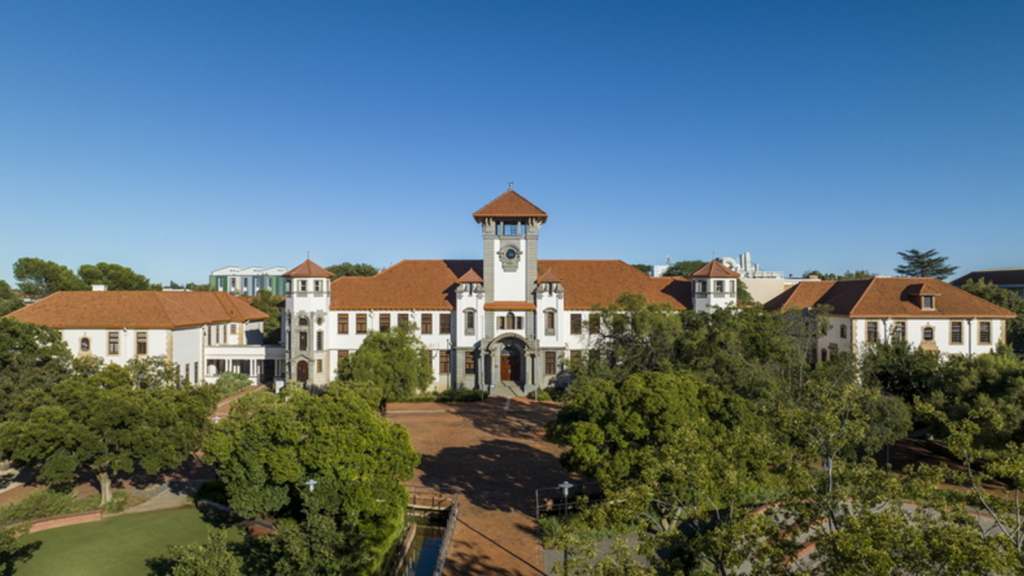
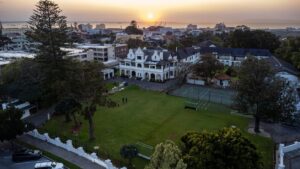
In 1904, six Humanities students walked through the doors of Grey University College in Bloemfontein.
They were the beginning of what would become the University of the Free State.
Today, the university of the Free State is home to 38,438 students across three campuses, supported by 250 NRF-rated researchers, 161 postdoctoral fellows and 88 active patents.
It has more than 120 years of history behind it, but its purpose is firmly rooted in the future.
Because age alone is not an achievement. What matters is what a university does with its legacy.
And the future is arriving quickly.
- By 2030, employers expect 39% of workers’ core skills to change.
- The years from 2015 to 2025 were the 11 hottest on record.
- UNESCO projects a global shortage of 44 million primary and secondary teachers, including 15 million in sub-Saharan Africa.
- By 2050, almost seven out of every ten people may live in urban areas.
These figures are not distant or abstract.
They are a teacher trying to reach an overcrowded classroom. A farmer watching familiar rainfall patterns disappear.
A family living where the next flood may come. A community waiting for clean water. A young person preparing for a job that may not yet exist.
That is why postgraduate study can no longer be only about adding another qualification to your name.
It must deepen your ability to understand change, lead through it and build something better.
Across the world, advanced knowledge is already transforming ordinary lives.
Rwanda turned drones into emergency lifelines, using them to deliver blood and essential medical products to hospitals difficult to reach by road.
The Netherlands combines flood protection, freshwater security and climate-conscious spatial planning through its national Delta Programme.
These successes did not come from one discipline working alone; they came from specialists in technology, health, planning, environmental science, public administration and research working together.
At the University of the Free State, that future is not merely discussed. It is being researched, tested and built.
Near Brandfort, the university has launched a first-of-its-kind giraffe research facility, where scientists, students and conservation partners are advancing knowledge in genetics, physiology, reproductive biology and wildlife conservation.
The work brings together expertise from several University of the Free State departments and creates new possibilities for protecting the world’s tallest land mammal.
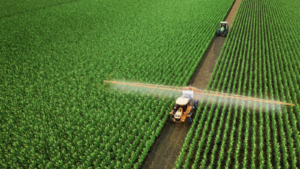
At Paradys Experimental Farm, students encounter precision agriculture through a DJI Agras T40 drone that can survey, map, spray and spread agricultural inputs.
In the Department of Geology’s MAGIC Lab, another drone captures high-resolution imagery and builds three-dimensional models of the earth’s surface, with approval to operate up to two kilometres beyond the pilot’s visual line of sight and survey almost 400 hectares in one flight.
And in mathematics, University of the Free State Professor Abdon Atangana was recognised by Research.com as the top mathematics scientist in Africa in its 2026 ranking.
His work in applied mathematics and scientific modelling shows that globally significant knowledge is not something that only happens elsewhere. It is being produced here, in the Free State.
Choose the question that will not leave you alone
Perhaps your question begins in a classroom: How do we help every learner understand, belong and thrive?
The Faculty of Education offers a BEd Honours specialisation in Psychology of Education, together with Master’s and PhD opportunities in Psychology of Education, Community Psychology, Natural Science Education, Science and Technology Education, Mathematics Education, Social Sciences Education, Language Education and Curriculum Studies.
These research-driven programmes prepare education professionals for specialist, leadership, research and academic roles.
Perhaps your question concerns the workplace, the economy or the quality of public leadership.
Postgraduate opportunities in Economic and Management Sciences include Industrial Psychology, Administration, Economics, and Public Administration and Management, at Master’s and doctoral levels where applicable, alongside postgraduate Master’s opportunities through the University of the Free State Business School.
These fields matter in organisations that must manage technological disruption, lead diverse teams, build ethical institutions and serve communities more effectively.
Perhaps your question is deeply human:
“Who supports the learner who carries hunger, violence, grief or family instability into the classroom?”
“Who preserves language, memory and the lessons history leaves behind?”
The Faculty of the Humanities offers the Master of Social Work in School Social Work, the BA Honours with specialisation in Hebrew, and the Structured MA with specialisation in History.
These programmes connect advanced research with learner well-being, textual and linguistic scholarship, translation, heritage, education, public debate and the preservation of knowledge.
Perhaps your question begins with sight.
At least 2.2 billion people worldwide live with near or distance vision impairment, and at least one billion of those cases could have been prevented or remain unaddressed.
The Master of Optometry at the University of the Free State develops advanced clinical expertise and research capacity for professionals who want to contribute to stronger eye-care services and leadership in optometry and related health sciences.
Or perhaps your future lies where land, life, cities, science and technology meet.
The University of the Free State postgraduate opportunities span:
- Architecture and building sciences
- Human settlements, urban and regional planning, spatial planning and land or property development
- Agrometeorology and climate science
- Integrated water, irrigation and disaster management
- Geography, geology, mineral resources and soil science
- Environmental management, conservation, wildlife and grassland sciences
- Consumer science, agriculture, sustainable agriculture and agricultural economics
- Plant pathology, botany, zoology, entomology, microbiology and biological sciences
- Computer and information systems, mathematics and statistics, nanoscience, chemistry and physics.
Depending on the discipline, opportunities are available at Honours, Postgraduate Diploma, Master’s and doctoral levels.
These fields prepare graduates for work in food security, conservation, climate services, mining, biotechnology, GIS, data science, renewable energy, research, government, municipalities and entrepreneurship.
Why the University of the Free State?
Because postgraduate students need more than a place to register.
The University of the Free State postgraduate students can access research-development support in academic writing, research methods, information management, ethics, project management, intellectual property and career development.
They are mentored and supervised by academics committed to helping new researchers build both competence and confidence.
And because, in the spirit of Ubuntu, knowledge should never end with the person who earns the degree.
Knowledge should return to the classroom, the farm, the hospital, the workplace, the archive, the municipality and the community. It should help another human being stand taller.
Nelson Mandela reminded us:
“Education is the most powerful weapon which you can use to change the world.”
Your postgraduate qualification can advance your career.
At its best, it can also improve a school, strengthen an organisation, protect a species, redesign a city, restore a water system or open possibilities for people you may never meet.
So perhaps the most important question is not simply:
“What should I study next?”
It is:
“What do I want my knowledge to change?”
Choose your next level. Choose knowledge with purpose. Choose University of the Free State.
Click here to apply to study at UFS.
Application information
Applications for 2027 are open, and applying to UFS is free.
Education postgraduate applications close on 30 September 2026.
Some programmes have earlier deadlines, including 15 September 2026 for dissertation-based Master’s and doctoral applications in Natural and Agricultural Sciences.
Closing dates and admission requirements differ by faculty and programme, so applicants should consult the official UFS postgraduate prospectus and closing-date schedule before applying.













 Loading ...