

Petrol Is Becoming a Second Car Payment


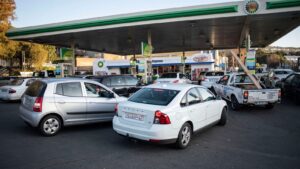
In July 2026, inland 95 petrol cost R26.10 a litre. Filling a 50-litre tank cost about R1,305.
For a motorist filling up twice a month, that works out to roughly R2,610. A third tank pushes the petrol bill close to R4,000.
For many South African households, petrol is no longer a minor motoring expense. It has become one of the largest monthly costs associated with owning a car.
The pressure has been building for some time. By June 2026, petrol prices were 31.7% higher than a year earlier, while transport inflation had reached 12.7%.
Taxi fares, e-hailing services, long-distance travel and school transport costs also increased, placing additional pressure on household budgets.
As a result, many motorists are starting to view petrol differently. Instead of treating it as a routine running cost, it is becoming a key factor in decisions about commuting, car ownership and household budgeting.
The monthly commute matters more than ever
South African cities are often built around long daily commutes.
Whether travelling from Pretoria to Johannesburg, the East Rand to Sandton, or the northern suburbs into Cape Town, many motorists can easily cover more than 1,000 kilometres a month before weekend activities, school runs and family obligations are added.
This is where petrol consumption starts to make a noticeable difference.
At R26.10 a litre, a car using 5.5 litres per 100 kilometres over a distance of 2,000 kilometres would consume approximately R2,871 in petrol each month. A car using 8.5 litres per 100 kilometres would cost about R4,437 over the same distance.
In an environment where petrol prices were 31.7% higher in June 2026 than a year earlier, even relatively small differences in petrol consumption can have a significant impact on household finances.
For many motorists, petrol efficiency is becoming just as important as the monthly instalment when comparing cars.
Features and styling still matter, but the long-term cost of keeping a car on the road is receiving closer attention than ever before.
A car that uses less petrol may not only save money at today’s prices, but can also help cushion households against future petrol price increases.
Why petrol is still difficult to budget for
Households can reduce unnecessary trips, choose a more efficient car and plan routes more carefully. The one thing they cannot control is the price of petrol itself.
South African petrol prices are influenced by international oil prices, shipping costs, the rand-dollar exchange rate and government levies.
While motorists benefited from a R1.96 per litre reduction in the inland price of 95 petrol in July 2026, recent months have demonstrated how quickly petrol costs can move in either direction.
This uncertainty makes budgeting difficult. A household may maintain the same commuting pattern from one month to the next and still find that its petrol spend changes significantly.
As a result, many families are focusing less on trying to predict petrol prices and more on controlling the factors that are within their influence.
Families are finding different ways to reduce transport costs
For some households, the biggest savings come from driving fewer kilometres.
A shared school lift can remove multiple trips each week. Consolidating errands into a single shopping trip can reduce petrol consumption.
Where flexible work arrangements are available, spending even one or two days a week working from home can have a meaningful impact on monthly transport costs.
The role of the second family car is also receiving renewed attention.
When a car spends most of its time parked, its petrol, insurance, licensing and maintenance costs continue to accumulate. In some cases, households may find that one frequently used car delivers better value than two lightly used cars.
When replacement time arrives, petrol consumption often becomes a more prominent consideration than it was a few years ago. A car that uses several litres less petrol per 100 kilometres can deliver substantial savings over its lifespan.
Looking beyond petrol for savings
While motorists cannot control the price at the petrol pump, they can evaluate other household expenses that affect their monthly budget.
The challenge for many households is that rising petrol costs rarely occur in isolation.
A family spending an additional R1,000 to R2,000 a month on petrol still needs to absorb increases in other transport-related expenses and everyday necessities like groceries.
That is why many consumers are taking a broader view of household finances rather than focusing only on the cost of filling a tank.
Some insurers have responded by incorporating additional value-added benefits that help policyholders manage everyday household costs.
Prime South Africa policyholders, for example, have access to Prime Advantage, a separately administered membership programme that includes discounts on selected grocery essentials from participating retailers, together with qualifying lifestyle benefits.
Prime Advantage members can access discounts on 100 selected grocery essentials from Shoprite, Checkers, Pick n Pay and Dis-Chem, together with qualifying lifestyle benefits. These include potential grocery savings of up to R4,500 per month on selected items and 15% off on two Bolt rides per month*.
These benefits are designed to support expenses already present in a household budget rather than encourage additional spending.
Savings on everyday necessities can help create more room for other unavoidable expenses, including transport costs.
The objective is not to reduce petrol costs directly, but to help create savings elsewhere in the household budget.
For families managing multiple monthly expenses, savings on everyday essentials can help offset pressure created by rising transport costs.
Similarly, greater cost certainty can be valuable in other areas of car ownership.
With Prime Comprehensive car insurance, premiums remain fixed for 24 months when the policyholder remains claim-free and no material policy, car, cover or risk-profile changes occur.
Policyholders who select the reducing basic excess option can also see their excess reduce over time, subject to policy terms and conditions.
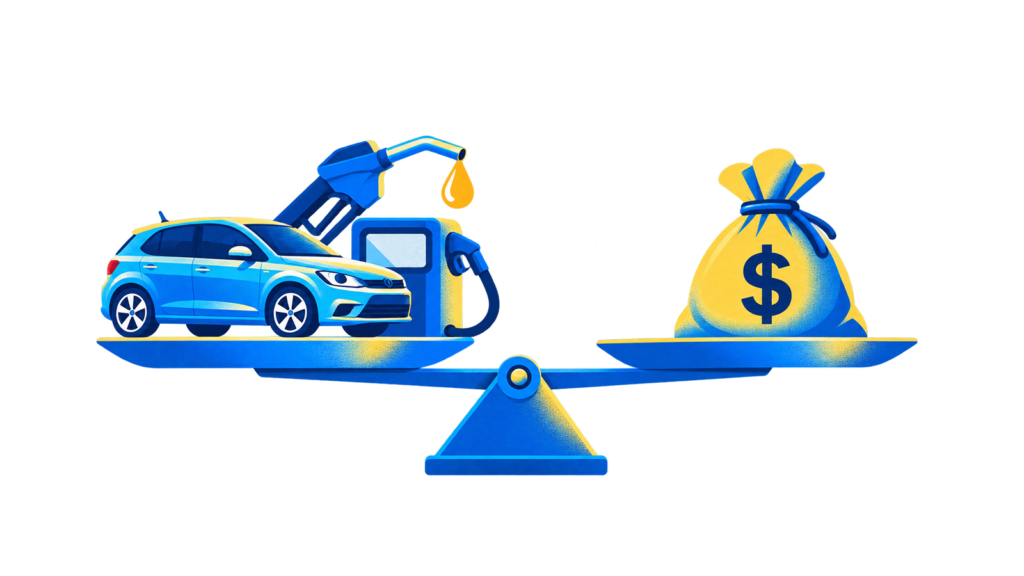
Start with the kilometres
When assessing the true cost of car ownership, the best place to start is often the distance driven each month.
Add together the daily commute, school runs, shopping trips, family commitments and weekend travel. Then calculate petrol consumption using realistic driving conditions and current petrol prices.
Many motorists are surprised by the result.
For growing numbers of South African households, petrol already costs several thousand rand each month before insurance, maintenance or car finance instalments are considered.
Understanding that number can influence everything from car choice to commuting habits and household budgeting.
In an environment where costs continue to rise, knowing what a kilometre really costs you may be more important than ever.
Click here to learn more about Prime South Africa.
Disclaimer
This article provides general information about petrol and car ownership costs in South Africa.
Actual costs depend on petrol prices, driving habits, travel distance and the car selected.
Insurance benefits underwritten by Santam Structured Insurance Ltd, a licensed non-life insurer and authorised FSP 1027.
Prime South Africa is an authorised FSP 41040. Prime Advantage is a non-insurance benefit and administered by Advantage Rewards.
Savings based on monthly reward allowance.
T&C’s apply.
















 Loading ...