

Record high petrol prices or pay higher taxes – Godongwana says you must pick one


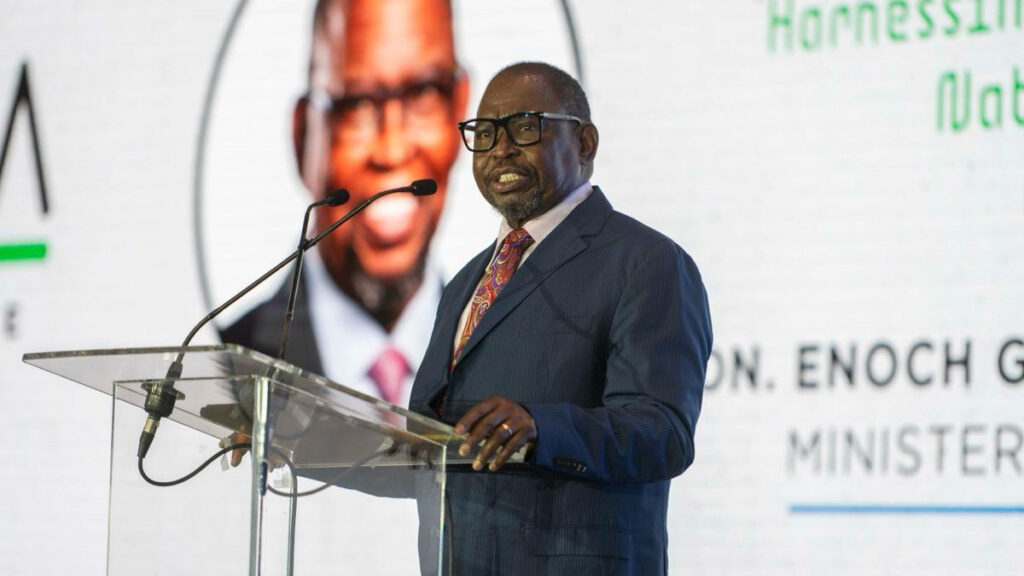
Finance Minister Enoch Godongwana says the government cannot insulate consumers from rising fuel prices and that any interventions by the Treasury will ultimately hit taxpayers or the economy harder.
Responding to Parliamentary Q&A about rising global oil prices and their impact on petrol and diesel prices, Godongwana said there is little to no room for Treasury to manoeuvre.
He noted that the government had already stepped in to shield consumers from rising prices in April and May, but there is no permanent solution at hand.
“Permanently offsetting these increases through the budget would ultimately shift the cost to taxpayers or increase government borrowing,” he said. “Fiscal policy, therefore, involves trade-offs.”
Apropos, while the National Treasury cut R3.00 per litre from petrol prices through a temporary tax cut in April and May 2026, these taxes were added back into the price in June and July.
The estimated cost of the temporary fuel levy relief from April to June 2026 was R17.2 billion in foregone tax revenue—money which will have to be recovered to ensure the budget balances.
At the time, Godongwana noted that the shortfall would be funded through a combination of higher-than-expected tax revenue and underspending by government departments.
However, now in September, the minister reminded consumers that the same trade-offs need to be considered.
He said that for the government to provide additional relief to consumers now, the cost would have to be weighed against the impact on other spending priorities, taxation, and government borrowing.
“Any further intervention would need to balance immediate relief to households and businesses against the severity and duration of the shock and available fiscal space, while preserving fiscal sustainability,” he said.
While this doesn’t rule out future intervention, the minister made it clear that the budget isn’t geared towards just addressing this one issue.
Government can’t permanently step in

Godongwana stressed that fiscal policy—managed by the National Treasury—is meant to support sustainable public finances, debt stabilisation, and measures to promote economic growth.
“Responding to cost-of-living pressures arising from external shocks is therefore part of a broader whole-of-government programme and depends on the effective implementation of these measures,” he said.
He noted that reducing poverty and tackling the high cost of living are part of the government’s Medium-Term Development Plan 2024–2029.
But this focuses on measures to protect vulnerable households, improve access to affordable basic services, and review administered prices—such as electricity.
The review of administered prices would also include the fuel price formula, but this had already been announced in April.
At the time of the Treasury fuel tax relief in April, the Department of Mineral and Petroleum Resources announced that it was reviewing the local fuel price mechanism over the longer term.
The review will look at how industry margins are calculated in South Africa. This includes wholesale margins, retail margins, secondary storage, and secondary distribution.
However, this process is only expected to be completed by March 2027, leaving consumers to contend with price pressures in the meantime.
Data from the Central Energy Fund (CEF) for the first week of September already shows that South African motorists are facing a R2-per-litre hike at the pumps in October.
This would push prices to record highs—for the second time this year—feeding inflation and multiple price pressures across the board.
Godongwana said that the reality of South Africa’s situation is that the government cannot protect consumers from the shock.
“Government cannot fully insulate consumers from a sustained increase in international oil prices, particularly as South Africa is a net importer of crude oil and petroleum products,” he said.















 Loading ...