

SARS coming after a new target in South Africa


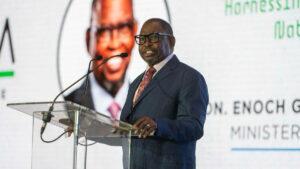
Finance Minister Enoch Godongwana says SARS is working to expand South Africa’s tax base, with the informal economy and taxi industry now key targets for improved tax compliance.
This was confirmed in a parliamentary Q&A, where the National Treasury was asked whether it was taking steps to bring more of the informal economy and taxi industry into the tax system.
The question comes amid growing pressure on South Africa’s formal taxpayers, who carry much of the country’s tax burden.
As a result, the government faces a shrinking pool of personal and corporate taxpayers in South Africa.
Godongwana said the National Treasury is responsible for setting tax policy, while the South African Revenue Service (SARS) is responsible for administering and enforcing tax laws.
To this end, he said the taxman was looking to new segments to sniff out potential taxpayers.
“SARS continues to broaden the tax base by improving registration, filing and payment, where tax compliance remains low. This includes the informal economy and the taxi industry,” he said.
The informal economy has specifically been identified by SARS as an area with significant potential for tax base expansion.
According to Godongwana, the revenue service is working to bring more informal businesses into the formal economy by helping them register, understand their tax obligations, submit returns and pay what they owe.
SARS is developing an Informal Economy Response Strategy, which aims to gradually formalise previously unregistered businesses.
The revenue service is also using third-party information, digital platforms and partnerships to identify taxpayers operating outside the formal tax system.
Godongwana added that efforts are underway to reduce barriers to compliance through simplified registration processes, digital services, and taxpayer education.
SARS is prioritising several sectors, including spaza shops, informal retailers, food services, personal services, construction businesses and digital micro-enterprises.
Godongwana said the strategy is already generating results.
Since the 2024/25 financial year, SARS data triggers have resulted in the registration of 21,890 previously unregistered taxpayers operating in the informal economy.
These taxpayers have contributed R314 million in additional revenue, with SARS planning to expand the programme further.
A priority target in South Africa

The taxi industry, including e-hailing operators, has also been singled out as a priority sector.
Godongwana said SARS is using risk assessments and available data to identify potentially unregistered or non-compliant taxi and e-hailing operators.
“Current interventions include the use of third-party and transactional data to identify potentially unregistered or non-compliant operators,” he said.
SARS is also conducting targeted compliance and enforcement campaigns while providing taxpayer education to participants in the sector.
Godongwana noted that SARS is also intensifying its fight against illicit financial flows and the broader illicit economy.
These activities include tax evasion, customs fraud, trade mispricing, money laundering, corruption and organised crime.
Godongwana said SARS is using an “intelligence-led” and “technology-enabled” approach to identify concealed economic activity and recover taxes and duties legally owed to the state.
The revenue service has increasingly turned to advanced analytics, artificial intelligence, third-party data, criminal investigations and customs interventions to strengthen enforcement.
During the 2024/25 financial year, SARS recorded 10,142 customs seizures worth R6.3 billion, conducted 281,330 customs inspections and completed 1,477 post-clearance audits.
It also collected R763.7 million through fuel and petroleum schemes, recovered R6.1 billion linked to VAT fraud and illicit gold trading, and disrupted diesel adulteration estimated to have caused a R3 billion loss to the fiscus.
Over five years, SARS has collected R20.1 billion in cash through illicit economy enforcement and prevented or recovered billions more through investigations, refund savings and detained goods.
“These results demonstrate that SARS’s work to curb illicit financial flows is active, coordinated and linked to direct revenue recovery,” Godongwana said.















 Loading ...