

South Africa bracing for bad news next week


While economists were nearly evenly split on whether the Reserve Bank will hike interest rates next week, the latest move by the US Federal Reserve has tipped the scales.
Economists have shifted from a 50/50 split on a 25 basis point hike or hold from the South African Reserve Bank, to an expectation of a hike.
This follows the US Federal Reserve opting to raise its interest rates by 25bp, to 3.75%-4.00%.
Chair Kevin Warsh’s third FOMC meeting saw the first interest rate increase since 2023, with the Fed hawkish on stubbornly high inflation.
Forecasts for a 25-basis-point interest rate hike in the US and South Africa have been building over the past few weeks, following the escalation of the conflict in the Middle East.
The conflict has sent oil prices surging to over $100 per barrel, approaching $110.
The main worry for central banks is that what was hoped to be a relatively short, contained war between the United States and Iran is now expanding and becoming entrenched.
This, in turn, is putting upward pressure on inflation—and the longer the conflict drags on, the worse the picture becomes.
Central banks, including the South African Reserve Bank (SARB), have limited options to contain the impact, with interest rate hikes the only real means to curb inflation.
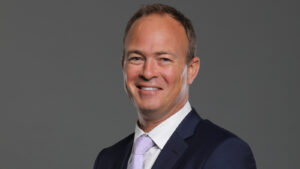
According to Investec Chief Economist, Annabel Bishop, markets were split on the SARB’s next rate move ahead of the Fed’s decision.
While the SARB’s Forward Rate Agreement curve showed an 85% chance of a 25bp interest rate hike at the Monetary Policy Committee’s September meeting, it was seen as just as likely that the hike would be pushed back.
A second 25bp interest rate hike for the year is fully factored in by year-end—markets were just contemplating when it would happen.
However, following the Fed’s move, the market split is now tilted towards a hike next week.
“For South Africa, the outcome bolsters the chance of an interest rate hike at next week’s MPC meeting, and we continue to expect a 25 bp lift,” Bishop said.
Inflation expected to rise

The SARB is navigating high levels of uncertainty in the market, with signals pushing from opposite ends.
On the one hand, inflation has been rising and, barring a small drop in July as fuel prices were cut, the trajectory is upward.
Inflation numbers for South Africa next week are expected to rise from 4.3% in July to 5.0% in August due to rising fuel prices.
Fuel prices rose again in September, and are expected to see another significant jump in October, meaning the pressure on prices is not going to subside.
However, while inflation is rising, inflation expectations—the long-term view from industry, consumers etc—are dropping, which signals to the Reserve Bank that prices are expected to cool.
While the expectation has now shifted to a likely 25bp bump, the SARB has surprised markets before.
After hiking interest rates at its May meeting, the SARB’s MPC opted to hold rates in July—against expectations—taking a wider ‘wait-and-see’ stance on the war and its second-round effects.
Bishop noted that another small interest rate hike at the September meeting would likely be seen by the SARB as reducing the need for larger and more severe interest rate hikes down the line.
However, she said the MPC makes decisions at its meetings, not beforehand.
“Much depends on the length of the current elevation in international oil and petroleum product prices on the escalation in the Middle East War, which is signalled to continue until November,” she said.
The MPC will meet next week and relay its decision on Wednesday, 23 September 2026. South Africa’s inflation data for August will be published on the same day.












 Loading ...