

Government land worth R58 million illegally transferred to private people, and half of South Africa’s universities should be shut down


The South African rand remained stable last week as investors shifted their focus to upcoming inflation data and the central bank’s monetary policy meeting, where the bank is widely expected to raise interest rates.
The currency has been supported by stable commodity prices following the U.S. Federal Reserve’s interest rate hike and its indication that further monetary tightening may be forthcoming.
Last week, the rand climbed back above R16 against the dollar as higher US interest rates and a hawkish Federal Reserve provided new support for the dollar.
The Fed raised rates by 25 basis points, bringing the target range to 4.00%- 4.25%, while Kevin Warsh hinted that further tightening could still be on the horizon.
Markets are now pricing in the possibility of another rate hike in 2026, which adds to the dollar’s attractiveness compared to emerging-market currencies.
Traders are eagerly awaiting the August consumer inflation data, set to be released on Wednesday, for insights into the South African Reserve Bank’s (SARB) interest rate plans.
Headline inflation cooled to 4.3% year-on-year in July, marking the first decrease in five months.
South Africa’s central bank surprised investors and economists by keeping its main lending rate unchanged at its previous meeting, and said that its policy was restrictive enough to bring inflation back to its target within two years.
On Monday, 21 September 2026, the rand was trading at R16.23 to the dollar, R21.72 to the pound, and R18.63 to the euro. Gold is trading at $4,355.52, while oil prices were at $101.6 a barrel.
5 important things happening in South Africa today
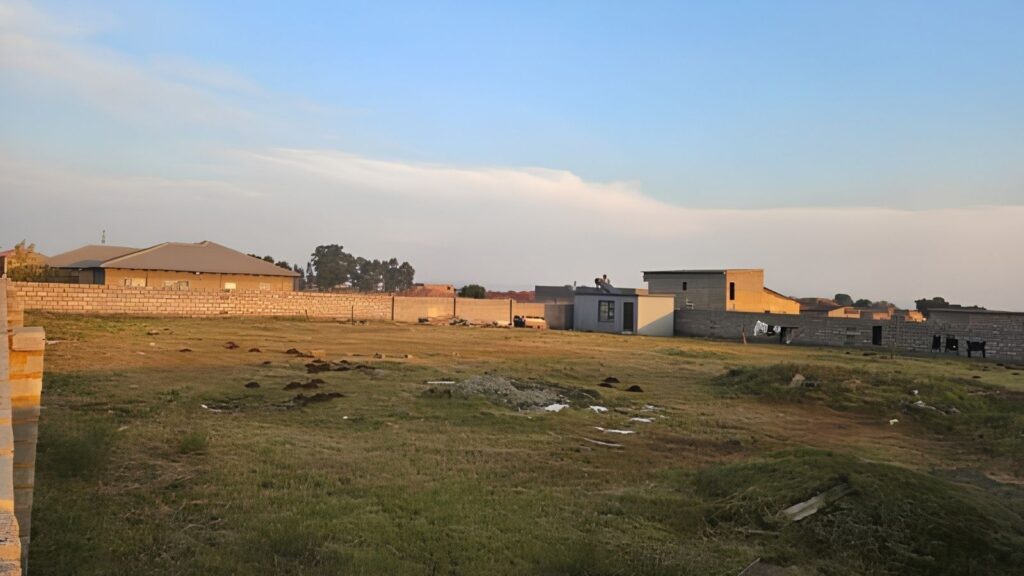
Land worth R58 million illegally transferred to private people: The Special Investigating Unit (SIU) found that 208 municipal plots in Villa Liza, Boksburg, valued at R58 million, were fraudulently transferred to private individuals between 2018 and 2022. [Newsday]
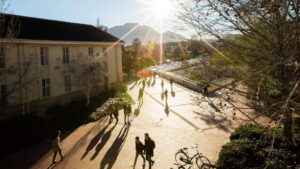
Half of South Africa’s universities should be shut down: As the nature of South Africa’s economy continues to adapt to modern trends, some have questioned whether the country’s education system is keeping pace. Efficient Group Chief Economist Dawie Roodt said many of the country’s universities should be closed or converted into skills development organisations. [Daily Investor]
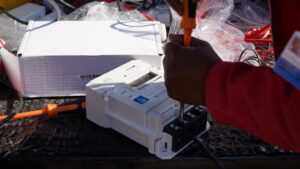
Cable thieves should be charged with treason: Cable thieves who destroy critical public infrastructure in South Africa should be charged with treason for costing the economy billions of rands every year. Wayne Duvenage, CEO of the Organisation Undoing Tax Abuse (OUTA), told MyBroadband that South Africa should enact new laws to prosecute and punish theft of electricity infrastructure. [MyBroadband]
New laws in South Africa to stop people from smoking in their cars: The South African government is working on new laws to ban the use of cigarettes in public spaces and areas where children and non-smokers can be exposed to the smoke, including cars and other forms of transport. [TopAuto]
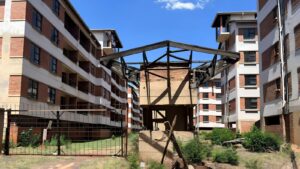
Eskom lost almost R1 billion building empty flats: Eskom spent almost R1 billion on a housing development near Kusile Power Station that was never completed and has never housed a single worker, leaving 366 flats empty and abandoned. [BusinessTech]










 Loading ...