

United States ambassador to South Africa hits back at Lamola and Ramaphosa


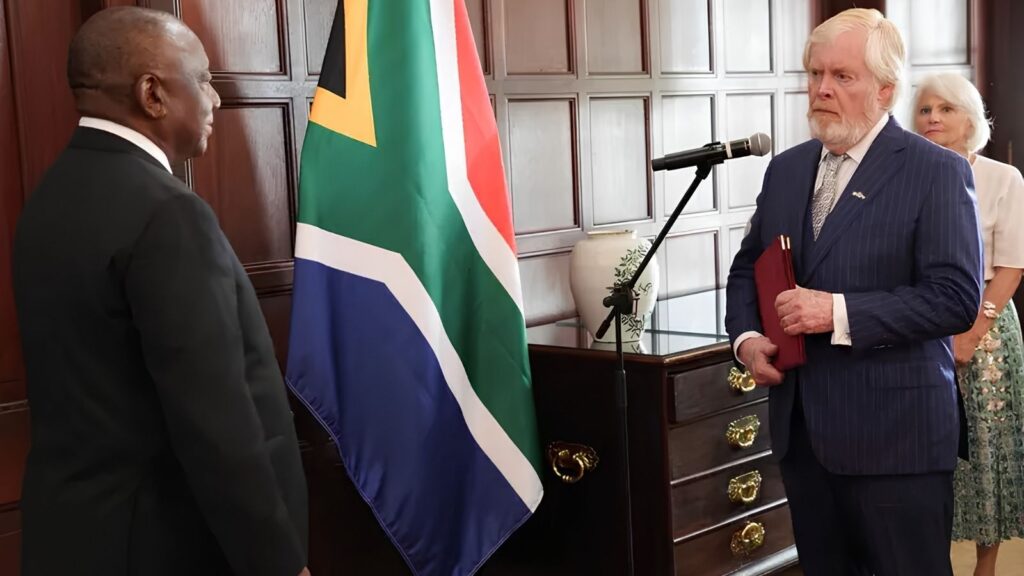
United States Ambassador to South Africa, Leo Brent Bozell, has hit back at Pretoria’s latest demarche, saying that Foreign Relations Minister Ronald Lamola is acting hypocritically.
Bozell was hit with his third demarche in South Africa last week, following an op-ed in which he criticised the South African government’s handling of five “asks” from the US to restore relations.
In the op-ed, he said the South African government was lying to the public about its handling of US relations and trying to spin it as an attack on the country’s sovereignty.
The Department of International Relations and Cooperation then ordered Bozell to Pretoria via demarche to explain himself, as later confirmed by the US embassy.
A demarche is a formal political and diplomatic response from one government to another, typically expressing protest. The ambassador revealed it was his third demarche this year.
Bozell faced his first demarche shortly after landing in South Africa in March, where he was called to answer for “undiplomatic remarks” about the ‘Kill the boer’ chant.
At the time, he said that he didn’t care what South Africa’s courts had ruled on the matter; he considered it hate speech. He later clarified that this was his personal view.
Speaking to Fox News, Bozell said he faced a second demarche soon after United States Secretary of State Marco Rubio imposed targeted visa restrictions on unnamed individuals in South Africa.
This, he said, was Pretoria questioning whether or not Lamola was on the list.
“Because he was about to get on an aeroplane. I told them, ‘I’m not going to tell you’. They wanted to know why, and I said because it was against the law – I can’t tell you who’s on the list,” Bozell said.
But it was the latest demarche that has now erupted into a very public war of words.
War of words
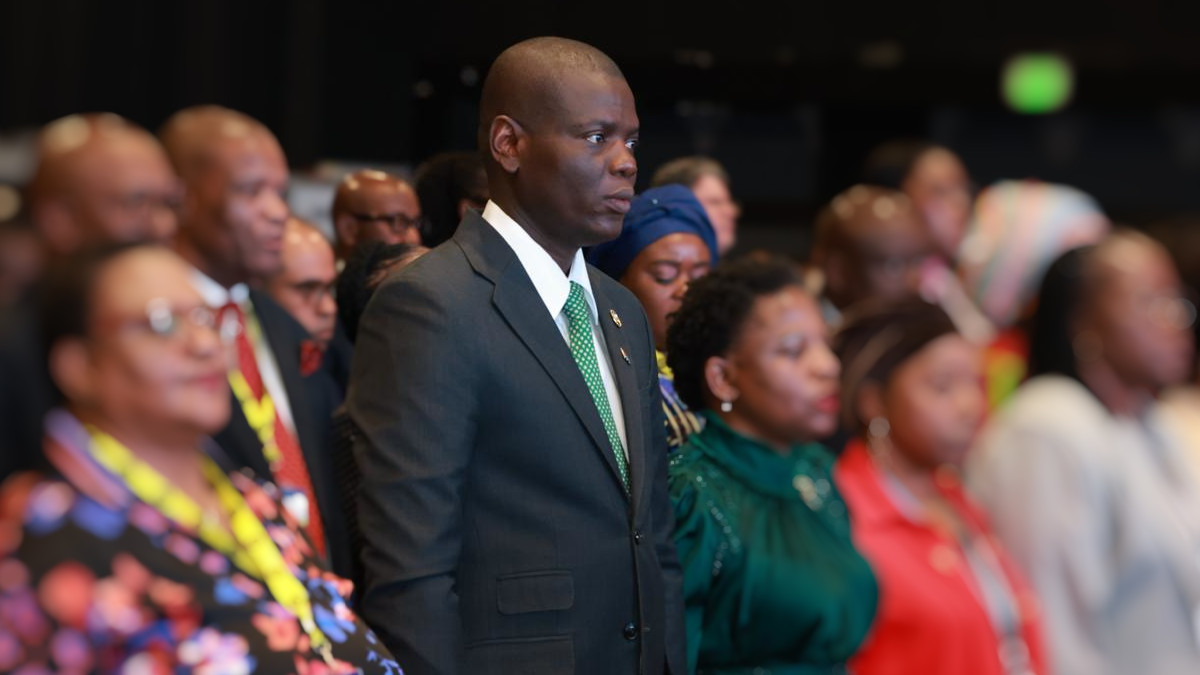
On top of being called to Pretoria to answer for his op-ed, Lamola publicly criticised Bozell for his “undiplomatic conduct”.
Speaking to the Sunday Times, the minister said Bozell should “get out of the kitchen” if he could not use proper diplomatic channels.
Lamola told the Sunday Times that he would continue to call out “wrong diplomatic conduct”, no matter the source.
He added that South Africa was being exceptionally forgiving, given that the United States had unilaterally expelled its former ambassador to the US, Ebrahim Rasool, without warning.
Lamola said the demarches were a clear indication that South Africa was committed to dialogue.
Bozell, however, took the comments as an insult.
“Here we go again. Another Minister Lamola personal insult aimed at an American leader—this time me—which, when denounced—which I’m doing now—will result in a demarche with a lecture about being “undiplomatic”,” he said.
“Then the South African government wonders why relations are collapsing.”
Speaking to Fox News, Bozell said Lamola’s comments were hypocritical, as the minister clearly had free rein to say what he wanted, even on American soil, even if Washington found it offensive.
“I want that conversation to stop. I don’t want to hear any more words about how an American diplomat or anyone else comports themselves when the foreign minister goes on American soil and insults the president of the United States, insults Secretary Rubio, and insults me,” Bozell said.
He said that President Cyril Ramaphosa has also said things which he considered offensive. He did not elaborate or provide any examples of the alleged insults from Lamola and Ramaphosa.
Lamola and Ramaphosa have publicly responded to the latest breakdown in relations by characterising the “asks” from Washington and the visa restrictions as an attack on South Africa’s sovereignty.
Lamola also led South Africa’s delegation at the United Nations General Assembly in New York, where he criticised the Trump administration’s policies.
Nevertheless, Bozell said that the two countries must work to “figure it out”. However, he said South Africa must do more.
“Temperatures can go up, but I want their (the South African government’s) temperature to go down too,” he said.
“We want this partnership; we want to figure this out. It’s good for South Africa, it’s good for the United States of America. Temperatures need to go down, and we have to figure it out.”
















 Loading ...