

Iconic retailer founded by two brothers is making a comeback in South Africa


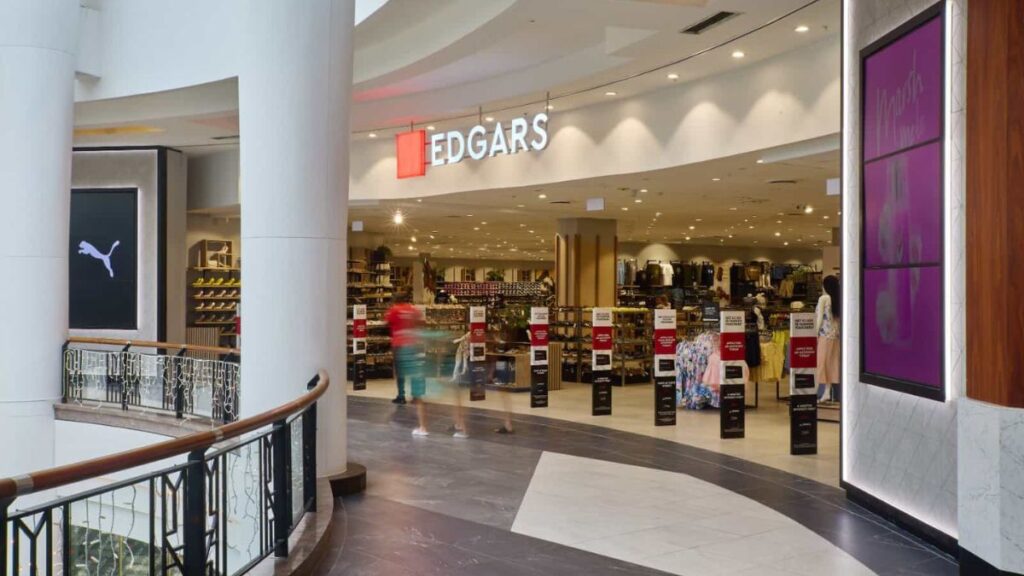
Edgars has recently undergone a revival after entering into voluntary business rescue, with plans to expand its footprint across South Africa.
Edgars has been part of South Africa’s fashion scene since 1929, when it was founded by brothers Morris and Eli Ross.
In recent years, the company struggled to stay afloat after being acquired by Bain Capital, an American private equity firm.
Following the acquisition, the business struggled with mounting debts and an increasingly competitive environment.
Edgars ultimately entered voluntary business rescue in 2020, as the COVID-19 pandemic added to its growing list of challenges.
The South African retailer was removed from business rescue later that year when the majority of its stores were acquired by Retailability, a Durban-based company.
Retailability spent years pursuing a turnaround at Edgars, eventually returning the brand to a strong position and planning for growth.
Retailability CEO Norman Drieselmann spoke to BusinessDayTV about the Edgars expansion project, which aims to add 50 stores to its South African footprint.
He said plans to grow the business had been successful so far, with all of its newly opened stores “hitting the business model targets we set.”
“The early indications are that we’ve got a model that customers are responding to,” he said. “They walk in, and it still feels like an Edgars store.”
Part of the strategy for new Edgars stores is to reduce their size to between 500 and 600 square metres to improve affordability.
Drieselmann said that, while the stores were now smaller, they still “had to feel like an Edgars” if the growth strategy was going to be successful.
“The sales numbers are telling us that we’re ticking the boxes in terms of what customers are expecting,” he said. “The strategy is working nicely so far.”
A competitive industry
While the clothing sector is a competitive market in South Africa, Drieselmann said Edgars is well positioned to gain market share.
“We’re in a fortunate position of being able to take market share across the board,” he said. “Our business is built on the back of fashion and beauty”.
He said that Edgars was also a late entrant into e-commerce, giving it a chance to continue growing in this industry to catch up with its competitors.
Another area in which market Edgars is involved is the cellular industry, but Drieselmann said it is difficult to compete with some of the other companies in this sector.
“Cellular is an interesting one for us, Drieselmann said. “It’s a massive game where you need a serious footprint.”
“It’s a commodity-led product, which is probably why the likes of Pepkor do so well based on their footprint and access to market.”
He said that Pepkor’s position in the cellular market was impressive and that his business couldn’t compete with them in this area.
“I can’t compete with them on that, every now and then just stand back and say ‘well done chaps, you’re really good at this,” he said.
The Pepkor group, comprising businesses such as Pep and Ackermans, has a massive footprint in South Africa, with 6,657 stores.
The group has a hand in the cellular market through the sale of physical devices and through FoneYam, which offers device rentals.
In its 2026 interim period, which ended on 31 March, FoneYam activated roughly 1.3 million accounts, bringing its client base to 2.4 million.
In Pep stores, the group sold 4.9 million cellular devices, while Ackermans sold 1.6 million, both increasing from the prior period.
The Pepkor group has increasingly sought to expand beyond traditional retail in recent years and has even received regulatory approval to provide banking services in South Africa.


















 Loading ...