

SA LTE speeds vs the world


OpenSignal recently released its June-August quarterly LTE report, which shows that South African LTE speeds are among the worst in the world.
The OpenSignal data is collected from real world consumer smartphones, and is recorded under conditions of normal usage.
“We don’t approximate the user experience, we directly measure it from the users of our smartphone applications,” said OpenSignal.
“Being located on consumer smartphones we are able to observe the network exactly as the user experiences it.”
Opensignal said that it is not interested in models, simulations or assumptions – their goal is to directly measure user experience through the eyes of the users themselves.
LTE speeds and coverage across the world
OpenSignal’s most recent data found that in some countries LTE has become a near ubiquitous technology – while in others, the technology is just starting to gain traction.
“In general we’re seeing both speeds and 4G availability creeping up across the globe as operators deploy new networks in new places and upgrade the networks they’ve already built,” OpenSignal said.
Getting a 20 Mbps connection is now commonplace in multiple countries as operators expand into new frequency bands and take advantage of new LTE-Advanced techniques.
According to OpenSignal’s data South Africa’s average LTE speed during the testing period was 8Mbps.
Vodacom provided an average LTE speed of 10Mbps, while MTN’s average LTE speed was 4Mbps.
The following charts show the LTE speeds and coverage of countries around the world.

LTE speeds by country

LTE coverage by country
South Africa’s other two main mobile players, Telkom and Cell C have also launched LTE services over the past year, with the latter having launched commercially as early as this week.
Telkom went live with its LTE-Advanced (LTE-A) network at the end of last year, but it still has very limited coverage.
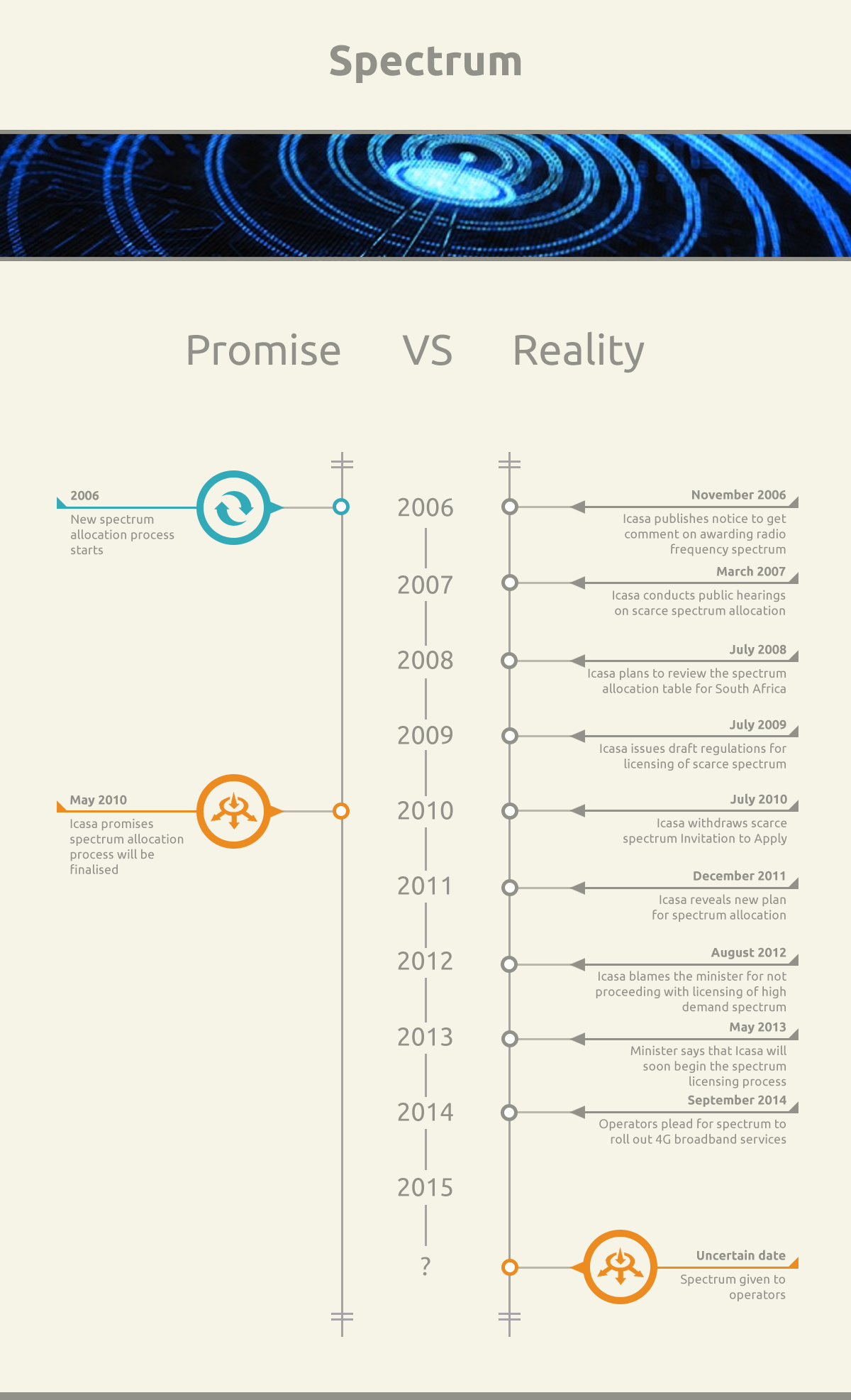
Spectrum shortage to blame for poor speeds and coverage
The main reason for the poor LTE speeds in South Africa is a lack of spectrum. The blame for this can be placed at the feet of the government.
The government and the regulator (Icasa) have been dragging their feet for nearly a decade on handing out valuable broadband spectrum.
The delay in providing South Africa’s mobile operators with LTE spectrum is costing the country billions per year, and consumers are the biggest losers.
In a mobile network the access medium – spectrum – is shared by different users in the same cell. More spectrum means that you can offer more bandwidth to users.
When spectrum remains unchanged while usage increases, though, the user experience can deteriorate.
To make sure this does not happen, mobile operators have to build new towers. This comes at a high cost, which is inevitably passed on to consumers.
If the government provides additional spectrum to mobile operators it will make it much easier for them to serve the growing data demand. It will also lower input costs, which will mean lower data prices.
More on spectrum
Neotel spectrum not enough for 4G: Vodacom
Commission rules on spectrum in Vodacom/Neotel merger approval

















 Loading ...