

One of South Africa’s most important state-owned companies on life support


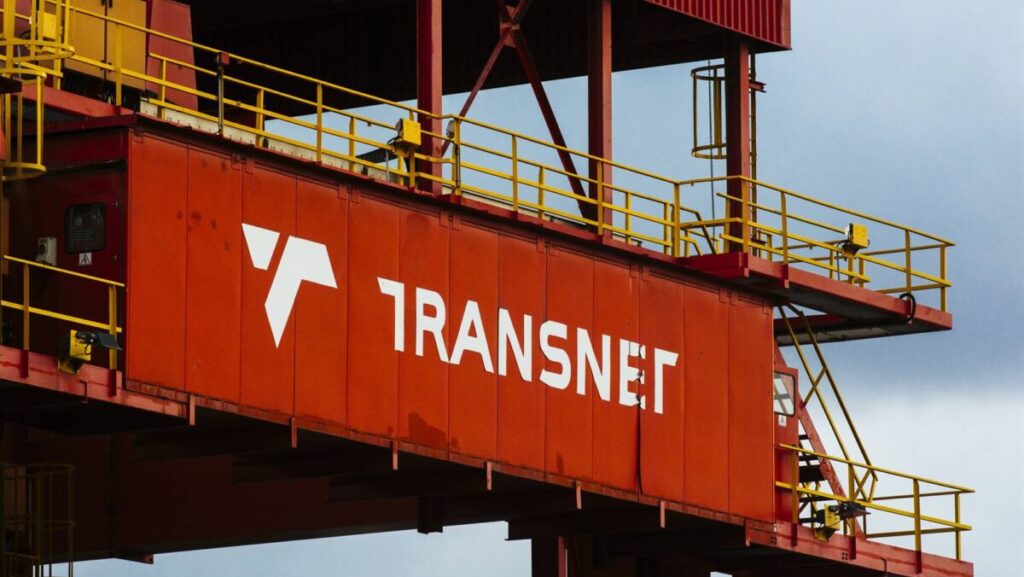
Ratings agency S&P Global has downgraded state-owned logistics company Transnet, casting doubt on the group’s turnaround and ability to reform without government bailouts to support it.
S&P believes that Transnet is burning through cash without the prospect of turning around its operating performance and that Transnet Freight Rail will fail to reach its volume targets.
The business has high fixed costs, major capital expenditure requirements and significant debt. S&P’s downgrade reflects its concern that its ability to service that debt is weakening.
The rating agency noted that Transnet is “entirely dependent on state support” and faces “sizable negative free operating cash flow”.
Shockingly, the company is burning through R13.5 billion a year in negative free cash flow, but is also hiking worker salaries by double the inflation rate.
According to Business Leadership South Africa chief executive Busi Mavuso, this is a “textbook example of unsustainable economics” enabled by government guarantees.
“S&P is calling out what has become clear to many of us – Transnet is seemingly resisting change and moving too slowly,” she said.
While many had hoped Transnet would follow in the footsteps of another strained state entity, Eskom, and embrace reform, the group has instead moved in the opposite direction.
In May, South Africa’s transport and finance ministries approved a R51 billion guarantee facility for Transnet, to help it refinance its maturing debt.
To raise funds on the back of the guarantees, Transnet will need to meet certain operational and logistics-sector reform conditions, similar to those required for a R47 billion guarantee facility it received in 2023.
However, the bailout came even as it posted a loss of R7.3 billion in 2024, as its debt reached R138 billion amid significant liabilities.
In May 2025, Moody’s Ratings warned that Transnet would run out of money for operations and debt servicing within three months unless it gets a government bailout.
Stop throwing money at the problem

Mavuso said the country cannot afford to keep throwing money at Transnet, hoping for change. She said that the National Treasury needs to step in and start setting strict conditions for any support.
“Conditions (like those) that enable the private sector competition that Transnet desperately needs.”
While the recent progress in separating rail infrastructure from operations, driven by Operation Vulindlela, is a start, Mavuso said the reforms must come much faster.
She previously noted that, for all its successes, Operation Vulindlela itself has lagged behind its own goals and targets, launching its second phase while first-phase projects—like logistics—still haven’t been addressed.
The BLSA lead stressed the need to accelerate private-public partnerships. Fixing the logistics crisis is one of the focus points of the business-government partnership.
She said private companies are ready to invest in South Africa’s logistics infrastructure, but they need certainty that political interference and Transnet’s resistance will not undermine their investments.
While there has been some progress through the National Logistics Crisis Committee, fundamental issues remain.
Some positive progress has been made in reducing backlogs at South Africa’s ports, and some rail corridors have seen volume improvements—but the S&P downgrade makes it clear that the big issues haven’t shifted.
“The S&P decision should be a wake-up call – Transnet is going in the wrong direction and we need to act urgently,” she said.
“Transnet cannot continue as if it is business as usual and President Ramaphosa needs to act to get the agreed reforms implemented fast.”













 Loading ...