

The oldest airline in South Africa is in trouble


The sudden resignation of South African Airways (SAA) CEO, and recent reports of Criminal syndicates stealing millions from the airline has rasied questions about the airline’s long-term sustainability.
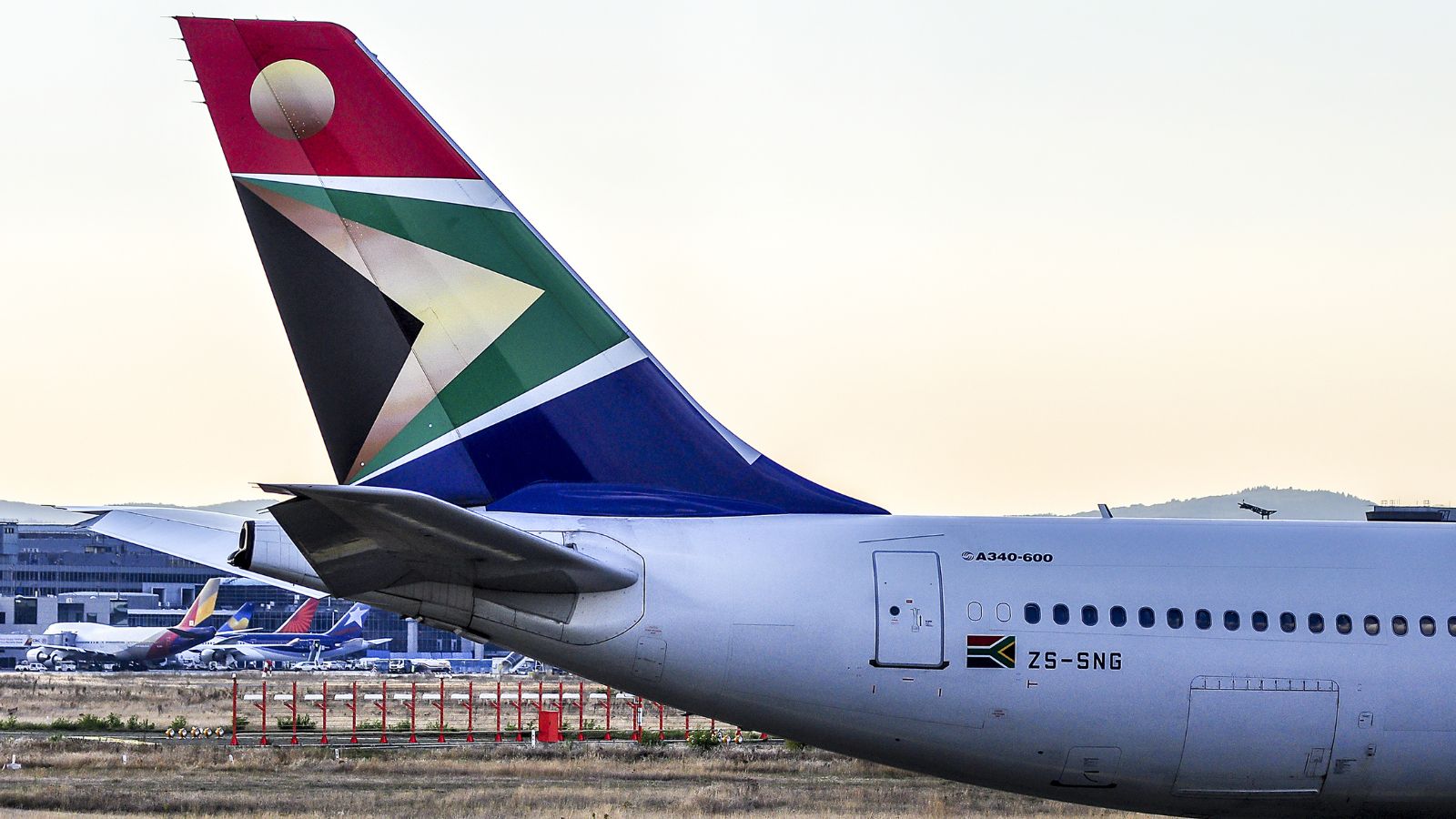
SAA was founded in 1934 when the South African government took over the assets of Union Airways, making the airline 94 years old and South Africa’s oldest airline.
South African Airways (SAA) was placed under voluntary business rescue on 5 December 2019 primarily because it was financially distressed and technically insolvent, having not turned a profit since 2011.
However, following the business rescue, SAA underwent a massive restructuring process and resumed operations with limited routes on 23 September 2021.
The airline soon expanded its fleet from five to 19 aircraft and grew its route network from six to 17 destinations.
South African Airways (SAA) then reached a major milestone, announcing a R155 million profit for the year ended 31 March 2025.
However, in April 2026, the Chief Executive Officer of South African Airways (SAA), John Lamola, resigned, effective 30 April 2026, with little to no explanation.
The sudden resignation of Lamola has once again placed South African Airways (SAA) under scrutiny, raising fresh concerns about leadership stability, strategy, and the airline’s long-term sustainability.
Speaking in an interview with HOT102.7FM, transport economist Joachim Vermooten said the development signals deeper uncertainty within the carrier.
He said the development suggests instability at the airline. He added that while little detail has been made public, the resignation “reflects some serious disagreement on policy or direction or funding.”
Vermooten warned that this instability also casts doubt over SAA’s reported financial performance.
He noted that questions remain about “whether past reported profits are just effectively a function of past taxpayer support and maybe some interesting accounting treatment.”
While he acknowledged that the airline appears to comply with international reporting standards, he stressed that “if you look at the normality of earnings and the ability to carry that forward, that is certainly under question.”
In his view, “whilst it may not be a difficulty concerning reporting standards, if you look at the sustainability of the profits, it certainly is a problem.”
Crime is another major problem for SAA
Beyond financial reporting, Vermooten highlighted operational challenges and cast doubt on the airline’s viability. He pointed to load factors as a critical metric.
He explained that about an 68% load factor was seen as a normal trigger in the past, but today, airlines require about 82% in order to break even.
This means carriers must fly with almost full capacity, leaving little margin for error, a problem SAA also is facing.
On SAA’s regional and domestic network, Vermooten was more optimistic. He said the routes have great potential. However, he reiterated that success depends on deploying appropriately sized aircraft.
Comparing SAA to competitors such as Airlink, he noted that rival operators often use “smaller, more fuel-efficient aircraft” on similar routes, which better aligns capacity with demand.
Compounding these issues are governance and financial management concerns at the airline.
Vermooten pointed out that the airline “has not been able to stabilise its financial and accounting records,” a basic requirement for any large organisation.
Another concerning point, damning on the governance front, is that SAA recently confirmed that an organised group of criminals is stealing valuable aircraft components from the airline.
In March 2026, a former avionics technician for the company was convicted and sentenced to 18 years in prison for the theft of high-value aircraft parts for a criminal syndicate.
Avionics refers to the electronic systems used on aircraft, including displays, navigation, communication, and management components.
Lucas Sekae was found guilty on three counts of theft, following an investigation by SAA Group Security, Forensics and the South African Police Service (SAPS) between 2019 and 2021.
“Mr Sekae was linked to a broader criminal syndicate involving SAAT employees and associated private companies,” SAA said in an announcement.
The airline stated that several other persons have already been arrested and found guilty, and are currently awaiting sentencing for corruption and criminal activities while employed by SAA.
All of this follows remarks made back in 2018 by then-chairperson of the Standing Committee on Public Accounts, Themba Godi, who said the thefts were a significant contributor towards the state-owned airline’s collapse.

















 Loading ...