

South Africa sinks in new global ranking


South Africa has dropped in the Fraser Institute’s 2026 economic freedom rankings, now ranking 87th among 165 global economies.
The institute’s Economic Freedom of the World (EFW) ranking assesses the extent to which people can make their own economic choices in a country.
The EFW index is scored across five categories, each related to an individual’s economic freedoms in a country.
In the 2026 rankings, South Africa ranked 87th among the 165 assessed countries and territories—a four-place drop from last year.
The rankings score each country out of 10, with higher scores indicating greater economic freedom. South Africa scored an absolute score of 6.63 out of 10.
The categories are:
| Category | Measure | South Africa’s score out of 10 (Rank out of 165) |
|---|---|---|
| Size of government | The extent to which a country’s fiscal policies and government spending limit individual economic choice. | 6.20 (105) |
| Legal system and property rights | How effectively a jurisdiction’s legal system protects property rights, upholds the rule of law, and enforces contracts in an unbiased manner. | 5.71 (61) |
| Sound Money | Whether a country’s monetary policies provide access to currencies that maintain stable value over time. | 7.84 (93) |
| Freedom to trade internationally | The degree to which governments restrict international trade and exchange with citizens of other countries. | 7.01 (95) |
| Regulation | Regulatory restraints that restrict entry into markets or interfere with freedom of voluntary exchange. | 6.37 (91) |
| Overall score and rank | 6.63 (87) |
According to the Free Market Foundation, South Africa’s position reflects a decline from last year, where it ranked 83rd, and shows a downward trend in the country’s economic freedom.
“The latest ranking signals an ongoing erosion of economic liberty,” the FMF said.
“The data confirms that South Africa’s economic freedom has been on a slow, downwards trend since its peak in the year 2000, leaving the country less free today than it was at the turn of the century.”
One area the Free Market Foundation flagged specifically is government spending, which is over one-third of the country’s GDP.
“The report highlights several major structural weaknesses holding South Africa back, including excessive general government spending,” it said.
It also noted a high degree of government regulation, particularly in the labour market, as a negative signal for economic freedom.
Cumberland University professor of finance and economics and Free Market Foundation senior associate Richard Grant said economic freedom is imperative for creating prosperity in a country.
“Historical data show unambiguously that countries with greater economic freedom are also more prosperous, with higher average incomes and lower poverty rates,” he said.
“Without widespread liberalisation, secure property rights, and a reduction in government overreach, South Africa will continue to suffer from anaemic growth.”
A struggling economy
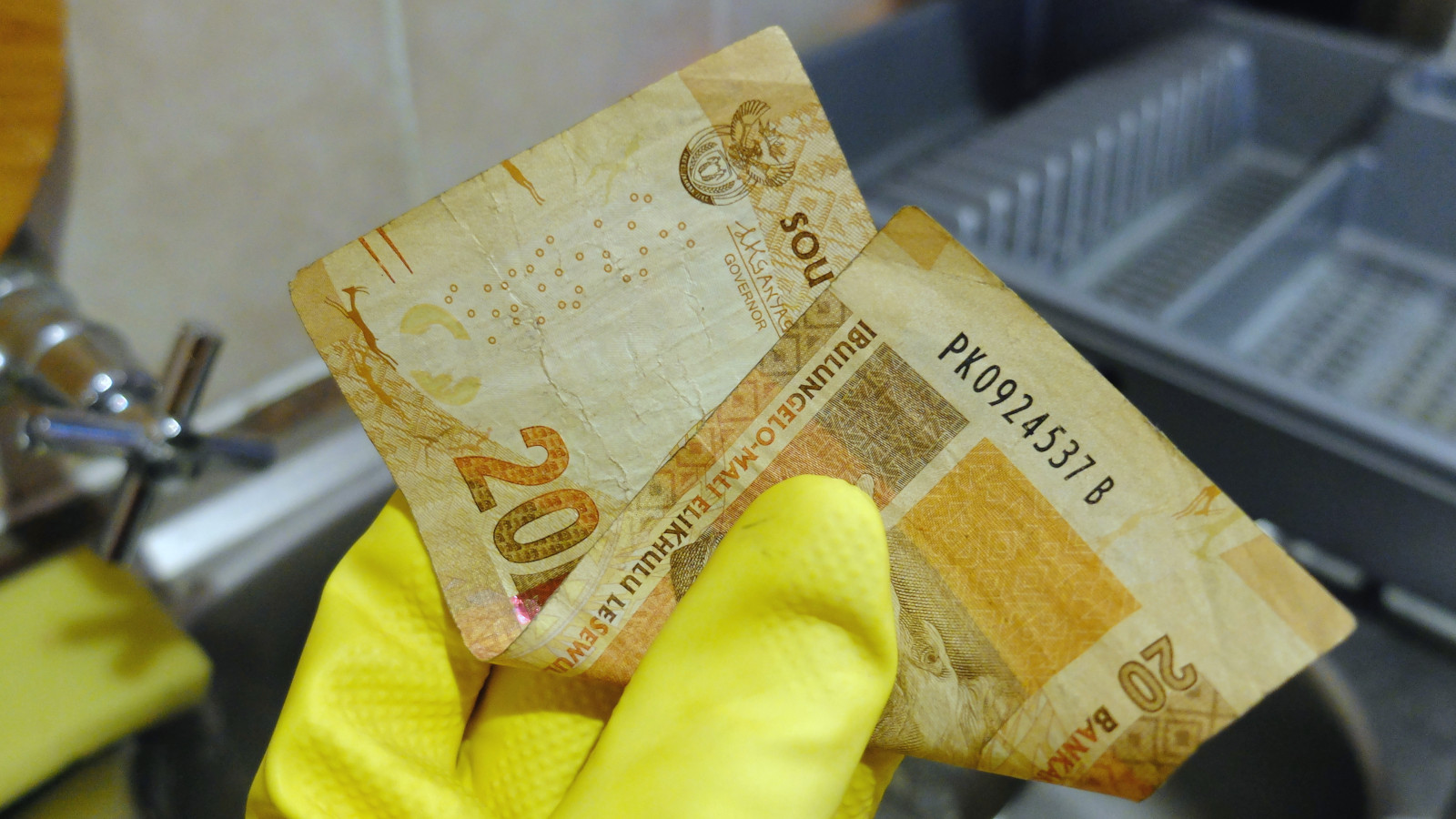
South Africa’s economy has been stagnant in recent years, with GDP growth reaching 1.1% in 2025, below many of its emerging market peers.
In the second quarter of 2026, the country’s GDP contracted by 0.2%, breaking its six-quarter growth streak.
The Free Market Foundation flagged inflation and currency depreciation as two areas threatening South Africa’s economic outlook.
“Ongoing inflation pressures and currency depreciation continue to exacerbate broader economic challenges,” it said.
South Africa’s inflation was 4.4% in August, slightly higher than it was in July. It reached its highest point in 2026 in June, at 5%.
The rate has consistently exceeded the South African Reserve Bank’s (SARB) 3% target, largely due to global geopolitical tensions.
The US-Iran war has had a heavy toll on global oil prices, due largely to the closure of the Strait of Hormuz.
The Strait is a vital shipping lane for the global oil trade, and its closure has led to high fuel prices in South Africa.
This has, in turn, led to higher business expenses and the cost of living in recent months, driving inflation higher.
In the last month, the rand has also struggled to hold its value against the dollar, and is trading at 16.57 to the greenback at the time of writing.
The rand has recently depreciated against the global benchmark, after trading below 16 to the dollar earlier this year.
According to the EFW’s metrics, South Africa performed poorly on the “sound money” index, which assesses each country’s monetary policy.
The country performed well in the “legal system and property rights” metric, which “measures the degree to which each jurisdiction’s legal system protects economic freedom,” the Free Market Foundation said.











 Loading ...