

Majority of Transnet workers agree to get back to work – but holdouts vow to keep the strike going


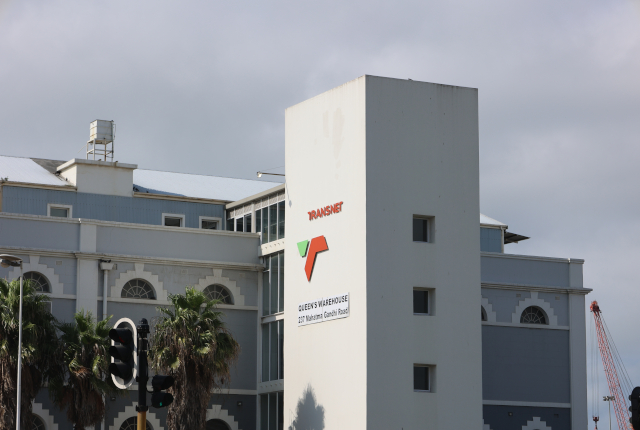
The United Transport and Allied Trade Union (Untu) has signed a three-year wage deal with national port and freight company Transnet after more than a week of strike action that crippled sectors of the economy.
On 7 October, Transnet declared force majeure across all its harbours as employees began industrial action. Over 40,000 employees downed tools, demanding above-inflation wage hikes.
The company offered an across-the-board increase of between 4.25% and 5%, which was rejected by the unions.
Untu – which is the majority union at Transnet, representing 53.9% of the workforce – has now agreed to a three-year wage agreement backdated to 1 April 2022 and continuing to 31 March 2025 – ending the industrial action by Untu members.
The settlement includes:
- Year 1: a 6% increase to the basic wage;
- Year 2: a 5.5% increase to the basic wage;
- Year 3: a 6% increase to the basic wage;
- An increase in the medical aid subsidy for employees;
- An increase in employees’ housing allowance.
Transnet said that its current goal is to clear any backlogs across the port and rail system – prioritising urgent and time-sensitive cargo, implementing recovery plans and working with industry and customers.
Holdouts
Despite the agreement between Untu and Transnet, the South African Transport and Allied Workers Union (Satawu) said that it would continue to strike, asking for a higher wage increase than what was offered.
Satawu has argued for a wage increase above inflationary levels of 7.6%. The holdout union said it was shocked and disappointed over the Untu deal and felt betrayed.
It said that Untu’s agreement encouraged the exploitation and profit maximisation of the company with the retrenchment clause being removed from the initial demands, a deduction of lost wages for workers on industrial action not being included, and the increase being below inflation.
“Our industrial action should continue as planned regardless of the betrayal in question,” said Satawu.
Satawu said it hadn’t met with Transnet since pay talks collapsed last week.
The prolonged strike action at Transnet has had a devasting toll on the economy, with the company essential to South Africa’s export and import industry. Valuable commodities like iron, coal, and other ores have not been able to move through the ports.
The Minerals Council of South Africa said last week that the strike is costing the mining sector alone R6 billion a day and compounding on top of the R50 billion already lost by previous failings.
According to data cited by the South African Association of Freight Forwarders (SAAFF), supply chain logistics delays cost the economy anywhere between R100 million and R1 billion each day, but the overall cost “is substantially greater than that.”
Speaking to BusinessLive on 16 October, Jacob van Rensburg the head of research at SAAFF, said that if the strike continues for another week, groceries at popular retailers like Woolworths, Pick n Pay and Checkers will start to “diminish rapidly”.
Juanita Maree, the CEO of the association, said that the strike is holding up R8 billion in exports a day, adding that the crisis is six times worse than the ongoing energy crisis
















 Loading ...