

Important 78-year-old business forced to shut down in South Africa


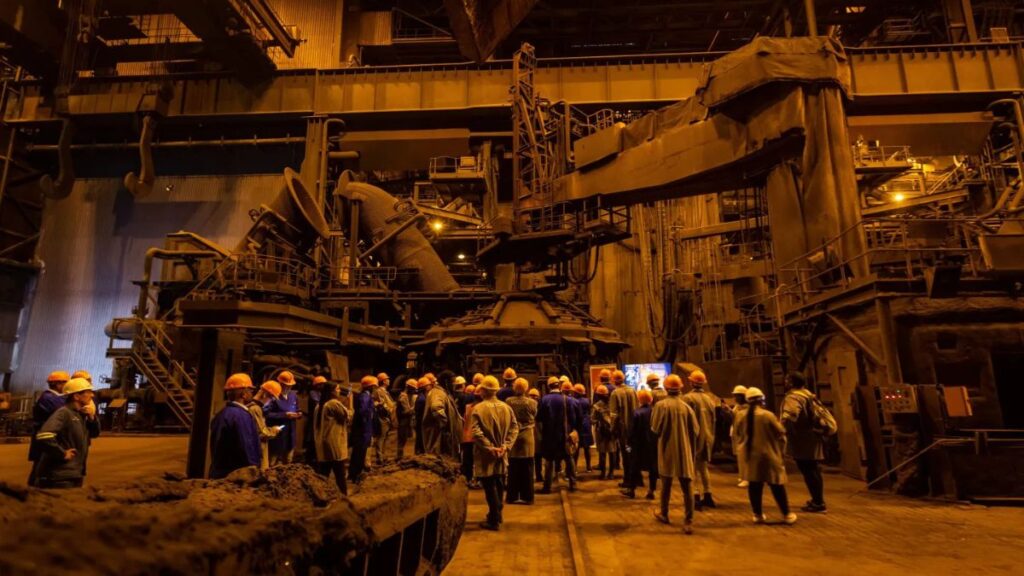
ArcelorMittal South Africa (AMSA) has begun shutting down its long steel business after 78 years in operation. From 1 September, the company will send section 189 notices to the affected employees.
The company, formerly known as Iscor, was founded in 1928 to boost local steel production and create jobs.
It produced its first steel in 1934 and rapidly expanded during World War II, supplying heavy plate for ship repairs and armoured cars.
In the post-war years, Iscor became one of the country’s most important industrial players.
It commissioned the Vanderbijlpark works in 1947 and later built the Newcastle plant in the 1970s, both of which specialise in long steel.
However, ArcelorMittal South Africa’s long steel division has been bleeding money for years, with losses running into billions of rands.
AMSA CEO Kobus Verster explained that both global and local conditions have become unsustainable.
“Internationally, steel has been in a crisis for two years. Prices are at all-time lows,” he said in a previous interview with BizNews.
“Domestically, demand is low, sales volumes dropped 11% and prices dropped 7%, so revenue fell 17% while costs didn’t drop at the same rate.”
South Africa’s demand for long steel products, which include rebar and other construction materials, has fallen to about half of installed capacity.
At the same time, competitors benefit from a 35% input cost advantage under the country’s scrap metal policy.
Rising imports, soaring electricity costs, and the collapse of Transnet’s rail system have added to this, which has left manufacturers scrambling to move bulk materials by truck at far higher costs.
ArcelorMittal has been in talks with the government and the Industrial Development Corporation (IDC) to find a solution.
The IDC stepped in earlier this year with R1.7 billion in emergency funding to keep the Newcastle operations alive until the end of September. That lifeline bought the company some time, but the long-term rescue plan never materialised.
Section 189 notices from 1 September

In a memo to employees on 29 August 2025, Verster acknowledged the efforts but admitted they had fallen short.
“Unfortunately, efforts to secure funding to operate beyond September 30 2025, have failed. In this light, we must now, I regret to say, take further preparatory steps towards the closure of the longs business,” he said.
While thanking employees for their dedication and resilience during the past two years of uncertainty, he stressed that the decision was unavoidable. “This is not a decision anyone wished to make, but a reality that we must responsibly prepare for.”
The impact will be significant. The Newcastle and Vereeniging plants employ around 3,500 workers directly and indirectly, with thousands more jobs in surrounding communities dependent on the steel value chain.
“We will accordingly be issuing section 189 notices to affected employees in the longs business on a staggered basis as facilities wind down, commencing on September 1 2025,” the memo added.
Trade unions have previously raised the alarm, warning that the closure will devastate workers and their families.
The National Union of Metalworkers of South Africa (NUMSA) described it as a looming “social and economic catastrophe,” which is one reason the government stepped in to help this year.
The looming shutdown is particularly unfortunate given the company’s deep roots in South Africa.
From its beginnings as a state-owned parastatal designed to fuel industrialisation, Iscor was closely tied to the country’s economic development.
Privatised in 1989 and listed on the Johannesburg Stock Exchange (JSE), the company marked a turning point with acquisitions like the Vereeniging works in 1991 and the partnership to build Saldanha Steel with the IDC.
By the early 2000s, Iscor had become a central player in global steel consolidation, eventually being absorbed into ArcelorMittal.
However, despite its global backing, the company has struggled to adapt to South Africa’s challenging business environment.
Electricity price hikes, logistics bottlenecks, and weak infrastructure have weighed heavily on operations. The steady rise of cheaper imports has only made the industry less competitive.
According to Solidarity Deputy General Secretary Willie Venter, the blame for the closure must be laid squarely at the government’s door.
“This closure is the direct result of the government’s inability to create a competitive industrial environment and to find and implement real solutions with a sense of urgency where such solutions fall within its control,” he said.
For years, our steel industry has been plagued by power crises, a failed rail and ports system and a government that simply cannot make the policy decisions to protect our industries. Now the jobs and income of thousands are at stake.”
He cautioned that the retrenchments would not only affect the steel industry, but that all indications currently point to a retrenchment bloodbath that could hit several industries in South Africa.
“If major companies such as AMSA fail to stay afloat, the government should realise that the country is on the brink of industrial disaster,” he added.
The closure of AMSA’ long steel plants will have a ripple effect on downstream manufacturing, also affecting various other industries that depend on AMSA’s products.














 Loading ...