

The South African stock that turned R1,000 into R51,000 in 6 years


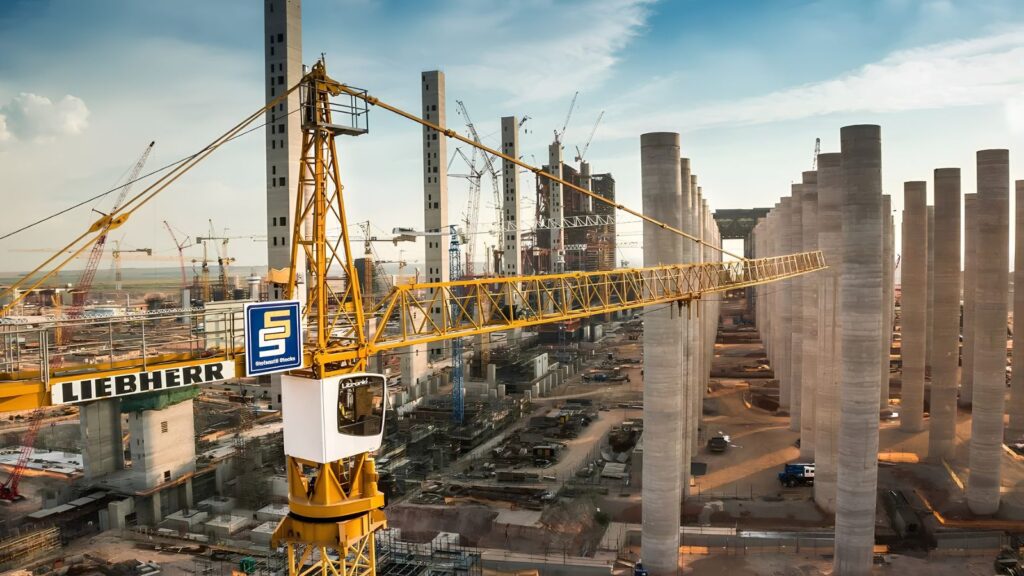
A R1,000 investment in Stefanutti Stocks during the lows of 2020 would be worth roughly R50,857 today—a 4,986% return in six years.
Stefanutti Stocks is one of South Africa’s most prominent listed construction companies, focusing on infrastructure development projects.
The company operates in various sectors, including civil engineering, building, mechanical and electrical engineering, and mining services.
Despite its diversified portfolio, Stefanutti Stocks faced significant challenges in the late 2010s and early 2020s.
One of the company’s biggest problems was an Eskom tender to work on the Kusile power plant. The tender was a joint venture with other private construction companies working on the Kusile power plant.
The original contract was for six years, with a completion date of November 2016. The planned construction duration was 19,000 days.
However, there were consistent delays in completing the Kusile project due to site access and construction problems.
Independent experts, in conjunction with the Dispute Adjudication Board (DAB), found that the project experienced more than 75,000 days of delays.
Stefanutti claimed that Eskom interfered with its work in a way that breached its original contract. This caused the project to progress much slower than expected.
Due to the delays, the company incurred significant prolongation costs and approached the DAB to assess Eskom’s claims.
This claim, project delays, and cost overruns strained the company’s financial resources, as evident in its balance sheets.
This situation was exacerbated by the broader economic impact of the COVID-19 pandemic, which led to project suspensions and further reduced cash flows.
The pandemic led to a sharp decline in the South African stock market, with the FTSE/JSE Capped SWIX Index falling by 37% from its January 2020 value.
The construction sector was particularly hard-hit, with lockdown measures halting projects and disrupting supply chains.
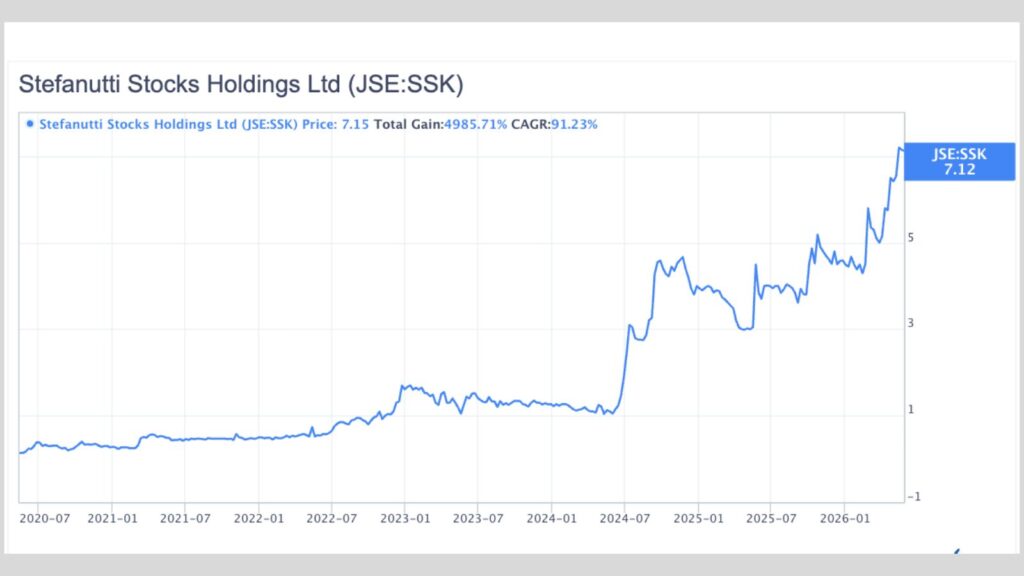
Stefanutti Stocks’ share price plummeted to R0.14 in May 2020, reflecting investor concerns about the company’s viability.
Restructuring plan starting to pay off
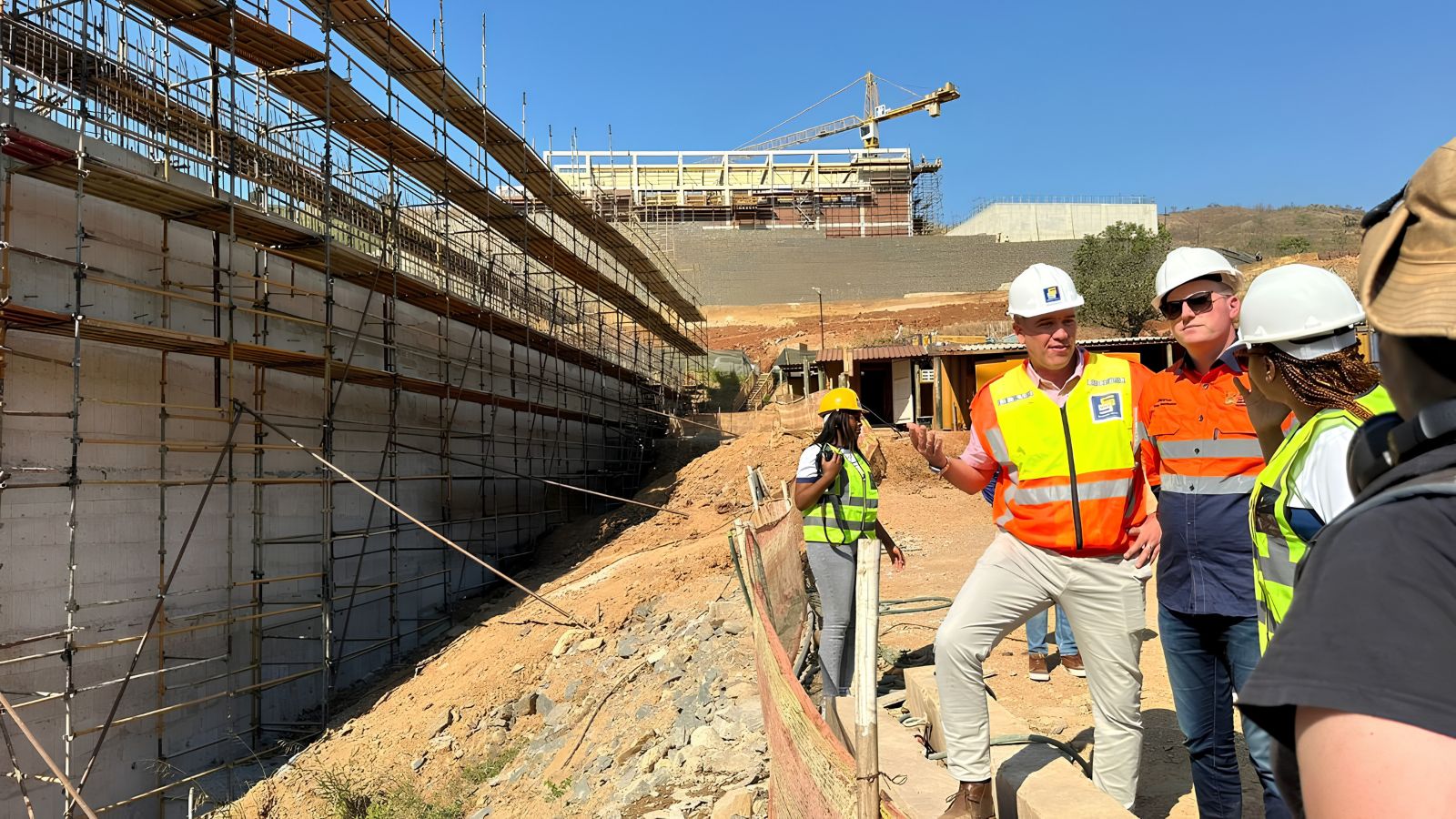
However, Stefanutti Stocks Holdings delivered a dramatically improved set of results for the year ended February 2026.
This was driven largely by the settlement of its long-running Kusile Power Project dispute with Eskom and the completion of its restructuring plan.
The company reported revenue of R7.8 billion, operating profit of R689 million, and year-end cash of R1.1 billion.
Additionally, Stefanutti Stocks reduced outstanding debt on its new R850 million Standard Bank facility to just R223 million after using proceeds from the Kusile settlement and asset disposals to make R620 million in prepayments.
Interest costs also fell to R80 million from R115 million a year earlier. The company’s current liability position improved sharply, with the deficit narrowing from R1.3 billion to R133 million.
Profit for the year also jumped to R620 million from R131 million previously, while earnings per share climbed from 78.60 cents to 370.44 cents.
Cash generated from operations rose to R1.7 billion from R403 million, lifting the cash balance to R1.1 billion.
The results showed that the current order book stands at R17.2 billion, up from R8.6 billion a year ago, with a growing contribution from projects outside South Africa and beyond 2027.
However, there are some concerns. A large portion of the earnings recovery was driven by a once-off Kusile settlement.
The R580 million settlement increased revenue by R448 million, operating profit by R388 million, and profit after tax by R492 million.
On a “normalised” basis, excluding the settlement and impairments, operating profit was R328 million instead of R689 million.
This means underlying profitability is materially lower than the headline figures suggest.
Additionally, the company still carries legacy financial stress. Stefanutti Stocks still has an accumulated loss of R386 million, and current liabilities exceed current assets by R133 million.
Despite these caveats, the company has remained resilient. In 2020, investors feared Stefanutti Stocks could collapse under debt, losses, and project disputes.
Since then, the company has stabilised operations, remained profitable for multiple years, refinanced debt, settled the Kusile dispute, and rebuilt liquidity.
Markets often reward companies that successfully avoid insolvency with massive reratings from distressed valuations.
The company also highlighted strong growth in roads, earthworks, electrical, water, wastewater, mining, renewable energy, and data-centre-related work.
Stefanutti’s debt reduction also strengthened confidence that the company can generate sustainable earnings again, rather than merely surviving year to year.
The market cap was extremely depressed in 2020, meaning even a partial operational recovery translated into an outsized share price gain.
The company’s share price has surged from R0.14 in May 2020 to R7.12 by 26 May 2026, representing a staggering 4,985.71% return.
A hypothetical R1,000 investment during its lowest point would now be worth approximately R50,857.
| May 2020 | May 2026 | % Change | R1,000 today |
|---|---|---|---|
| R0.14 | R7.12 | 4,986% | R50,857 |















 Loading ...