

Cape Town is losing to its biggest rival


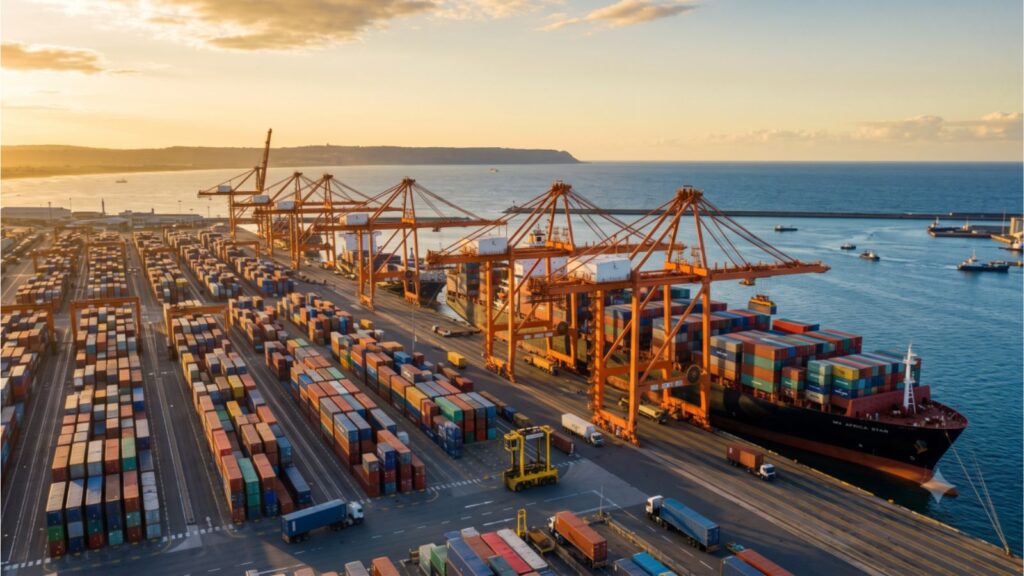
Durban’s port was ranked the most improved in 2025 by a World Bank study, while Cape Town’s port ranked at the bottom among the 400 assessed locations.
The Durban Container Port (DCP) is the busiest point of entry for cargo in South Africa, handling approximately 88 million tonnes of goods every year.
The port is an essential part of South Africa’s import and export processes, and is operated by the state-owned company Transnet.
In recent years, the port has come under scrutiny for operational delays, leading to backlogs and poor performance.
These operational delays would often leave trucks carrying cargo waiting to unload, and would lead to long turnaround times for container ships.
Container ship turnaround times are the primary indicator of port performance, according to the Container Port Performance Index (CPPI).
This index is a ranking done in partnership with the World Bank and the S&P, which assesses the performance and operational efficiency of 400 global ports.
In its 2024 rankings, the CPPI listed the DCP as the worst-performing container port in the world due to its high turnaround times and the time ships spent waiting to be unloaded.
In the 2025 rankings, this gloomy outlook on the Durban port shifted, with it being ranked as the most improved facility globally.
The CPPI attributed this improvement to several factors, including stabilising its operations, recovering equipment, and implementing management reforms.
The index also noted that increased public-private partnerships had helped the port, including its deal with International Container Terminal Services (ICTSI) to manage operations.
ICTSI, a port-operating company based in the Philippines, agreed to the venture at the end of 2025, bringing R11 billion in investment into the DCP.
“The operational gains have been supported by new investments and increased private sector participation,” the CPPI said.
“The most structurally significant development is the December 2025 awarding of a 25-year concession with ICTSI to modernise Durban Container Terminal Pier 2”.
Plans for Cape Town

DCP’s rapid improvement in the 2025 rankings left Cape Town’s port as the bottom-ranked by the CPPI for the year.
The index noted that this poor performance was caused by uncontrollable factors, such as adverse weather conditions, as well as equipment reliability issues.
These factors led to a high variability in turnaround times for container ships entering the port, according to the CPPI.
After the CPPI’s rankings were released, local stakeholders in the Cape Town Port quickly noted that the results did not tell the whole story.
Cape Chamber of Commerce vice chair for the transport and freight industry sector portfolio committee, Megan Gobey, said the report did not reflect actual operational improvements.
Despite objections to the CPPI ranking, stakeholders conceded that it is a useful metric for analysing global port performance.
Recently, the current operator of the Cape Town Ports, Transnet, has considered increasing private-sector participation at the facility.
Transnet operates both the Durban and Cape Town ports, and recently requested bids from companies to manage operations at the Western Cape facility.
This would be a 25-year contract, and would hopefully boost investment into the port and increase its operational efficiency.
Recently, the Red Sea Gateway Terminal (RSGT), a Saudi Arabian port operator, considered a bid for a part of the Cape Town facility.
This process is ongoing, as RSGT has increasingly sought to expand its international presence, particularly in Africa.
The move to appoint a new private partner in Cape Town comes soon after Transnet appointed ICTSI as the new operator at the Port of Durban.
The private partnership in Durban has had clear positives, with operational efficiency improving massively since the start of the year.
Recent data from Transnet showed that crane efficiency in Durban’s Pier 2 has increased from 18 to 28 moves per hour since the start of the year.
Recently, Minister of Transport Barbara Creecy said that the Port of Cape Town had shown signs of reduced vessel turnaround times.
The port recorded a 16% increase in container volumes during the first quarter of the 2027 financial year, ahead of the facility’s busiest export season.


















 Loading ...