

Whole province investigated in South Africa – with issues so bad, municipal managers had to be subpoenaed


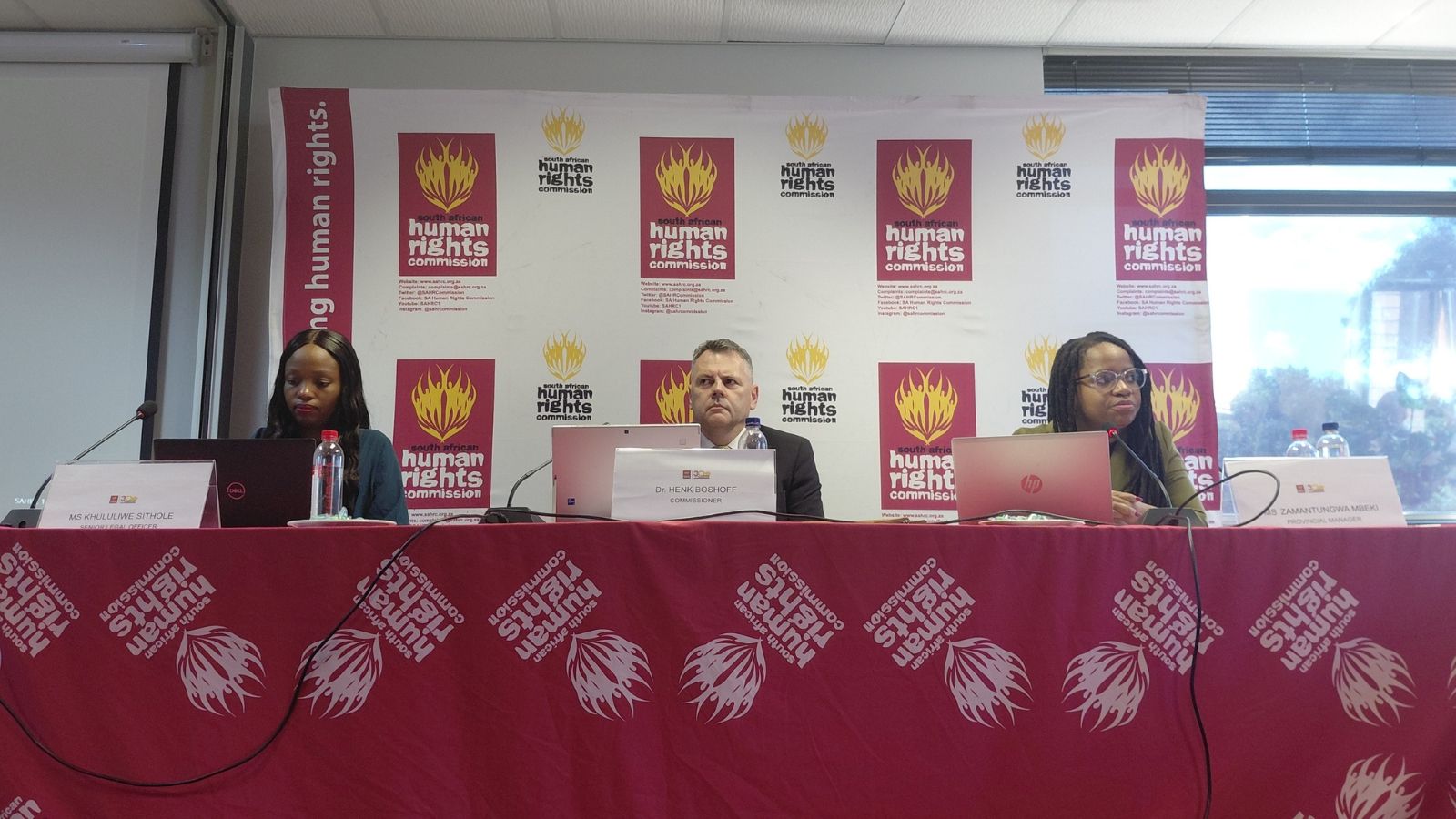
The South African Human Rights Commission (SAHRC) investigated the whole Gauteng province over the state of water and sanitation service delivery.
The investigation identified widespread systemic failures across all nine of the province’s water service authorities.
Municipal managers had to be subpoenaed to attend the investigation as municipalities struggled to account for deteriorating infrastructure, massive water losses, and poor service delivery.
The investigation found that the province’s recurring water crisis is not caused by a shortage of bulk water, but by years of infrastructure neglect, financial mismanagement, and failures in municipal governance.
Khululiwe Sithole, Senior Legal Officer at the SAHRC, said the difficulty experienced in getting municipalities to participate in its hearings reflected the broader problems residents face when trying to get their local authorities to address service delivery failures.
Municipal managers, who are responsible for the administration and finances of municipalities, had to be subpoenaed to attend the hearings.
Some received repeated notices, while Rand West City Local Municipality failed to submit its evidence on time and did not attend.
“I think you told us what we already saw in terms of the complaints we received from communities,” Sithole said in an interview with 702 Drive.
She explained that the commission should not be the first port of call for residents experiencing service delivery problems, as municipalities are supposed to address these complaints.
“However, the fact that we have an influx of complaints coming to us because people have gone to the municipalities and they are getting no response is an indication of failing municipalities, and this is exactly what we saw.”
One of the investigation’s most significant findings was the scale of water losses across Gauteng.
Evidence from Rand Water and the Department of Water and Sanitation did not suggest that the province lacked sufficient bulk water resources.
Instead, approximately 50% of its water is being lost through leaking pipes, deteriorating distribution networks, and other infrastructure failures.
Criminal charges will follow if the issues aren’t addressed
Johannesburg has an estimated R27 billion infrastructure renewal backlog and loses approximately 45% of its water.
Tshwane faces a R23-billion backlog and loses around 39%. The situation is even worse in some smaller municipalities, with Rand West losing approximately 58% and Emfuleni 57%.
“There are high water losses across the province, and there aren’t sufficient plans that are put in place to detect and prevent these water losses,” Sithole said.
These losses also have serious financial consequences, as municipalities pay for treated water that disappears before reaching consumers, leaving them unable to recover the associated costs.
“It’s not that we don’t have money, or we don’t have water; it’s just not being used right,” she said.
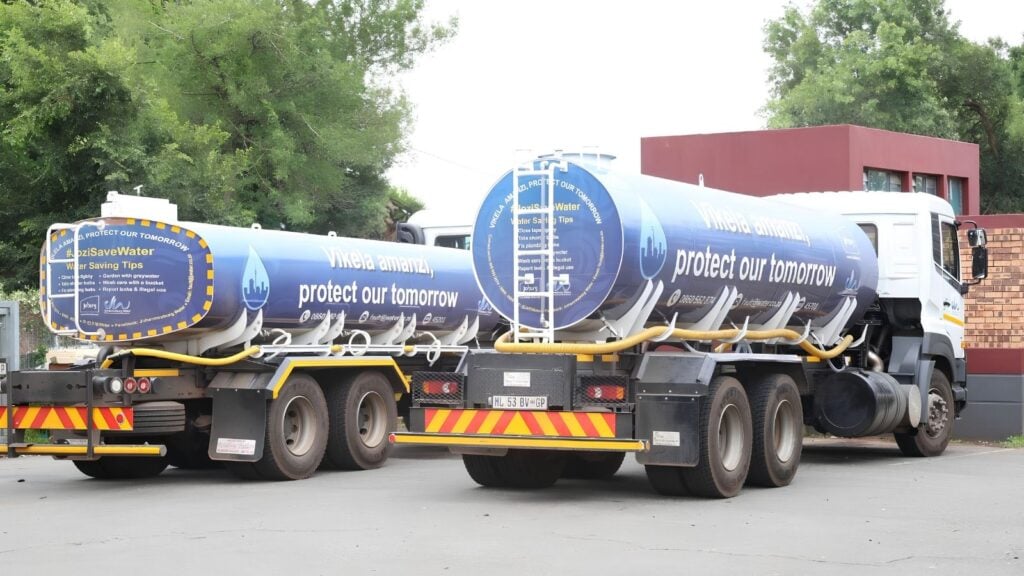
The investigation also raised concerns about the growing dependence on water tankers, which has created a breeding ground for tanker mafias.
Services intended as emergency measures have become a substantial and recurring expense, with some municipalities spending hundreds of millions of rand while residents continue to experience unreliable water supplies.
The commission warned that the financial incentives created by tanker contracts could encourage corruption and undermine efforts to restore permanent water infrastructure.
Wastewater treatment was another major concern. Several treatment works are failing to meet required standards, resulting in untreated or inadequately treated sewage entering rivers, dams and other water sources.
Facilities highlighted include Rooiwal in Tshwane, Devon in Lesedi and Flip Human in Mogale City. Financial mismanagement has further undermined municipalities’ ability to address these problems.
Emfuleni reportedly had no capital budget for water and sanitation for two consecutive years, alongside approximately R7 billion in unauthorised, irregular and wasteful expenditure.
Merafong also faced severe financial pressure after accumulating approximately R1.5 billion in debt to Rand Water, resulting in a 40% restriction on bulk water supply.
Sithole said ageing infrastructure, insufficient investment, and wasteful expenditure had compounded the crisis, despite Gauteng’s growing population and increasing demand.
The SAHRC has issued eight recommendations requiring municipalities and relevant government departments to address the failures.
Municipalities must report back within periods ranging from three to six months, with some requirements extending to 12 months.
Sithole warned that submitting plans or attending further meetings would not be sufficient. The commission expects evidence of actual improvements in water delivery and sanitation.
“If they fail to give us reports that show the steps that are being taken and are being implemented to address the water infrastructure issues, then we will have to consider other avenues that are available to us, including litigation,” she said.
The commission has warned that continued failures constitute an ongoing violation of residents’ constitutional rights to water, sanitation, and dignity.
















 Loading ...