

Big petrol price win for South Africa


While inflation may not have cooled as much as forecasters had predicted in January, the big drop in petrol prices at the start of the year is to thank for things not going in the opposite direction.
Stats SA published the latest inflation data on Wednesday (18 February), marking a marginal decline in headline consumer pricing to 3.5% y/y for January.
This was slightly higher than the 3.4% y/y expected by economists, but was still lower than the 3.6% y/y recorded in December 2026.
The decline also aligns with the South African Reserve Bank’s view that inflation had peaked at the end of 2025, and that the country would now move towards the new 3% inflation target over 2026.
According to economists at Nedbank, the main driver of the cooling of headline inflation is lower transport costs, which have turned a corner after four months.
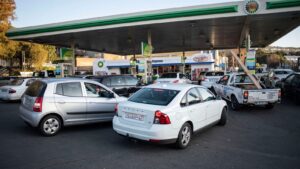
During the month, fuel prices dropped sharply by 3.4%, benefiting from lower global oil prices and a firmer rand.
This dragged the y/y fuel costs (-3.7%) back into contraction territory after four consecutive months of increases.
Private transport operation costs also declined (-1% y/y), and inflation for new vehicles eased from 0.8% y/y to 0.7%. Consequently, transport costs contracted by 0.2% y/y from a 1% rise.
However, because of base effects from 2025 and risks around fuel and food inflation, Nedbank believes that the overall inflation picture might pick up in the coming months.
The economists noted that inflation is expected to peak at around 3.7% before the SARB’s target becomes reality.
In the near term, fuel prices are likely to remain the main driver of cooler CPI, with fuel inflation set to be “sticky” in the first quarter.
Petrol prices in January saw a sizeable cut of 65 cents per litre (cpl), followed by another 65cpl cut in February. February’s inflation print (to be published in March) is likely to reflect a similar contraction for fuel.
However, driven by base effects and slightly higher global prices linked to increased winter demand in the Northern Hemisphere, this could reverse heading into the second quarter, pushing inflation higher.
Petrol prices for March are currently building to a flat outcome, with fuel price recoveries on the cusp of a cut or a hike (between -1cpl cut and 1cpl hike). Diesel prices are set to rise by 45cpl.
Nedbank anticipates that this is only a short-term bump, however.
“Fuel prices are expected to ease into deflationary territory (later in the year), kept in check by excess global oil supply and a relatively stable rand,” Nedbank said.
Other inflation pressures

While the petrol price is a significant benefit for inflation, the other main driver of CPI—food prices—is still a pressure point.
While Food and Non-Alcoholic Beverages (Food NAB) inflation appears stable at 4.4% y/y, higher meat prices are a concern.
Meat prices have seen double-digit inflation since the outbreak of Foot and Mouth Disease, with other animal diseases also impacting other livestock.
These pricing pressures are expected to continue to at least April 2026.
Beyond food and transport costs, Nedbank also flagged electricity and water tariffs, which will also exert mild upward pressure on production and operating costs.
Energy regulator Nersa has granted Eskom permission to collect billions of rands more in revenue through tariff hikes, which will see electricity prices go up close to 9% in April and July.
But even with these pressure points, Nedbank expects that inflation will be kept in check by the stronger rand subduing import costs.
“Overall, we expect inflation to average 3.4% in 2026 before declining towards 3.1% in 2027,” the group said.
This forecast puts the SARB on track to cut interest rates later in the year, with Nedbank anticipating two 25bp cuts in May and July.
Others view the cuts as being more staggered, and starting sooner, with two 25bps cuts in March and July.














 Loading ...