

South Africa’s finance hub is slowly recovering from a messy 2016


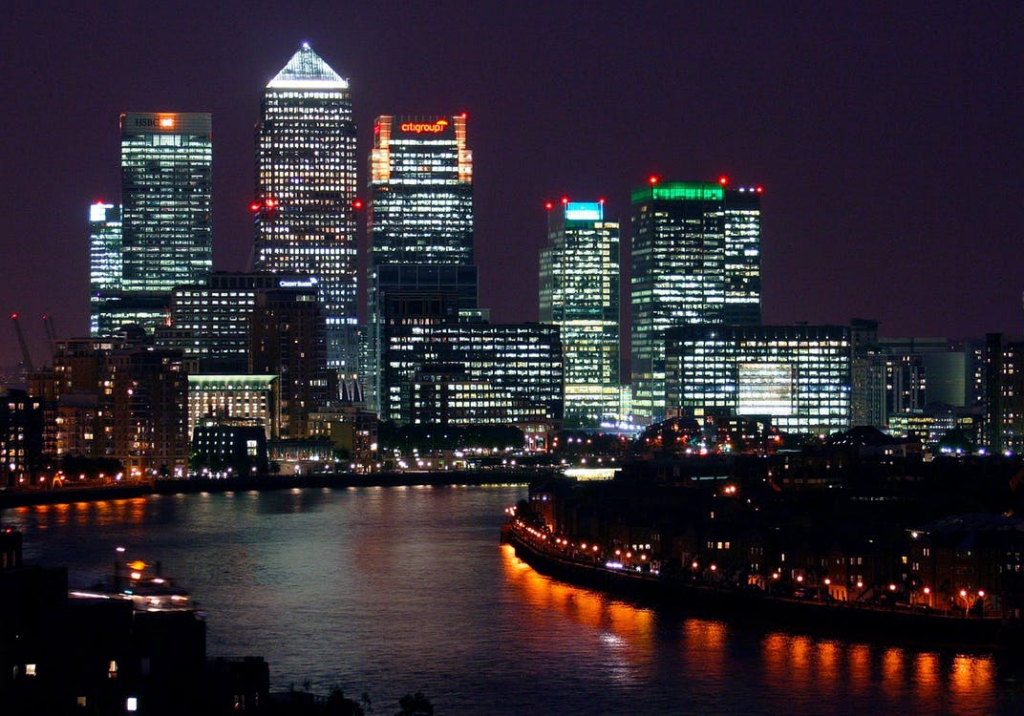
The Global Financial Centres Index (GFCI) for 2017 shows how Africa’s biggest financial centre – Johannesburg – has recovered from a major drop in the previous ranking,
The index is based on 23,812 financial centre assessments drawn from 3,150 respondents across the globe.
It also encompasses over 102 indices from organisations such as the World Bank, the Organisation for Economic Co-operation and Development (OECD) and the Economist Intelligence Unit.
Echoing findings from The Banker’s recent financial centres ranking, the GFCI ranks Johannesburg as the biggest financial centre in Africa, ranking ahead of Mauritius in 69th position – the only other African nation listed.
Joburg is ranked as the 48th biggest financial centre in the world, up 11 places from its placement in 2016, where the city dropped 18 places in the ranking. However, Africa’s financial hub is still far off its 33rd place ranking in 2015.
South Africa’s climb in the ranking reflects the recovery in the economy from a turbulent start to 2016.
Because the index only represents assessments between March 2016 and March 2017, it does not take into account the fallout from the firing of former finance minister Pravin Gordhan in April 2017, nor the subsequent ratings downgrades and decline in economic growth, since.
However, when compared to the same period in 2015/16 – which factored in the firing of Nhlanhla Nene and the economic fallout from that event – South Africa was in a far stronger position a year later.
This allowed Joburg to secure a higher rating, up 32 points to 648. The city was the fourth biggest climber in the rankings.
Globally, the GFCI said that well-established centres like New York, London, Singapore, Hong Kong, Tokyo maintained their lead. However, several emerging cities have been gaining traction and made tremendous strides as new economies and financial centres.
Meanwhile, there has been an overall drop in confidence among the leading centres, the group said.
Of the top 25 centres, 23 fell in the ratings and only two rose. At the lower end of the table, 20 of the 25 lowest rated centres actually rose in the GFCI ratings.
London and New York remain in first and second places. Interestingly, despite the ongoing Brexit negotiations, London only fell two points, the smallest decline in the top 10 centres.
Hong Kong has moved just ahead of Singapore into third – only two points ahead on a scale of 1,000. Tokyo remains in fifth.
Biggest financial centres in the world
| # | Financial Centre | Country | Score |
|---|---|---|---|
| 1 | London | UK | 780 |
| 2 | New York City | USA | 756 |
| 3 | Hong Kong | Hong Kong | 744 |
| 4 | Singapore | Singapore | 742 |
| 5 | Tokyo | Japan | 725 |
| 5 | Shanghai | China | 711 |
| 7 | Toronto | Canada | 710 |
| 8 | Sydney | Australia | 707 |
| 9 | Zurich | Switzerland | 704 |
| 10 | Beijing | China | 703 |
| 11 | Frankfurt | Germany | 701 |
| 12 | Montreal | Canada | 697 |
| 13 | Melbourne | Australia | 696 |
| 14 | Luxembourg | Luxembourg | 695 |
| 15 | Geneva | Switzerland | 694 |
| 16 | San Francisco | USA | 693 |
| 17 | Vancouver | Canada | 692 |
| 18 | Dubai | UAE | 691 |
| 19 | Boston | USA | 690 |
| 20 | Shenzhen | China | 689 |
| 48 | Johannesburg | South Africa | 648 |
Read: Joburg ranks as the top financial market in Africa in 2017

















 Loading ...