

‘Curse of Zuma’ to linger over SA’s economy for years to come


South Africa might take a while to shake off the curse of Jacob Zuma on its credit ratings.
One year since Africa’s most-industrialized economy lost its investment-grade rating as the former president fired his finance minister, the country is basking in new-found confidence with Cyril Ramaphosa now in charge.
He received a boost last month when Moody’s Investors Service ended its threat of a downgrade to junk, citing the positive impact of the changes in political leadership.
S&P Global Ratings, which cut the nation’s debt to junk a year ago on Tuesday, said last week the country’s assessments have “bottomed out,” and all three ratings companies have a stable outlook on South Africa for the first time in more than a decade.
Still, it’s too early to talk about upgrades, analysts including Isaah Mhlanga from FirstRand Ltd’s Rand Merchant Bank unit said.
Economic growth will only reach 2% by 2020, according to the central bank, and government debt is more than 50% of gross domestic product.
“If you look at S&P, even if they upped the economic forecast, they still view the hurdle for thinking about upgrades as too high,” Mhlanga said, referring to S&P on March 27 doubling its estimate for GDP expansion this year to 2%.
“Their concerns have been structural reforms. Yes, we’ve seen a lot of changes and a lot of promises, but we haven’t seen actual policy implementation coming through.”
Policy uncertainty relating to the crucial mining industry and state graft concerns were among the main drivers that saw Fitch Ratings Ltd. and S&P lower their assessments to junk in 2017.
Cash-strapped, state-owned power utility Eskom Holdings SOC Ltd., the largest recipient of state guarantees, has been roiled by a series of scandals, including allegations of corruption linked to the politically connected Gupta family.
Everyone concerned has denied wrongdoing. S&P said Jan. 18 that there was a “clear danger” that Eskom could default on its debt.
Eskom poses a big risk to the fiscus, and the 22 February state budget that contained debt-consolidation plans didn’t provide a public-support pledge for the utility, Mhlanga said.
“The absence of government support to Eskom worsens all these liquidity problems,” he said.
“It implies that at some point in time, the government will have to step in — if that happens, the debt trajectories announced in the February budget won’t be met.”
As part of measures to stabilize debt and prevent the third junk credit rating, the government from April 1 raised value-added tax for the first time since 1993. Higher taxes will bring in an additional R36 billion ($3 billion) in the year through March 2019 and be coupled with budget cuts totaling R85 billion over three years.
Prospects for this year are looking up. Business confidence climbed to the strongest since October 2015 in January, having fallen to a three-decade low in August.
The purchasing managers’ index was above 50 in February, indicating expansion in the manufacturing industry.
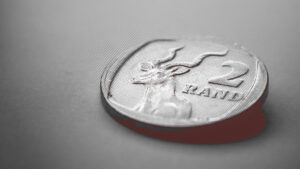
The rand has strengthened 4.7% to the dollar this year, the best-performing major currency after Mexico’s peso and Japan’s yen.
“The developments we see now are positive, the rand and confidence indicators, but that’s because they were so bad for so long,” said Ilke Smit, an economist at Pinebridge Investments Europe Ltd. in London.
‘‘The government now has to come through with reforms – whether it is to enhance growth or remove growth-impeding obstacles.”
Read: Why it may not be the best time to be saving money in your bank account















 Loading ...