

These graphs show how wealth in South Africa has flatlined


As South Africa counts the costs of the “wasted decade”, data from banking group Credit Suisse shows exactly how the country’s wealth has stagnated over the last 10 years.
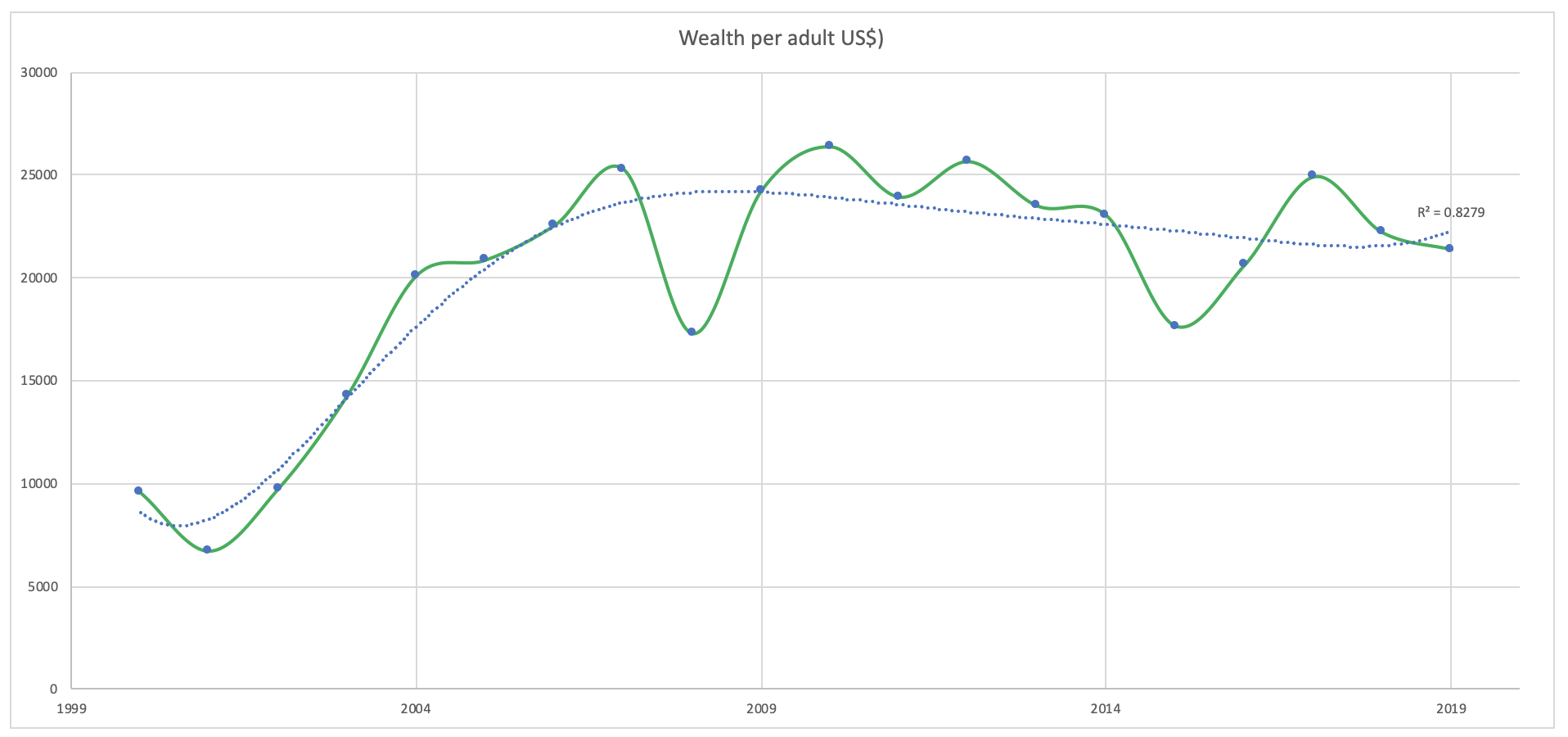
According to Credit Suisse, household wealth in South Africa grew strongly prior to the global financial crisis, rising from $9,560 in the year 2000 to $25,280 in 2007 on a per-adult basis.
The country exceeded its 2007 wealth level for a single year in 2010, but mean wealth has declined by US$5,000 since then, leaving it with a wealth per adult of US$21,380 in mid-2019.
“This is largely due to currency depreciation, as the rand has lost half its value since 2010,” the group said.
“In local currency units, wealth per adult rose 55.9% from 2010 to 2019, although after correcting for inflation there was a fall of 0.1%, i.e. virtually no change.”
The group recorded a decline in total wealth held by the adult population in 2019 while also seeing declines in the number of wealthy individuals in the country.
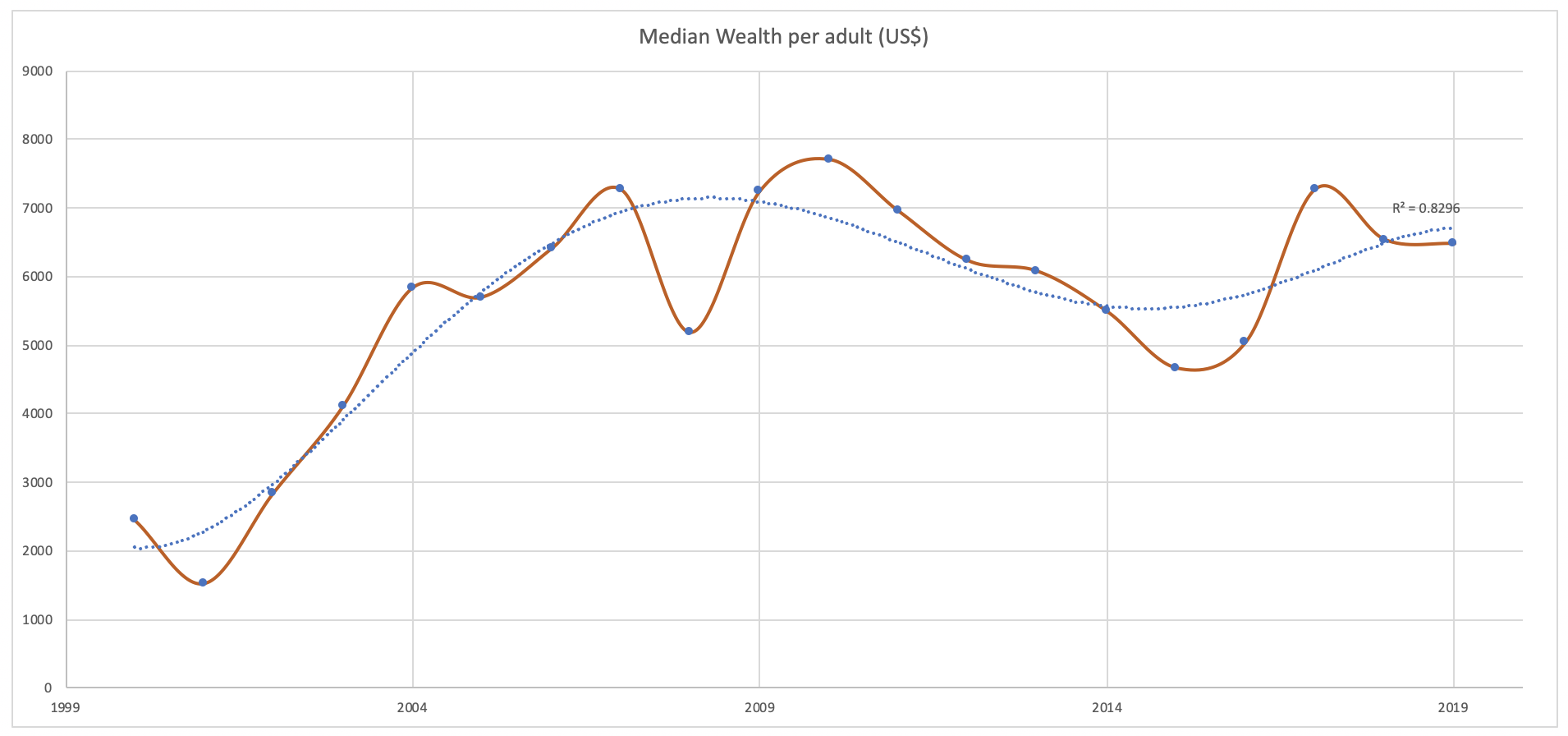
The graphs below outline how wealth in South Africa has flatlined since 2009.
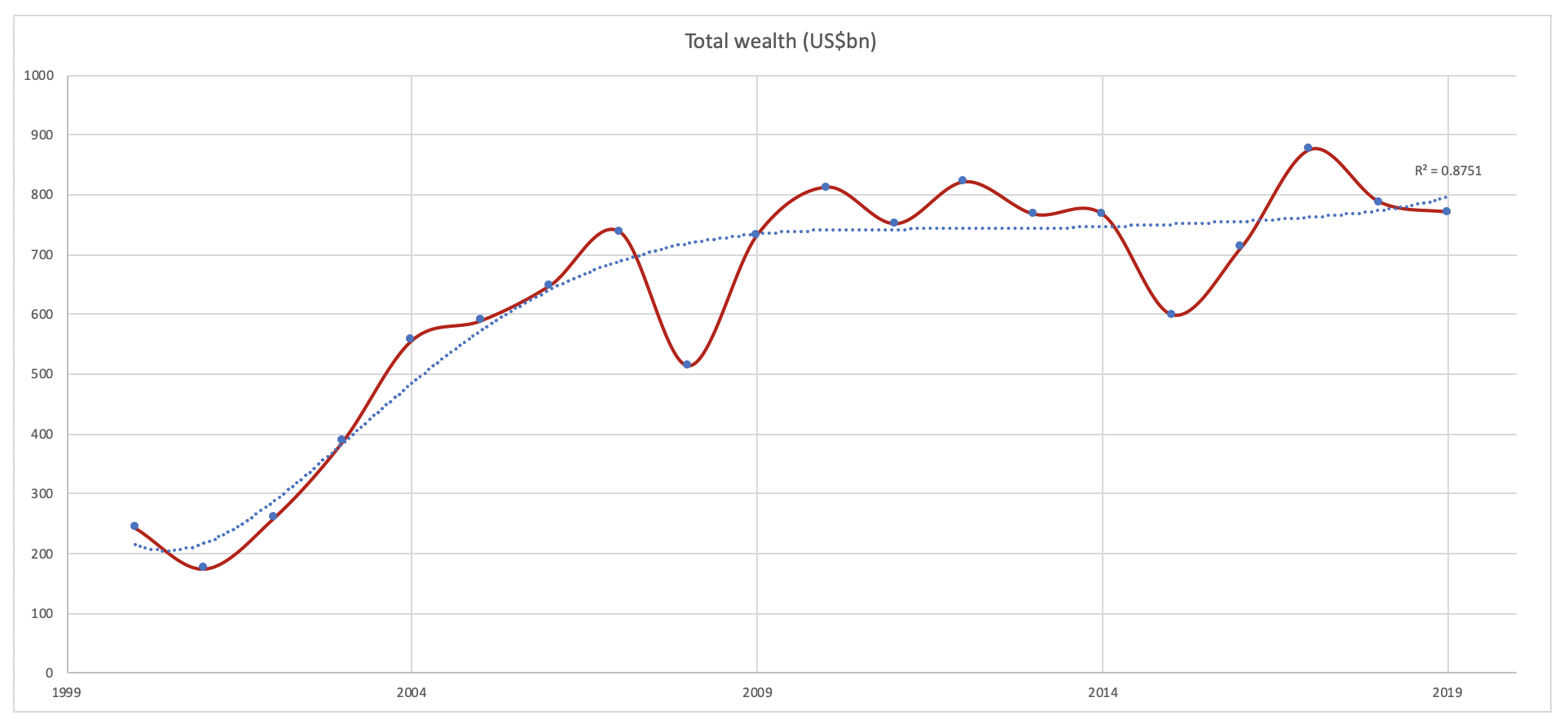
Total wealth in South Africa amounted to $770 billion in mid-2019 estimates, down from R787 billion recorded the year before.
While wealth levels have fluctuated over the years, on a normalised path it has trended flat.
Wealth per adult has trended lower over the last decade but, as per Credit Suisse’s analysis, has seen a slight upward swing in 2019, to put it back at the same levels as the end of the last decade.
South Africa’s wasted years
Many analysts have labeled the last decade or so of South Africa’s history as the wasted years – referring to a period of economic stagnation at a time when global economic conditions favoured emerging markets.
While South Africa’s peers in China, India, Russia, Brazil – and in CIVET economies (Colombia, Indonesia, Vietnam, Egypt and Turkey) – enjoyed strong economic growth over this period, South Africa barely exceeded 1.5% per annum to end 2017.
The period was marred by the prevalence of corruption and state capture.
At a recent conference hosted by the Financial Times in London, president Cyril Ramaphosa told delegates that more than R500 billion may have been stolen during Zuma’s nine-year tenure, and ‘some people’ have said the figure could exceed R1 trillion.
On top of the billions lost or destroyed under state capture, South Africa has also suffered the fallout from the effects of poor governance.
State power provider, Eskom is almost at the point of financial collapse, while load shedding has wiped billions from the economy.
The stagnating economy has not provided the necessary environment for job creation, leading to record-high unemployment rates in the country.
Meanwhile, government policies have taken a more populist slant: threats to the independence of the Reserve Bank; moves to change the Constitution to allow the government to take land without compensation; constant changes to the country’s education system; and the introduction of universal healthcare (limiting options for private alternatives).
All these factors have contributed to higher rates of emigration, particularly among the country’s most wealthy individuals.
Read: What South Africa lost in the “9 wasted years” under Zuma


















 Loading ...