

SARS wants to collect more personal data on taxpayers – and Ramaphosa is all for it


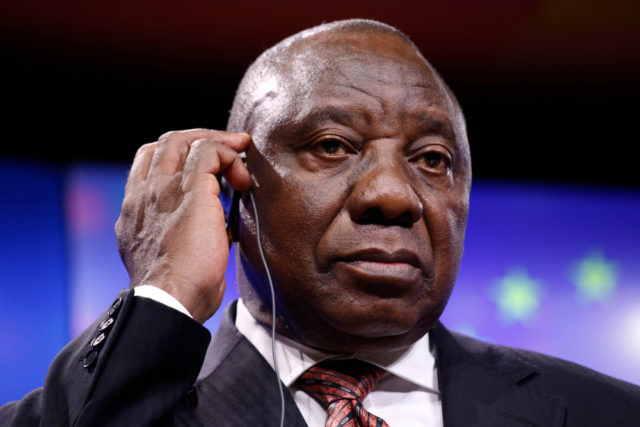
The South African Revenue Service (SARS) has been accessing data locally and across the world to help the tax collector detect and act against non-compliant taxpayers and criminal syndicates, says President Cyril Ramaphosa.
Speaking at the silver jubilee of the tax authority, Ramaphosa said that it is essential that South Africans comply with their legal tax obligations if they wish for SARS to be able to do its job properly.
He said that SARS must continue along its mandate without fear and prejudice: “I would like to encourage SARS to continue in this vein and to inspire other government departments and entities to follow suit.”
A few months back in August, the SARS commissioner Edward Kieswetter, said that the tax collecting agency has been expanding its use of data, adding that this data is being used to do a risk profiling of every taxpayer in the country.
“We use data and artificial intelligence to select taxpayers for further auditing or investigation, but we also use data and technology to provide a seamless experience for most taxpayers,” said Kieswetter.
With access to more data, the machines that automatically draw up a risk profile for a taxpayer can do so better, he added. The taxman has been cracking down on non-compliant taxpayers as well as people who have committed financial crimes.
According to a recent report by the Financial Intelligence Committee (FIC), over R41.6 million in penalties were imposed by SARS and the FIC on certain South Africans and/or their businesses in 2021 – many a result of non-compliance with tax provisions.
SARS was able to recoup R8.2 billion in income from illegal and criminal activity during the fiscal year 2021–2022. The number increased by more than 331% over the previous year, showing a growth in the services capacity and strict direction.
According to a recent PwC survey on tax, Elle-Sarah Rossato, who specialises in tax controversy and dispute solution, said that SARS has a clearly defined strategic objective to detect taxpayers and trades who do not comply and make non-compliance harder to do and more expensive.
The revenue service has also been on a major drive to look into sources of unexplained wealth in the country with plans to improve its ability to dive deeper into the sources and history behind certain financial transactions.
SARS has also been testing new methods of probing finances; Kieswetter in August said that the service is limited by its legislation but wants to be able to use data to investigate information regarding things such as:
- Luxury Properties
- Luxury vehicles
- Beneficial ownership
Praising the taxman
Ramaphosa commended SARS for its recent work and ability to grow out of being a victim of the state capture that enabled the national fiscus to be looted.
From its inception, SARS has been guided by a strong philosophical orientation of serving a higher purpose rather than just collecting rands and cents, said Ramaphosa.
During the pandemic, government-supported tax relief measures were all administered by SARS – indicating its dedication to businesses in distress, he added.
“These measures were intended to prevent factory closures and job losses and ensure that the livelihoods of workers could be safeguarded. SARS is an excellent example of a government entity that is efficient and effective.”
Since its formation in 1997, SARS has been able to collect over R18 trillion for government to provide to fund various programs that have supported the lives of South Africans.
















 Loading ...