

Rand on shaky ground as oil prices jump


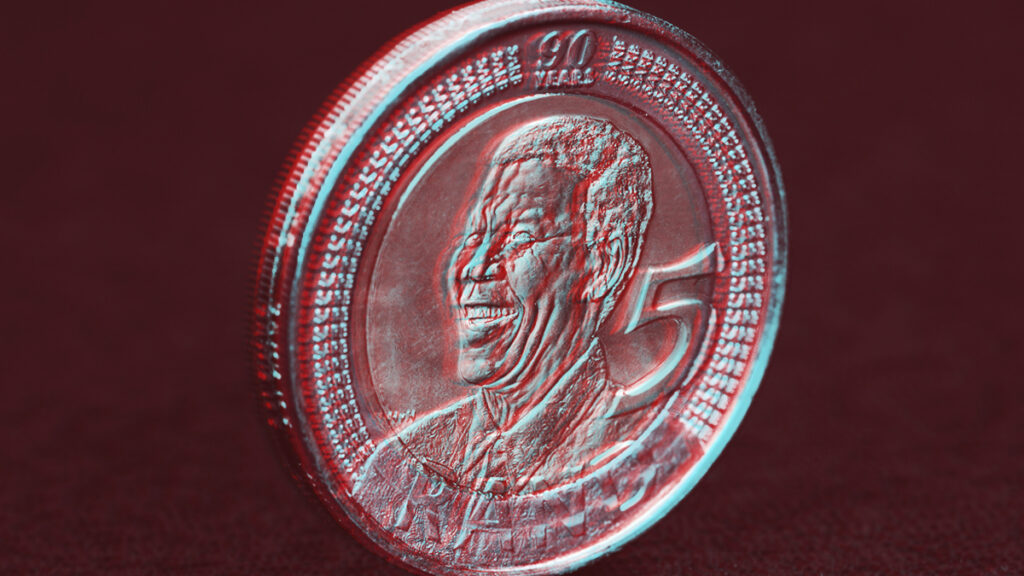
The South African rand remains at risk of global financial markets, as seen with the currency slipping in early trade this Monday (3 April).
Nasdaq reported that following a decision by major oil producers to reduce supply, the rand took a knock, trading at R17.90 to the dollar, 0.59% weaker than the previous close.
On Sunday, the Organization of the Petroleum Exporting Countries (OPEC) and its allies, known as OPEC+, announced their decision to reduce the oil supply by about 1.16 million barrels per day.
This, in turn, pushed oil prices up by 6% by this Monday and drove dollar strength.
According to Nasdaq, analysts have said that the jump in oil prices may prompt the US Federal Reserve to raise interest rates once again when it meets next month.
In a recent research note, ETM Analytics said that the jump in oil prices had added a new dimension to global inflation risks.
Investec’s chief economist Annabell Bishop said the rand continues to be at risk and will likely remain volatile and vulnerable to global financial market sentiment.
Regarding the recent announcement by OPEC, Bishop said that market risk sentiment had elevated somewhat as the production cut for oil saw its price rise significantly.
Bishop said, however, that this spells bad news for risk assets as higher oil prices are typically supportive of higher inflation and interest rates.
She added that the currency faces fundamental weakness in terms of the domestic economy – underpinning poor currency performance.
Provided the risk sentiment improves in the global economy, the rand should as well, Bishop added. If the country can avoid more severe bouts of load shedding, it may be able to keep domestic factors at bay.
Unfortunately, the outlook for load shedding looks bleak, with analysts pointing to a likely increase in the frequency and severity of load shedding over the upcoming winter periods when demand for electricity is at an all time.
Last week, the South African Reserve Bank (SARB) hiked interest rates by 50 basis points, above market expectations, providing some positive movement for the rand despite smaller occurrences of dollar strength in the latter parts of the week, said Bishop.
The economist said that the expectation of additional US interest rate hikes had been largely factored out with only one more 25bp lift seen, with a 65% chance currently, while in South Africa, a full 25 basis point hike is factored in over the next six months, supporting the rand.
Risk has been the primary driver of rand performance this year so far. Bishop said that the erosion in the risk premium necessary on rand portfolio assets had weakened the rand materially over the past 12 months as interest rates failed to keep up with the US.
After the latest rate hike by the governor of the SARB, Lesetja Kgnayago, the country is now only 50 basis points behind that of the US.
The Fed has hiked by 475 bps in its current cycle, and South Africa by 425 bps.
Domestically, South Africa is seeing rate hikes every two months and the US every six weeks, therefore resulting in a quickening in American rate hikes beyond those in South Africa, even with the same size hikes at each meeting, said Bishop.
If there were to be a further 50 basis point hike in domestic interest rates, and no more from the Fed, it would most likely see the rand strengthen materially further, said Bishop.
She added that this would help in reducing the marked upwards pressure on price inflation, which has come from the rand’s weakness.
Read: Salt in the wound for fed-up taxpayers in South Africa


















 Loading ...