

Pep loses over 200,000 trading hours to load shedding


Pepkor says its performance has been negatively affected by the constrained consumer environment and persistent load shedding.
In its interim results for the six months ended 31 March 2023, the group said its customers indicated that they have to prioritise spending on essentials, with high levels of inflation – particularly food and transport – hurting consumers’ pockets.
Moreover, its customers have struggled to earn an income due to disruptions in the grant payment system and the economic impact of load shedding.
Due to load shedding, the group said that the number of trading hours lost to load shedding increased 500% during the period, rising to 211,000 hours.
Although many of the group’s stores could trade during load shedding, the inability of other retailers to do so hurt trading in shopping complexes.
The group’s diesel costs were close to R72 million over the period, and it said that it is implementing an initiative to mitigate the impact of the outages by increasing the proportion of the group’s store base with alternative power sources to 74%.
Moreover, the group is working with property owners to expand upon alternative power courses to address the trading hours issue.
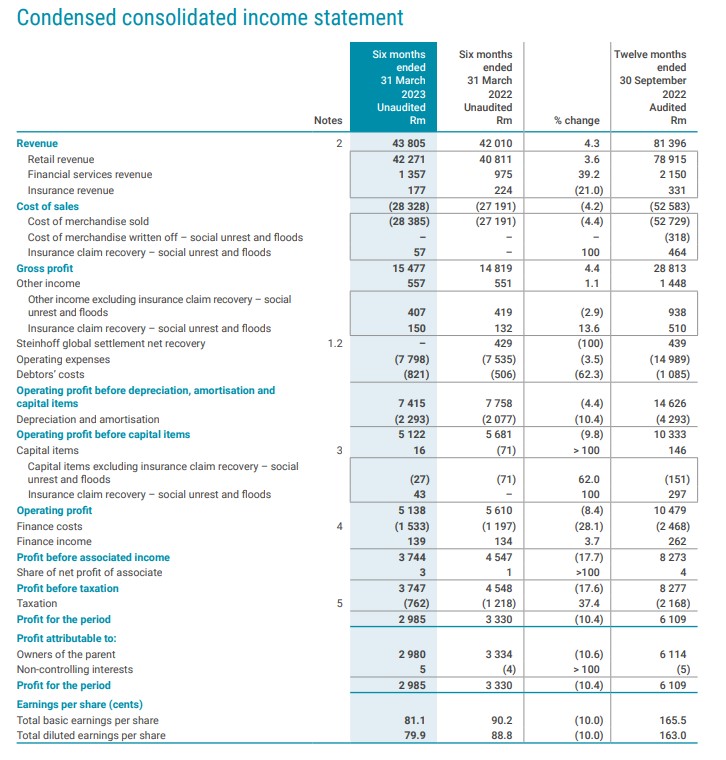
In terms of financials, the group’s revenue grew by 4.3% to R43.8 billion.
However, Headline Earnings Per Share decreased to 80.8 cents
As per Pepkor’s historical dividend policy, no interim dividend was declared.
Outlook
Although the group said that trading has improved in May 2023, it is expected that the operating and consumer environment will not improve any time soon.
Targeted cost reduction measures have been implemented to compensate for the softer trading performance.
Higher levels of product inflation are also expected in the upcoming summer season as the rand fluctuates.
Despite the difficult economic environment, the group said it would expand its footprint to over 6,000 stores by the end of the financial year.
Moreover, the group said it would grow its presence in the informal retail market, its cellular and financial services offerings and its discount and value proposition in the Brazilian market.
Read: The best and worse case scenario for the rand – and what it would take to make it a reality

















 Loading ...