

R11 billion win for criminals in South Africa


The Beer Association of South Africa (BASA) says that the decision to keep increasing excise on alcoholic beverages in the country is handing the legitimate liquor trade over to the illicit market.
This is costing the fiscus about R11.3 billion in lost tax revenue, it said, while making life even more difficult for producers who are already under severe pressure.
The group was responding to the 2025 budget tabled in May, which included a 4.8% to 6.8% increase for tobacco and alcohol produces, commonly referred to as ‘sin taxes’.
Considering the expected average inflation of 4% this, alcohol products will see a real increase of 2.8%.
While the National Treasury has acknowledged complaints and concerns from the alcohol sector about the increases, it has also made it clear that they won’t be going away any time soon.
Responding to the Budget debate in parliament, the finance department said that, as a policy, excise duty rates are adjusted for inflation annually, as a minimum.
This is done to “preserve the real or effective rates of excise duties”, failing which, the tax’s revenue raising and behavioural change objectives would be compromised.
“The baseline assumption in the fiscal framework is that excise duties will be adjusted by the expected inflation rate each year,” Treasaury said.
“What is then reflected as additional revenue is based on the real adjustment, which depends on the CPI outlook.”
The department said that above-inflation increases are necessary to generate additional revenue and discourage consumption of these products—”that are harmful to human health”—over time.
However, alcohol producers say the government is doing more economic harm by hiking taxes above inflation, warning that it’s the black market that ultimately benefits.
BASA said South Africa’s beer producers continue to face escalating input costs, weakening consumer demand, and strained infrastructure.
An aggressive and unpredictable excise regime only adds further pressure—undermining investment, job creation, and economic growth.
“At the same time, the illicit alcohol trade is booming. It now accounts for an estimated 22% of total alcohol consumption in South Africa, costing the fiscus over R11.3 billion in lost revenue,” it said.
Handing the industry to the black market
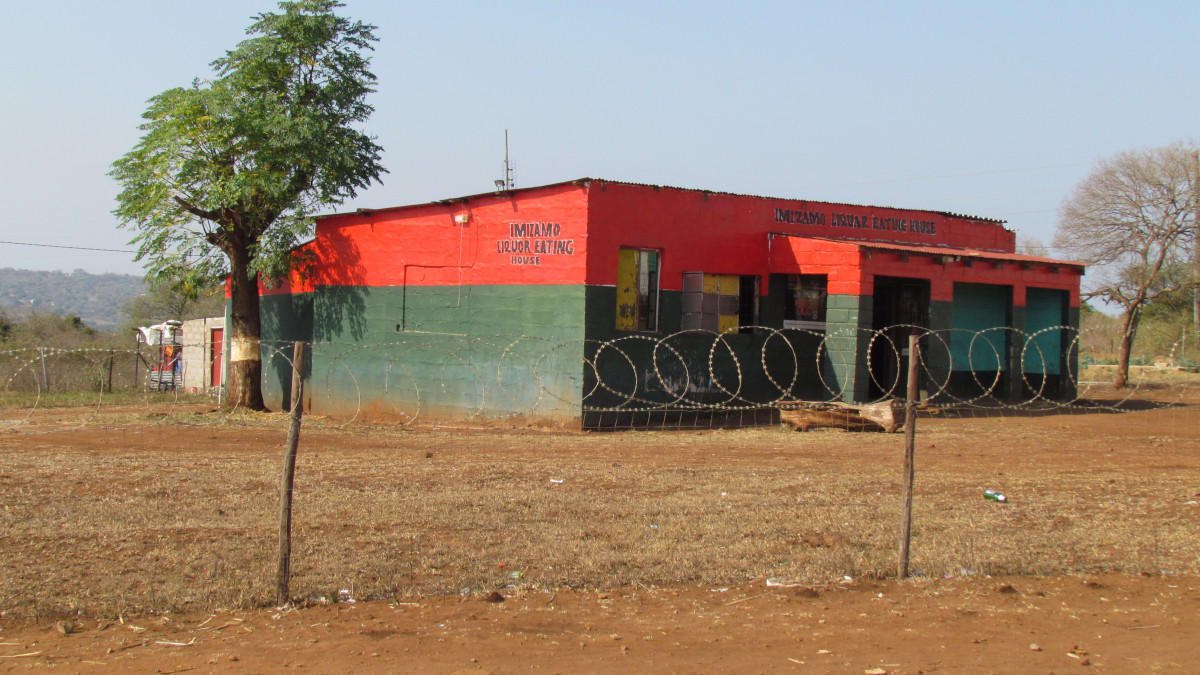
BASA noted that a significant portion of South Africa’s beer industry is made up of small-scale traders who serve consumers for whom beer is an affordable, occasional indulgence.
As costs rise, more traders are forced to either cut their operations significantly by reducing stock and trade, or turning to the ‘dark side’ and embracing illicit trade.
With year-on-year excise duty increases outpacing inflation, this puts thousands of traders who contribute to the economy at risk, the association said.
The tax pressure comes on top of the general rising cost of production, operating expenses and lagging recovery from the Covid-19 years, which saw alcohol sales shut down entirely.
With the latest tax hikes, excise makes up nearly 40% of the retail price of a bottle of beer, placing significant strain on consumers and the broader industry.
The same pattern can be seen in other alcohol types. Changes in specific excise duties for the 2025/26 financial year are as follows:
- Unfortified wine is currently at R5.57 per litre and the proposed excise duty rate is R5.95 per litre.
- Fortified wine is currently at R9.40 per litre and the proposed excise duty rate is R10.04 per litre.
- Sparkling wine is currently at R17.83 per litre and the proposed excise duty rate is R19.03 per litre.
- Ciders and alcoholic fruit beverages are currently at R135.89 per litre of absolute alcohol (231.02c per average 340ml can) and the proposed excise duty rate is R145.07 per litre of absolute alcohol (246.61c per average 340ml can).
- Spirits are currently at R274.39 per litre of absolute alcohol (R88.49 per 750ml bottle) and the proposed excise duty rate is R292.91 per litre of absolute alcohol (R94.46 per 750ml bottle).
BASA said that South Africa desperately needs to reform liquor excise tax to create a more balanced and sustainable regime.
It specifically wants the state to do more research into the impact of these taxes on small businesses, and how they prop up illicit traders.
Industry insiders noted that on top of higher taxes on products, taverns are also seeing a 100% increase in licencing fees.
As a result, traders just stop renewing licences, and there are not enough policing auhorities to enforce the laws, so illegal taverns and shebeens keep cropping up.
Another common complaint—one which is shared across various sectors in the country, not just alcohol trade—is that there is no indication that tax money is actually getting used to improve things.
Service delivery continues to collapse, and sectors like alcohol traders get no support from the state.
Many small liquor sellers are being driven towards illegal sales, some traders noted. Not only by the burden of excise taxes but also by the onerous costs of licensing, and other taxes like the fuel levy.
“We call for a targeted, evidence-based approach towards excise taxes, rather than a blanket tax that fails to reduce harm,” BASA said.
“As input costs continue to rise, businesses throughout the value chain will face growing financial pressure, further constraining their ability to operate sustainably and competitively.”













 Loading ...