

New SARS commissioner delivers first warning to taxpayers


South Africa’s newly appointed tax commissioner warned that the Iran war could undermine the government’s ability to meet its revenue targets.
This could see an even more aggressive push from the tax service to collect debts owed by taxpayers, as it now has more gaps to fill.
This, as rising fuel prices drive costly subsidies and threaten to slow economic growth.
“We are worried” about the R2.13 trillion revenue forecast in the 2026 budget, said Johnstone Makhubu, who became commissioner of the South African Revenue Service on 1 May 2026.
“We see an April that is not alarming,” he said during an interview at Bloomberg’s Johannesburg office on Wednesday. “But I’m sure I can bet my last dollar that in May, the impact is going to show.”
South Africa’s revenue collection has been outperforming in recent years following steps to fix poor performance, contributing to a growing sense among investors that the nation has got its public finances under control after a decade of mounting debts.
But the war that began on 28 February represents a significant test of fiscal discipline.
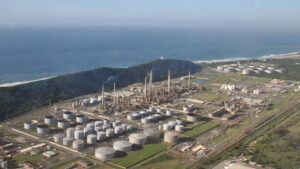
The National Treasury has extended a fuel levy reduction relief measure introduced in April until June to cushion businesses and households from soaring gasoline prices, which have risen by the most in almost two decades since the conflict erupted.
The move will cost about R17 billion in foregone revenue.
While the Treasury has said the intervention would be offset for the first month by juggling spending priorities, it is unclear how it will find the money for May and June.
One remedy could be to go after the R650 billion owed by taxpayers, Makhubu said.
“We can still go back there and try to find some opportunities to help us balance out and offset some of the losses,” he said.
But a bigger concern is what happens to the economy, which Makhubu said underpins around 86% of revenue collection.
“If that sneezes, no matter what you do with the other 14%, 15%, it’s not going to be enough to cover the fractures that you see in the economy and the shocks that are in the environment,” he said.
Growth Downgrade

The International Monetary Fund recently lowered its 2026 growth forecast for South Africa to 1% from 1.4%. Treasury, which uses this estimate to predict revenue collection, before the war broke out, had projected growth of 1.6%.
A key focus for the new commissioner is shrinking South Africa’s tax gap, or the difference between the revenue SARS receives and what it would get if everyone paid their taxes.
Makhubu said that up to R450 billion in value-added tax went uncollected and cited the illicit trade in alcohol and tobacco as ripe sectors to target by deploying technology.
SARS is already working with the South African Reserve Bank on a fiscal marker that would mimic the techniques used to prevent counterfeit bank notes and would be placed on all goods subject to excise tax, he said.
Customs duty is another area where SARS estimates it is under-collecting as much as R70 billion because importers deliberately under-value goods brought into the country.
Enhancing surveillance at South Africa’s ports of entry would help, Makhubu said, while acknowledging the problem required a comprehensive approach, including strengthening border security and investing in expensive detection equipment.
By Ntando Thukwana and S’thembile Cele for Bloomberg















 Loading ...